Blank Plastic Cards for Library Cards: Long-Lasting Quality
Table of Contents []
- Why Plastic Card ID Is the Trusted Source for Library Card Programs Nationwide
- Understanding Blank CR80 Cards: The Foundation of Every Library Card Program
- Magnetic Stripe Cards for Library Systems: HiCo vs. LoCo Explained
- RFID and Smart Chip Cards: Next-Level Library Card Technology
- Card Printers, Ribbons, and Supplies: Completing Your In-House Program
- Frequently Asked Questions About Blank Plastic Library Cards
- Ready to Build a Better Library Card Program? Start with Plastic Card ID
Blank Plastic Cards for Library Cards: The Complete Guide to Running a Modern Card Program
Walk into any thriving public library today and you will notice something. The cards members carry are not flimsy paper slips or laminated printouts. They are solid, professional plastic cards that fit neatly into a wallet and hold up through years of daily use. Blank plastic cards for library cards represent one of the smartest operational investments a library system can make - and understanding how to source, print, and manage them is what separates a smooth-running program from a constant headache.
| Card Type | Best Use | Encoding Option | Print Compatibility |
|---|---|---|---|
| Blank CR80 PVC | Standard patron ID | None (print only) | All desktop printers |
| Magnetic Stripe HiCo | Barcode swipe systems | HiCo magnetic encoding | Encoding-capable printers |
| Proximity / RFID | Contactless check-in | 125kHz or 13.56MHz | RFID-capable printers |
| Smart Chip Cards | Multi-service access | Contact chip (ISO) | Smart card printers |
| Colored / Frosted PVC | Tiered membership levels | None (print only) | All desktop printers |
Why Plastic Card ID Is the Trusted Source for Library Card Programs Nationwide
There is a reason library systems - from small-town branches to multi-location county networks - keep coming back to the same supplier year after year. Over 25 years of serving more than 100,000 customers and delivering upwards of 50 million cards across the United States tells a story that a slick website alone cannot. Consistency, reliability, and deep product knowledge are what make a card supplier worth trusting with something as operationally critical as your patron identification program.
What sets CPE apart is not just the catalog - it is the understanding of how card programs actually work in the field. A library does not need a one-time transaction; it needs a partner who understands reorder cycles, printer compatibility, encoding requirements, and the reality of issuing cards at a service desk under time pressure. That operational intelligence is baked into every product recommendation and every order fulfilled.
A Partnership Model That Actually Works
Most card vendors sell you cards and disappear. Plastic Card ID operates differently - as a strategic partner invested in the long-term success of your card program. Whether you are issuing 50 cards a month for a small branch or managing a mass-production run in the tens of thousands, the approach scales without sacrificing service quality or price competitiveness.
That means when your printer ribbon runs low mid-week or you need to quickly source cleaning kits before a busy checkout period, you are not starting from scratch with an unfamiliar vendor. Your supply chain stays tight, predictable, and well-stocked - exactly what a busy library operation demands.
Decades of Proven Performance Across the USA
Serving customers in all fifty states means CPE has encountered virtually every library card scenario imaginable. Urban systems with dozens of branches. Rural libraries running single-computer checkout operations. University libraries issuing student ID and library access cards from a single card printer in a back office. Each situation brings its own requirements, and that breadth of experience informs every product that ships.
The numbers reinforce the trust libraries place in this supply relationship. Fifty million cards sold is not an abstract figure - it represents patron IDs, student credentials, community access cards, and branch membership cards that have moved through checkout lines and card readers millions of times across the country.
Get in Touch Before You Order
Not sure which card type matches your ILS (Integrated Library System) or barcode scanner setup? Unsure whether you need HiCo or LoCo magnetic stripe? The team is ready to walk you through it. Reach out at 800.835.7919 and get answers before you commit to an order - because the right card on the first try saves time, money, and frustration.
The consultation costs nothing. The clarity it provides is genuinely valuable, especially for library administrators managing tight budgets and needing to get specifications correct the first time.
Understanding Blank CR80 Cards: The Foundation of Every Library Card Program
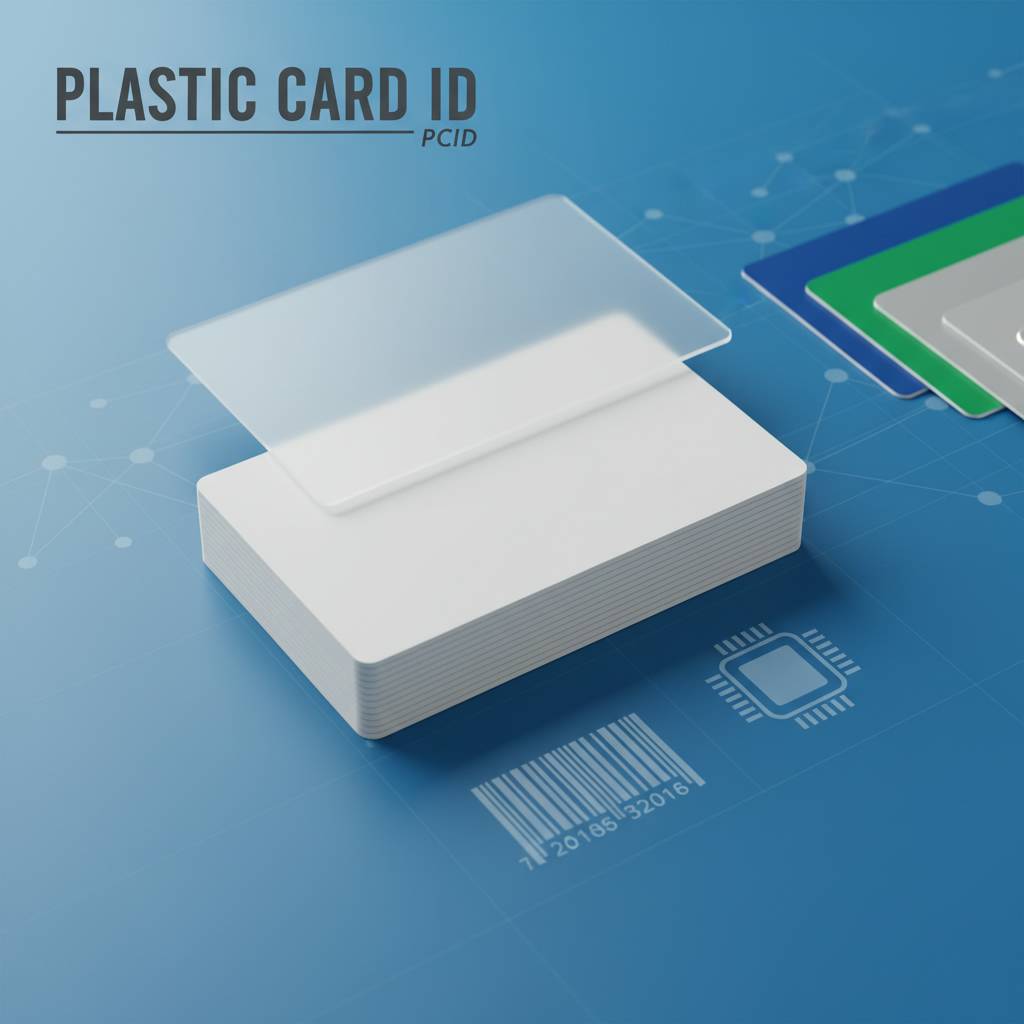 The CR80 standard is not arbitrary - it is the internationally recognized ISO 7810 specification that defines the exact dimensions of a credit card-sized plastic card: 3.375 inches by 2.125 inches, 30 mil thick. This standardization matters enormously in a library setting because it means your blank cards will fit every standard card printer, every card sleeve, every wallet, and every card reader without modification or guesswork.
Blank CR80 PVC cards are the workhorse of in-house card programs precisely because they hand design control back to the organization. You print what you need, when you need it, at the quality your patrons expect. No waiting on a third-party print shop. No minimum run requirements that force you to order 5,000 cards when you only need 500. No outdated designs stuck in a drawer because circumstances changed.
What "Blank" Really Means for Your Workflow
A blank plastic card is a canvas. It arrives clean, flat, and ready for your card printer to transform it into a fully branded patron library card complete with your logo, branch name, barcode, patron photo, and any other data your system requires. Total design control at every stage is a significant operational advantage - especially for library systems that periodically refresh their branding or need to distinguish between card types for different patron categories.
The cost economics are compelling too. Buying blank cards in volume and printing in-house consistently delivers a lower per-card cost than ordering pre-printed cards from an outside printer. Over a year of issuing hundreds or thousands of cards, that difference adds up to a meaningful budget line.
PVC Quality and What It Means in Daily Library Use
Not all PVC cards are created equal, and the difference shows up in real-world use. Lower-quality cards develop visible edge wear, surface scratches, and fading within months of regular handling. Quality blank PVC stock maintains its appearance through thousands of swipes, taps, and pocketings. A professional-looking card signals legitimacy and permanence to patrons in a way that paper or laminated alternatives simply cannot match.
For libraries, patron trust matters. A well-made card reinforces the sense that this is an institution worth belonging to - and that subtle psychological effect is not trivial. Membership cards that live in wallets outperform paper alternatives in engagement and retention, a pattern libraries are increasingly recognizing.
Blank Card Thickness and Format Options
Standard library patron cards use 30 mil thickness, the same as a credit card. For certain applications - keychain cards, junior patron cards for children's programs, or budget-conscious bulk issuance - alternative thickness options exist and are worth discussing with your supplier. The goal is always matching the card specification to the actual use case, not defaulting to one size because it is familiar.
Colored PVC stock opens another dimension entirely. Issuing cards in different colors by patron category - blue for adults, yellow for juniors, green for senior patrons, for example - creates an instant visual classification system that staff can use at a glance during busy checkout periods.
Magnetic Stripe Cards for Library Systems: HiCo vs. LoCo Explained
Many library systems rely on magnetic stripe technology for patron identification and checkout, either as a standalone method or in combination with barcodes. Understanding the difference between High Coercivity (HiCo) and Low Coercivity (LoCo) magnetic stripe cards is not optional knowledge for a library administrator - it is essential to making sure your cards actually work with your existing readers and ILS infrastructure.
HiCo magnetic stripes are far more resistant to accidental demagnetization than their LoCo counterparts. In a library environment where cards get tossed into bags next to phones, keys, and other magnetically active items, HiCo is almost always the recommended specification. The slightly higher cost per card is more than justified by the reduction in patron complaints and card replacement costs.
Matching Your Card Spec to Your ILS Requirements
Every integrated library system has specific requirements around how patron data is encoded on a magnetic stripe. Tracks 1, 2, and 3 carry different data types, and your ILS documentation - or your system vendor - will specify exactly which track and encoding format your system uses. Getting this right before you place an order prevents a costly mismatch that leaves you with a batch of cards that your checkout terminals simply will not read.
CPE carries both HiCo and LoCo magnetic stripe blank cards, and the team is equipped to help you verify your encoding specifications before you commit to a purchase. That kind of pre-order support is the difference between a smooth card program launch and an expensive do-over.
Encoding-Ready Cards and Printer Compatibility
Blank magnetic stripe cards are only half the equation - your card printer also needs to be encoding-capable to write data onto the stripe during the print process. Evolis, Zebra, and Fargo printers all offer magnetic stripe encoding modules, and Plastic Card ID carries the full lineup. Matching your card stock to your printer's encoding specifications ensures seamless, reliable operation from day one.
If you are starting a new card program or upgrading an existing one, a simultaneous cards-and-printer package sourced from a single supplier simplifies compatibility, reduces technical risk, and often produces better pricing than buying components from separate sources.
Contact Plastic Card ID for Magnetic Stripe Card Guidance
Magnetic stripe specifications can be genuinely confusing, especially when your ILS documentation uses technical shorthand that is not immediately obvious. Call 800.835.7919 to speak with someone who has helped hundreds of library systems work through exactly these questions. You will come away with a clear spec sheet and confidence that your order is correct.
Libraries that get their magnetic stripe card specifications right the first time spend less on replacements, generate fewer patron complaints, and run smoother checkout operations. That outcome is worth a five-minute phone call without question.
RFID and Smart Chip Cards: Next-Level Library Card Technology
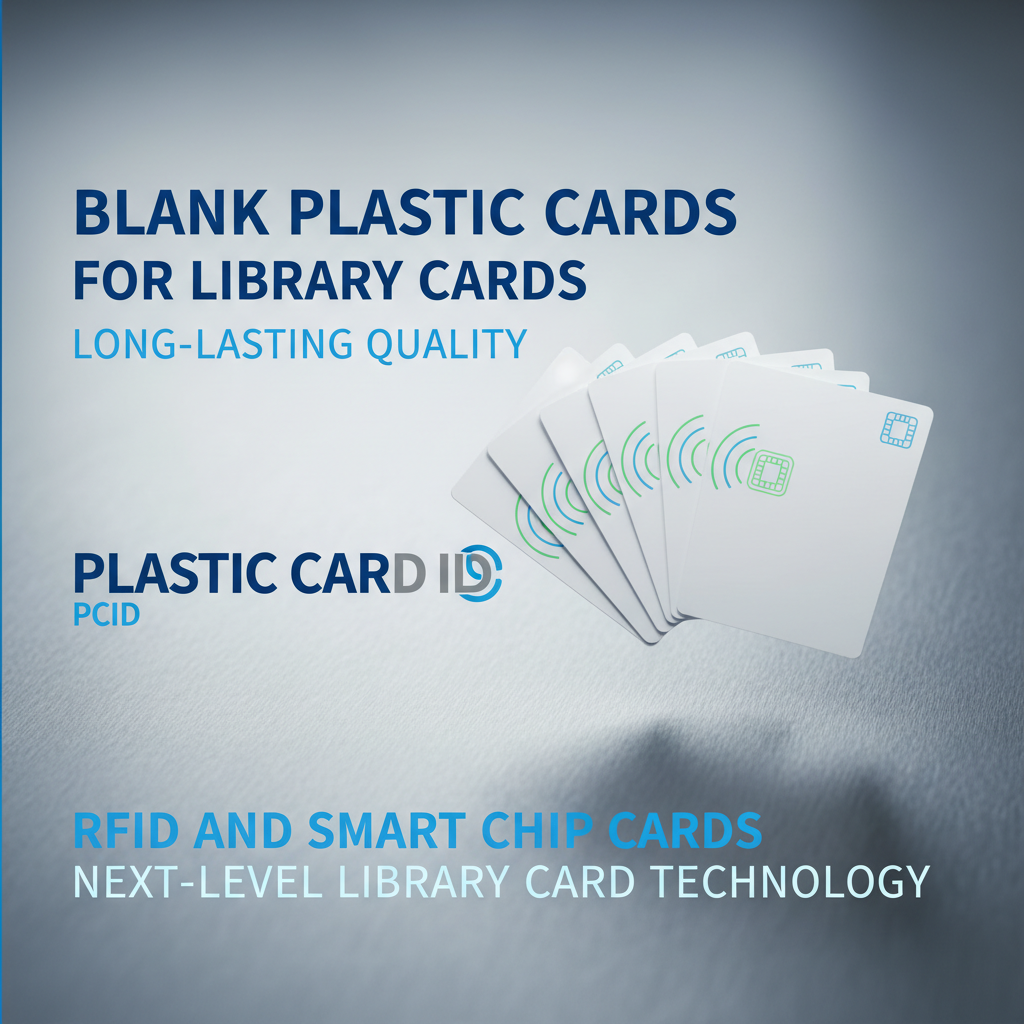 Contactless technology is no longer a novelty in library settings - it is an increasingly practical choice for systems looking to speed up checkout, reduce physical wear on cards and readers, and support multi-function access scenarios. RFID and proximity cards bring a measurable operational upgrade to libraries already managing digital resources, self-checkout kiosks, and access-controlled study spaces or computer labs.
Blank RFID cards available through CPE operate at two primary frequencies: 125kHz for standard proximity access applications, and 13.56MHz for more sophisticated contactless smart card protocols including MIFARE DESFire - a technology that supports encrypted, multi-application card programs. Libraries running integrated patron services across physical checkout, digital resource access, and room booking can consolidate all of that onto a single smart card.
Proximity Cards for Access Control Applications
Many library buildings use proximity card access control for staff entrances, server rooms, archive spaces, and after-hours access. Issuing staff proximity cards through the same blank card supply chain used for patron cards simplifies procurement, standardizes card format, and consolidates vendor relationships. One supplier, one invoice, one relationship - that kind of operational simplicity is underappreciated until you have managed the alternative.
Blank proximity cards are available in standard CR80 format and pair with the same desktop card printers used for patron ID cards, allowing you to print a visible employee name and photo on the same card that handles contactless door access. Dual-function cards reduce the number of credentials staff carry and the administrative overhead of managing separate systems.
Smart Chip Cards and Multi-Service Library Environments
University libraries, large public systems, and special library environments are increasingly looking at smart chip cards as the infrastructure layer for patron services that extend well beyond book checkout. Printing lab credits, managing resource reservations, validating interlibrary loan privileges, and controlling access to restricted collections can all live on a single ISO-compliant smart card. The consolidation benefit is both functional and cost-effective.
Blank smart chip cards are available in contact chip configurations that work with smart card-capable desktop printers from Evolis, Zebra, and Fargo. The card body is standard CR80, meaning it fits every wallet, sleeve, and card holder your existing program uses - the intelligence is simply added through the chip embedded within the card.
Choosing the Right Technology Tier for Your Library
Not every library needs RFID or smart chip functionality, and over-specifying your card program wastes budget that could go elsewhere. Here is a practical breakdown of which technology tier makes sense at different levels of operational complexity:
- Standard barcode or visual ID only: Blank CR80 PVC cards with a desktop printer - simplest, lowest cost per card, and fully adequate for most small to mid-size branch libraries.
- Magnetic stripe checkout: Blank HiCo magnetic stripe cards with an encoding-capable printer - recommended for libraries whose ILS relies on swipe-based patron identification.
- Contactless check-in or self-checkout: Blank proximity or 13.56MHz RFID cards - ideal for libraries deploying self-checkout kiosks or contactless service points.
- Multi-service campus or urban library: Smart chip or MIFARE-compatible cards - best for environments where a single card needs to manage access, digital resources, printing credits, and more.
- Staff access control: Proximity cards or dual-technology cards combining visual print with contactless access - the most efficient solution for staff credential management.
Card Printers, Ribbons, and Supplies: Completing Your In-House Program
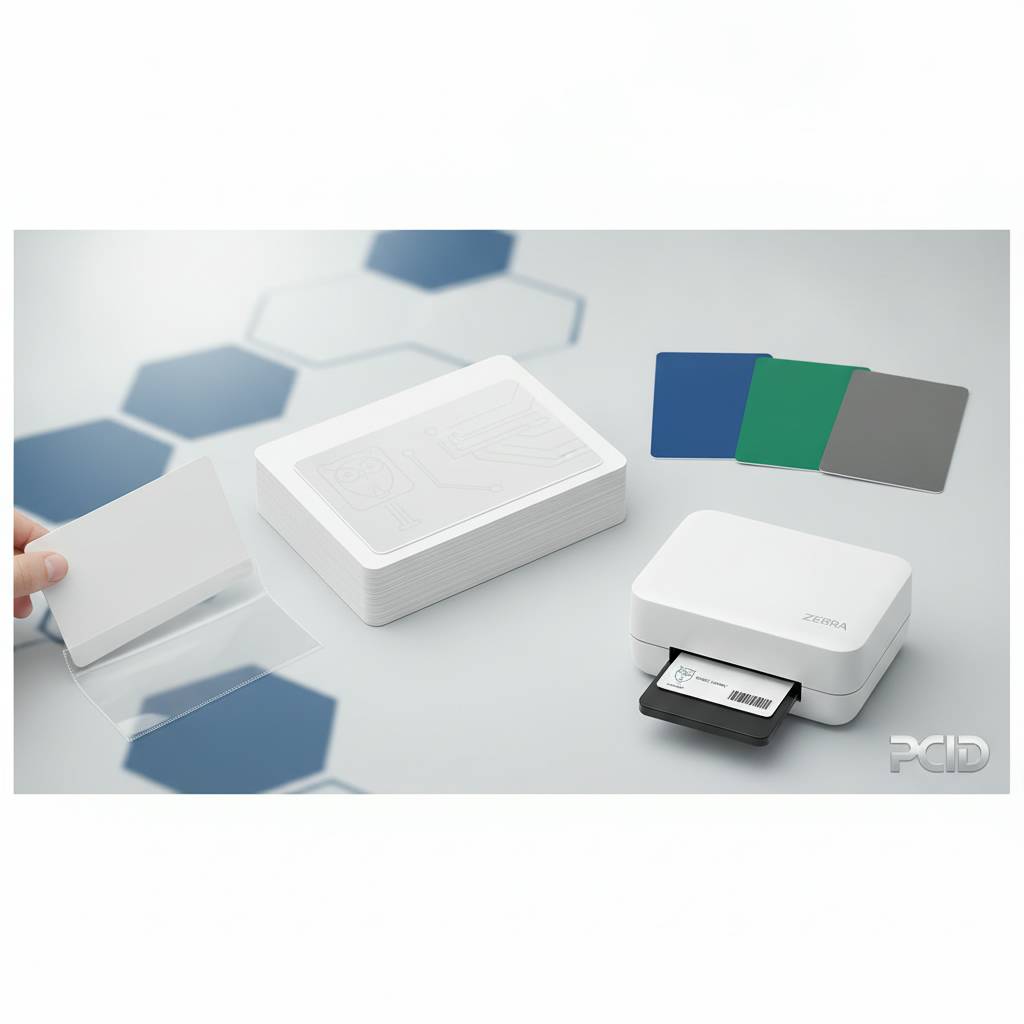
Blank plastic cards are only as useful as the printer and supplies that bring them to life. Plastic Card ID carries a curated selection of card printers from three of the most respected brands in the industry - Evolis, Zebra, and Fargo - covering everything from compact single-sided desktop models for small branch operations to dual-sided, encoding-capable systems built for high-volume institutional environments. Matching the right printer to your card volume and feature requirements is as important as choosing the right card stock.
Beyond the printer hardware, a sustainable card program requires a steady supply of the consumables that keep it running. Printer ribbons specifically formulated for your printer model, cleaning kits to maintain print head performance and extend printer life, card sleeves for patron-facing card protection, and card carriers for mailing - CPE stocks all of it under one roof, eliminating the fragmentation that comes from sourcing supplies across multiple vendors.
Selecting the Right Printer for Your Card Volume
A library issuing 50 new patron cards per month has fundamentally different printer requirements than a multi-branch system processing 2,000 new cards per month. Entry-level single-sided Evolis models are excellent for low-volume branch operations and are priced accessibly for libraries working within tight equipment budgets. Mid-range dual-sided printers from Zebra handle the photo ID plus barcode plus magnetic encoding combination that many library patron cards require. High-throughput Fargo systems are the right choice when production speed and encoding complexity matter most.
Every printer sold through Plastic Card ID comes with the full manufacturer's documentation and is compatible with the blank card stock carried in the same catalog. There is no guesswork about whether your cards will work in your printer - the entire ecosystem is designed to work together from the first card printed to the thousandth.
Ribbons, Cleaning Kits, and the Cost of Neglect
A card printer is a precision device, and like any precision device it rewards proper maintenance with long service life and consistent output quality. Printer ribbons formulated for your specific model produce sharp, durable prints that do not fade or flake. Generic ribbons that seem cheaper upfront often cause print head damage that results in repair costs vastly exceeding the savings. Using the right ribbon is not optional maintenance - it is basic operational discipline.
Cleaning kits are similarly non-negotiable for any library operating an in-house card printing program. Regular cleaning cycles remove card dust, ribbon residue, and debris that accumulate inside the printer and gradually degrade print quality. A well-maintained printer reliably produces professional-looking patron cards; a neglected one produces cards that embarrass the institution that issued them.
Card Affixing, Mailing Services, and the Last Mile
For library systems that mail new or replacement patron cards to registrants - a common workflow for remote registration programs, homebound patron services, or large-scale re-issuance campaigns - card affixing and mailing services remove a significant operational burden from library staff. Plastic Card ID offers card affixing to mailers and fulfillment services that handle the physical distribution component of your card program without requiring you to build that capability in-house.
Card sleeves and carriers are available for libraries that prefer to hand-deliver cards with professional packaging, reinforcing the perceived value of the card and the institution it represents. The details of how a card is presented to a patron matter - they shape first impressions that affect long-term engagement with the library's services.
Frequently Asked Questions About Blank Plastic Library Cards
Library administrators evaluating blank plastic card programs often arrive with similar questions - about specifications, minimums, compatibility, and best practices. The following represents the most common and practically useful inquiries that come through before a first order is placed.
These are not hypothetical questions. They reflect real decisions that library systems across the United States make every time they set up or upgrade a card program. Getting clear answers to them upfront makes the difference between a program that runs smoothly and one that generates constant operational friction.
What Are the Minimum Order Quantities?
Minimum order quantities for blank PVC cards are designed to be accessible for organizations of all sizes. Small branch libraries issuing modest card volumes are not forced into bulk purchases that leave thousands of cards sitting in a storage closet. Programs starting at just 50 cards per month are fully supported, and volume pricing kicks in at higher quantities to reward libraries that are ready to order in larger runs.
For libraries uncertain about how many cards they will need over a 12-month period, discussing projected volumes with the Plastic Card ID team before placing an initial order is genuinely worthwhile. Accurate volume projections unlock better pricing tiers and prevent both under-stocking and over-ordering.
Are Blank Cards Compatible with My Existing Card Printer?
Standard CR80 blank PVC cards are compatible with virtually every desktop card printer on the market, including all Evolis, Zebra, and Fargo models. Specialty cards - magnetic stripe, RFID, and smart chip configurations - require specific printer capabilities, but the Plastic Card ID catalog clearly identifies these requirements. Compatibility verification before you order eliminates the most common source of program-launch frustration.
If you are unsure whether your existing printer supports a particular card type, the team can verify compatibility against your printer's model number in minutes. This is a quick check that prevents a potentially costly mismatch.
How Do I Handle Card Replacement for Damaged or Lost Patron Cards?
Replacement card workflows are a routine part of any library card program, and they are significantly easier to manage with an in-house printing setup. A blank card stock supply means replacements are printed on-demand at the service desk, without waiting on an outside print vendor and without minimum run requirements. On-demand replacement capability is one of the most operationally compelling reasons to run an in-house card program rather than relying on pre-printed cards from a third party.
Maintaining a small buffer stock of blank cards - typically two to four weeks' worth of average issuance volume - ensures that replacement demand never outpaces supply. Reorder reminders and consistent restocking through Plastic Card ID keep that buffer intact without requiring dedicated inventory management effort from library staff.
Ready to Build a Better Library Card Program? Start with Plastic Card ID
Twenty-five years of experience, 100,000 customers served, 50 million cards delivered - those numbers describe a supplier that understands what a successful card program looks like and has the catalog, expertise, and operational depth to help you build one. Blank plastic cards for library cards are not a commodity purchase - they are the physical foundation of your patron identification and access system, and they deserve to be sourced from a partner who takes that responsibility seriously.
Whether you are setting up your first in-house card printing operation, switching from pre-printed cards to blank stock for greater flexibility, upgrading to magnetic stripe or RFID technology, or simply looking for a more reliable supplier than your current one, CPE has the products, the knowledge, and the service commitment to make it straightforward. Your library's patrons deserve a card that reflects the quality of the institution - and your staff deserves a supply chain that never lets them down at a busy service desk.
Take the Next Step Today
Starting a conversation costs nothing. Whether your question is about card specifications, printer compatibility, encoding requirements, or pricing for your annual card volume, the right answers are a phone call away. Call 800.835.7919 to speak directly with a card program specialist at Plastic Card ID and get clarity before you place your first - or next - order.
Your library's patron card program is too important to leave to a vendor who treats it as a routine transaction. Partner with a supplier who has spent over a quarter century earning the trust of libraries, schools, businesses, and organizations across the United States - and who will be just as invested in your program's success on day one thousand as on day one.
Contact Plastic Card ID today at 800.835.7919 - because every great library card program starts with the right blank card and the right partner behind it.
Previous Page