How Proximity Cards Work for Building Security: Full Explanation
Table of Contents []
- What Makes Plastic Card ID a Trusted Source for Proximity Access Cards
- The Science Behind How Proximity Cards Work
- Proximity Card Technologies Compared: 125 kHz vs. 13.56 MHz
- Real-World Applications: Where Proximity Cards Deliver Results
- Selecting and Ordering Proximity Cards: Practical Buyer Tips
- Printing and Personalizing Proximity Cards In-House
- Partner With Plastic Card ID for Your Proximity Card Program
How Proximity Cards Work for Building Security
Swipe, tap, and grant access - proximity cards have quietly become the backbone of building security for thousands of organizations across the United States. Whether you manage a corporate campus, a healthcare facility, a university dormitory, or a manufacturing plant, understanding how these cards work (and why they outperform older alternatives) can directly influence how safely and efficiently your operation runs.
| Card Type | Frequency | Read Range | Common Use Case |
|---|---|---|---|
| 125 kHz Proximity (Prox) | 125 kHz | 2-6 inches | Basic door access, time and attendance |
| 13.56 MHz RFID / Smart Card | 13.56 MHz | Up to 4 inches | Secure access, data storage, multi-application |
| MIFARE DESFire | 13.56 MHz | Up to 4 inches | High-security campuses, government, enterprise |
| HID-Compatible Prox | 125 kHz | 3-6 inches | Widely deployed corporate environments |
What Makes Plastic Card ID a Trusted Source for Proximity Access Cards
Proximity card programs are not a side note at Plastic Card ID - they are a core part of what we do. With over 25 years supplying plastic cards to U.S. businesses and organizations, and more than 50 million cards sold, we have helped security administrators, facility managers, and IT directors build access control systems that actually hold up over time. This is not commodity reselling - it is strategic partnership.
From single-door small offices purchasing 50 cards a month to large-scale enterprise deployments requiring thousands of encoded cards on tight timelines, CPE scales to meet the demand. The catalog includes standard 125 kHz proximity cards, 13.56 MHz RFID smart cards, MIFARE DESFire high-security options, and compatible card printers capable of personalizing each card with photo IDs, barcodes, and custom artwork - all in-house.
More Than 25 Years of Card Program Expertise
Longevity in this industry means something. It means we have navigated format changes, watched access control technology evolve, and supported clients through system upgrades without leaving them behind. Relationships outlast individual transactions at CPE, and that philosophy shows up in the support and guidance customers receive when selecting their proximity card format.
Our team understands the difference between a legacy 125 kHz Wiegand system and a modern 13.56 MHz multi-application environment. That contextual knowledge shapes every recommendation we make, ensuring that the cards you purchase today are compatible with the readers you have installed and the system you plan to grow into tomorrow.
Over 100,000 Customers Served Across the USA
The breadth of industries represented in that customer count is striking. Healthcare networks, university systems, manufacturing facilities, hotel chains, government contractors, retail chains - the common thread is a need for reliable, professionally produced plastic cards that perform consistently in the field. Proximity cards are among the most operationally critical products any organization buys, and quality cannot be negotiated away on price alone.
Serving exclusively U.S.-based businesses means CPE understands domestic compliance needs, shipping timelines, and the urgency that often accompanies card replenishment orders. Running out of access credentials at a secure facility is not a minor inconvenience - it is a real operational problem, and we help clients plan ahead to avoid it.
Contact Our Team for Expert Card Program Guidance
Whether you are building a proximity card program from scratch or upgrading from outdated technology, talking to someone with deep product knowledge makes a measurable difference. Our team asks the right questions - about your reader infrastructure, your security tier requirements, your volume, and your budget - before recommending a single card type.
Reach us directly at 800.835.7919 to discuss your access control card needs with a knowledgeable representative who can guide you from selection through fulfillment. The right card choice at the start saves thousands in replacement costs later.
The Science Behind How Proximity Cards Work
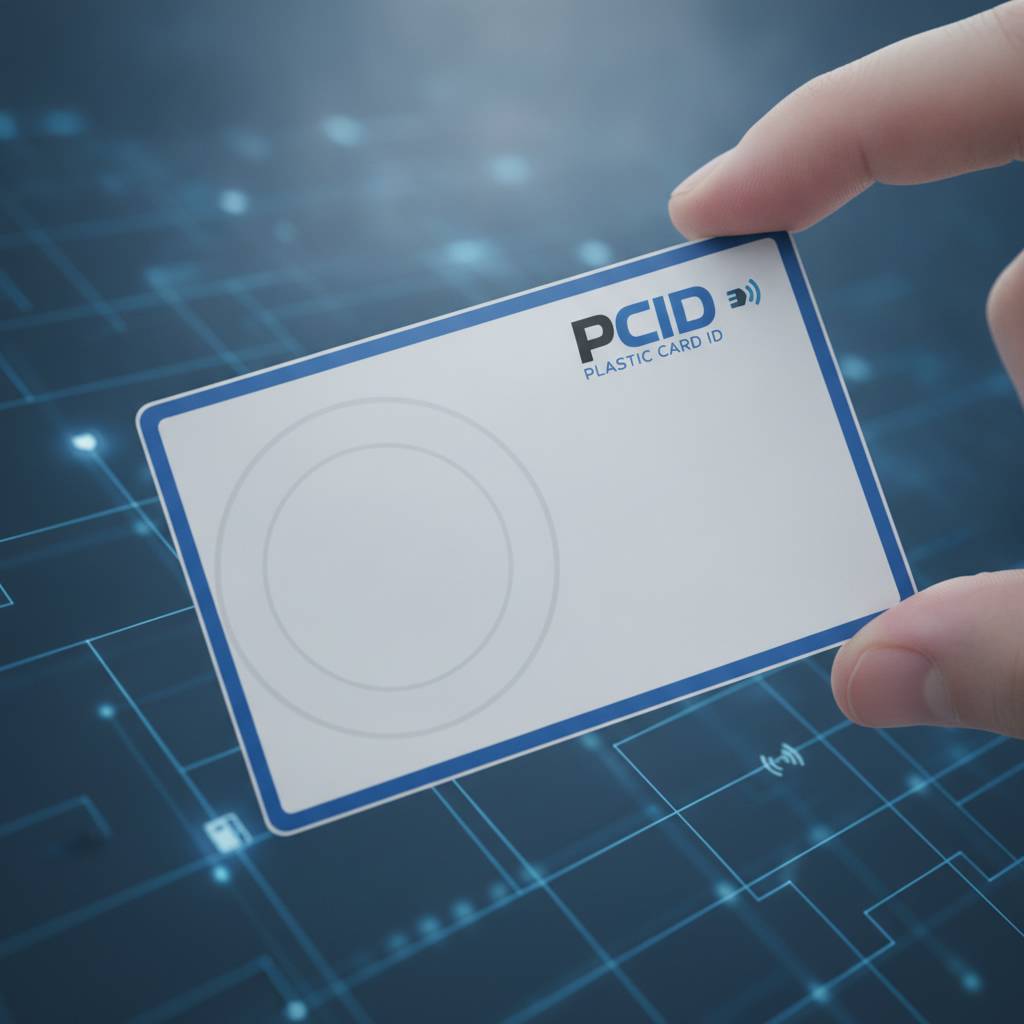 A proximity card looks like any standard CR80 plastic card - same dimensions as a credit card, same thickness. But inside that laminate shell lives a small antenna coil and a microchip working in concert to perform a wireless transaction every time you approach a reader. No battery. No button. No physical contact required. The elegance of the technology is what has made it the dominant building security credential for decades.
When a proximity card enters the electromagnetic field generated by a card reader, that field induces an electrical current in the card's antenna. That induced current powers the chip, which transmits a unique identifier back to the reader via radio frequency. The reader then compares that identifier against an access control database and either grants or denies entry. The entire process takes under a second.
Radio Frequency Identification: The Core Mechanism
RFID is the underlying technology that powers proximity cards. The two dominant frequency ranges in building security are 125 kHz (low frequency, used in traditional prox cards) and 13.56 MHz (high frequency, used in smart cards and RFID cards with advanced data storage capabilities). Each has performance tradeoffs that affect your security architecture decisions.
Low-frequency 125 kHz cards are simpler by design - they store a fixed identifier and transmit it when energized by a compatible reader. Simplicity is both their strength and their vulnerability. High-frequency 13.56 MHz cards support encryption, mutual authentication, and writable memory sectors, making them significantly more resistant to cloning and credential theft.
Wiegand Protocol and Modern Access Control Integration
Most proximity card deployments in the United States transmit card data using the Wiegand protocol - a decades-old but remarkably persistent communication standard between card readers and access control panels. A 26-bit Wiegand format encodes a facility code and a card number, giving access control systems a straightforward way to manage thousands of individual credentials.
Understanding Wiegand matters when ordering proximity cards, because the facility code and card number sequence must match your access control panel's expectations. Mismatched encoding renders cards useless, which is why working with an experienced supplier - rather than ordering from an anonymous online catalog - protects your investment and your timeline.
What Happens During an Access Event
The sequence is fast but layered. A cardholder presents their proximity card within a few inches of the reader. The reader's electromagnetic field energizes the card. The card's chip transmits its stored identifier. The reader decodes the transmission and forwards it (typically via Wiegand or OSDP protocol) to an access control panel. The panel checks the credential against its authorized user database, evaluates time-of-day rules and access level permissions, then signals the door lock to release - or holds it closed.
That multi-step verification process, executed in milliseconds, is what distinguishes an access control system from a simple lock and key. Every card transaction creates a timestamped audit log, giving security administrators the ability to reconstruct movement histories, identify anomalies, and respond to incidents with documented evidence rather than guesswork.
Proximity Card Technologies Compared: 125 kHz vs. 13.56 MHz
Choosing between 125 kHz and 13.56 MHz proximity technology is one of the most consequential decisions a security administrator makes when building or upgrading an access program. Both technologies are in active use across thousands of U.S. facilities today, but their security profiles and capability sets are quite different. Understanding those differences is non-negotiable before purchasing a single card or reader.
The short version: 125 kHz cards are simpler, cheaper, and widely compatible with legacy systems. 13.56 MHz smart cards offer encryption, anti-cloning protections, and the ability to store additional data - making them better suited for environments where security threats are more sophisticated or where the card needs to serve multiple functions simultaneously.
125 kHz Proximity Cards: The Legacy Standard
These cards have been deployed in U.S. facilities since the 1990s and remain extraordinarily common. HID-compatible 125 kHz prox cards are the default credential for a massive installed base of readers. If your facility runs HID-compatible readers, these cards slot right in without system modifications. Backward compatibility is the primary selling point for legacy prox.
The tradeoff is security depth. Standard 125 kHz cards transmit unencrypted fixed identifiers - a vulnerability that sophisticated attackers can exploit using off-the-shelf cloning equipment. For low-security environments such as gym access, time-and-attendance tracking, or internal office separations, the risk profile may be acceptable. For higher-stakes applications, upgrading makes sense.
13.56 MHz Smart Cards and MIFARE DESFire
At 13.56 MHz, smart cards enter a different tier of capability entirely. They support mutual authentication, AES-128 or AES-256 encryption, and sector-based memory that can hold cardholder data, loyalty program information, or digital credentials alongside the access control identifier. One card can serve multiple system functions, reducing the number of credentials a user needs to carry.
MIFARE DESFire, a specific smart card platform widely used in high-security environments, implements hardware-level encryption that makes cloning attacks impractical. Government contractors, hospital systems, and university campuses with sensitive research facilities are among the organizations that have standardized on DESFire-based credentials. CPE supplies these cards in quantities ranging from small replenishment orders to large-scale program deployments.
Side-by-Side Feature Comparison
- 125 kHz Proximity: Wide legacy reader compatibility, low per-card cost ($0.75-$3.00 per card in volume), fixed unencrypted identifier, fast read speeds, no data storage beyond the card ID
- 13.56 MHz RFID / Smart Card: Encrypted communication, supports multiple applications per card, writable memory sectors, stronger resistance to cloning, higher per-card cost reflecting security features
- MIFARE DESFire EV2/EV3: AES encryption, mutual authentication, application-level access controls, used in government-grade and enterprise deployments
- HID-Compatible Prox: Designed to operate with the enormous installed base of HID readers across U.S. facilities, predictable Wiegand output format
- Combo Cards: Dual-interface cards that combine 125 kHz prox with a 13.56 MHz smart chip, enabling migration from legacy to modern systems without reader replacement
Real-World Applications: Where Proximity Cards Deliver Results
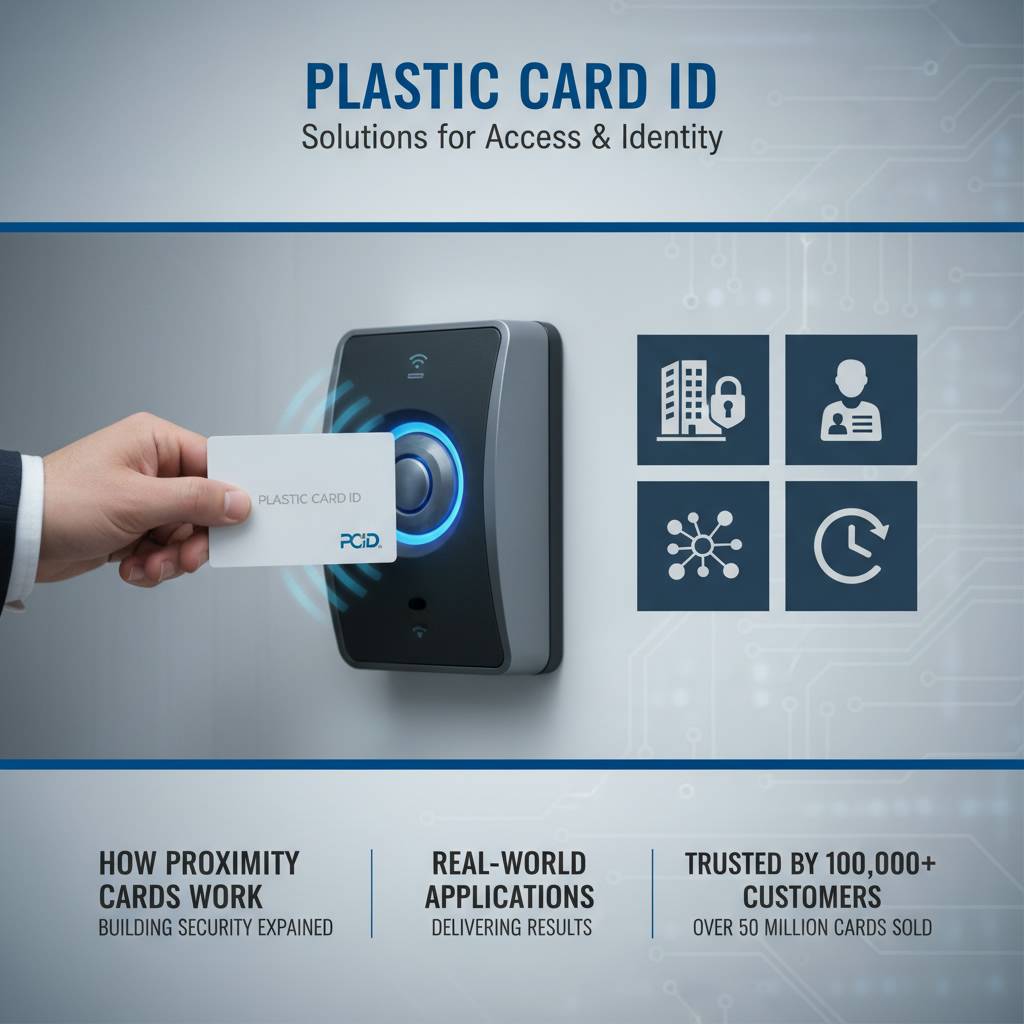 Proximity cards show up in more contexts than most people initially realize. They are the credential that unlocks the server room at 11 PM and logs the access event. They are the employee badge that grants parking garage entry and building access from a single card. They are infrastructure - quiet, reliable, and only noticed when they stop working.
The breadth of applications matters when evaluating card program design. A corporate headquarters and a healthcare facility have different security tier requirements, different reader infrastructure, and different expectations for audit log granularity. Proximity card programs are not one-size-fits-all, and CPE helps clients match technology to application rather than defaulting to whatever is cheapest.
Corporate Office and Campus Access Control
Multi-tenant office buildings and corporate campuses are among the most common proximity card deployments. A single card issued at onboarding grants access to the employee's specific floors, labs, or departments while restricting entry to areas outside their clearance. Time-based rules add another layer - a card that works during business hours but triggers an alert if presented at 3 AM creates a smart security perimeter without complex infrastructure changes.
When employees leave the organization, their credentials are deactivated in the system - no physical lock change required, no key collection to manage. The operational efficiency gains over traditional key-based systems are substantial, particularly for organizations with high staff turnover or frequent departmental reorganizations.
Healthcare Facilities and Restricted Area Access
Hospitals and medical centers manage some of the most complex access control environments in any industry. Pharmacy storage, operating theaters, pediatric units, executive offices, and server rooms each carry different access requirements - and the cardholder population includes full-time staff, part-time contractors, volunteers, and visiting clinicians whose access needs change frequently.
Proximity cards in healthcare environments often combine access control functionality with photo ID badging on a single credential. Card printers from brands like Evolis, Zebra, and Fargo - all available through CPE - produce professional photo ID cards printed directly onto proximity card blanks, creating a unified credential that satisfies both security and identification requirements simultaneously.
Hotels, Hospitality, and Temporary Access Scenarios
Hotel key cards are a specialized proximity card application most people encounter as guests without thinking about the technology involved. Contactless hotel key cards are encoded at check-in with a specific room assignment and expiration date, functioning as temporary credentials that self-expire when the guest checks out. The same infrastructure can control access to fitness centers, pool areas, conference rooms, and executive lounges with different permission tiers per card.
For hospitality operators, the guest experience benefit is tangible - contactless entry is faster, more reliable, and more consistent than mechanical key systems. For security administrators, the centralized management console provides real-time access logs and the ability to immediately deactivate a lost or stolen card without changing a single physical lock.
Selecting and Ordering Proximity Cards: Practical Buyer Tips
Buying proximity cards without the right information leads to expensive mistakes. Cards that are incompatible with your readers, encoded in the wrong format, or supplied at the wrong security tier create real operational problems. Ask these questions before placing any order, and you will save yourself from the frustration of receiving a batch of cards that cannot be used in your system.
CPE has helped over 100,000 customers navigate these decisions. The guidance below distills the most common procurement pitfalls into actionable buyer advice that applies whether you are ordering 100 cards or 10,000.
Know Your Reader Before You Order Your Cards
Reader compatibility is the single most important factor in proximity card selection. Identify your reader manufacturer and model number before ordering. Most commercial readers accept HID-compatible 125 kHz cards; some support both 125 kHz and 13.56 MHz; a smaller number are configured for specific smart card platforms like MIFARE DESFire or iCLASS. Matching the card to the reader is non-negotiable - no amount of software configuration corrects a fundamental frequency mismatch.
If you are unsure about your reader's compatibility, our team at 800.835.7919 can help you identify compatible card types based on your reader model. This consultation step costs nothing and can prevent the frustration and cost of receiving incompatible credentials.
Understanding Facility Codes and Card Numbering
In a Wiegand-based access control system, each proximity card carries two key values: a facility code (assigned to your organization or site) and a unique card number. These values must be managed carefully to avoid credential conflicts, particularly in multi-site organizations that share an access control platform. Duplicate card numbers across different facility codes can create access anomalies that are difficult to diagnose after the fact.
When ordering encoded proximity cards, specify your facility code and the card number range you need. If you are expanding an existing program, bring your current card documentation so the new batch integrates cleanly with your existing credential inventory. Good record-keeping at the card procurement stage pays dividends in access control management for years afterward.
Volume Planning and Program Scalability
Proximity card programs tend to grow. A 50-person office that starts with 60 cards in January often finds itself needing 150 cards by the following year as the team expands, contractors cycle in and out, and the card program extends to new doors and facilities. Planning for growth from the start avoids the chaos of running out of credentials during a busy onboarding period.
Consider establishing a standing replenishment order for a predictable card program, or stock a buffer of blank proximity card stock that your on-site card printer can personalize on demand. CPE supports programs of all sizes - from lean monthly orders to bulk annual purchases with staggered fulfillment schedules that match your operational rhythm.
Printing and Personalizing Proximity Cards In-House
One of the most powerful capabilities available to organizations running proximity card programs is in-house card printing. Printing your own proximity cards on demand eliminates the lead time of outsourced print orders, gives you total control over card design, and reduces per-card costs significantly over the long term - particularly for programs that issue cards frequently or in small batches.

The workflow is straightforward: start with blank proximity card stock (cards pre-loaded with the RFID chip and antenna but with plain white surfaces), run them through a desktop card printer loaded with a dye-sublimation ribbon, and produce finished, personalized credentials in under a minute per card. The result is a professional-quality photo ID badge with embedded proximity technology - a unified credential that looks legitimate because it is.
Compatible Card Printers for Proximity Card Programs
CPE carries a full lineup of card printers from Evolis, Zebra, and Fargo - three of the most trusted names in the ID card printing industry. Each brand offers models suited to different volume requirements and print quality standards, from entry-level desktop units ideal for small organizations to high-volume retransfer printers built for enterprise deployments printing thousands of cards per month.
Retransfer (reverse-transfer) printers deliver the highest print quality on proximity cards because the image is printed onto a film layer that is then laminated over the entire card surface - including the chip bump that can cause print artifacts on direct-to-card printers. For professional-grade photo ID proximity cards, retransfer printing is the gold standard.
Ribbons, Cleaning Kits, and Consumables
A card printer is only as reliable as its consumables. Dye-sublimation ribbons, laminate overlaminates, cleaning rollers, and cleaning cards are the maintenance supplies that keep a card printer producing consistent quality output month after month. Neglecting cleaning cycles is the most common cause of print head failure - an expensive repair that proper maintenance prevents entirely.
CPE supplies OEM-compatible ribbons and cleaning kits for all major card printer brands in our catalog. Bundling consumables with your card stock order ensures you always have what you need on hand when a card needs to be issued - because the worst time to run out of ribbon is when a new employee starts on Monday morning.
Partner With Plastic Card ID for Your Proximity Card Program
Building a reliable, scalable proximity card program requires more than a product catalog - it requires a partner who understands how access control card technology actually functions in the field, who can help you navigate compatibility questions, volume planning, encoding specifications, and printer selection without a steep learning curve on your end.
Plastic Card ID has spent over 25 years earning that trust with more than 100,000 U.S. customers. Our proximity card inventory spans the full spectrum of access control credential formats - from basic 125 kHz prox to high-security MIFARE DESFire smart cards - backed by expert guidance, competitive pricing, and fulfillment infrastructure designed for organizations that take their card programs seriously.
Every Program Size Matters Here
Whether you are replacing a handful of lost credentials or launching a multi-site access control rollout, CPE treats every order with the same level of attention. No program is too small to deserve expert support, and no program is too large for our fulfillment capabilities. The same team that helps a 20-person office set up their first card reader also supports enterprise clients managing tens of thousands of active credentials across multiple facilities.
Proximity card programs are long-term infrastructure investments. The decisions made at program launch - card format, encoding standards, printer platform - will shape your security program for years. Starting that journey with an experienced partner pays dividends in avoided mistakes, smoother audits, and a security credential program your organization can actually rely on.
Get Started Today
Call 800.835.7919 now to speak directly with a proximity card specialist at Plastic Card ID. We will help you identify the right card format for your reader infrastructure, plan your initial order quantity, and set your program up for seamless scalability as your organization grows.
Plastic Card ID is ready to be the proximity card partner your access control program deserves. With the inventory, expertise, and track record to back it up, there is no better starting point for a serious building security credential program anywhere in the United States. Call 800.835.7919 today and put 25 years of card program expertise to work for you.
Previous Page