How to Start an In-House ID Card Printing Program Today
Table of Contents []
- How Plastic Card ID Helps You Launch a Successful In-House ID Card Printing Program
- Choosing the Right Card Printer for Your Program
- Selecting the Right Blank Cards for Your In-House Program
- Setting Up Your Card Design and Printing Workflow
- Specialty Card Options That Elevate Your Program
- Card Accessories, Fulfillment, and Program Support
- Partner With Plastic Card ID to Build Your Card Program Right
How Plastic Card ID Helps You Launch a Successful In-House ID Card Printing Program
Somewhere between ordering custom-printed cards from an outside vendor every few months and just handing people paper badges, there is a smarter option - one that gives you control, speed, and serious cost savings. Building an in-house ID card printing program is not as complex as it sounds, and the organizations that have made the switch consistently wonder why they waited so long.
Whether you run a school district, a healthcare facility, a corporate campus, a gym, or a regional retail chain, the ability to print professional ID cards on demand is a genuine operational advantage. This guide walks you through everything - the hardware, the card stock, the encoding options, and the workflow decisions - so you can get your program off the ground with confidence.
Why In-House Printing Changes the Game
Outsourcing card printing sounds convenient until you need a replacement badge at 7 AM on a Monday. With your own setup, that card is printed in minutes. Speed and flexibility are the core advantage of keeping production in-house, and once you experience it, going back feels unthinkable.
Beyond the convenience factor, the math works in your favor. The upfront investment in a card printer and a stock of blank cards typically pays for itself within the first year for organizations printing even moderate volumes. Per-card costs drop dramatically when you eliminate vendor markups, shipping charges, and rush fees.
Who Should Consider Starting a Card Program
The honest answer? Most organizations with more than a handful of people to credential. Schools, hospitals, hotels, warehouses, fitness centers, event venues, government offices, nonprofits - the list is long. Any place where people need to be identified, granted access, or recognized as members is a candidate.
Small businesses sometimes assume in-house printing is only for large enterprises. That assumption is wrong. A boutique hotel printing 50 key cards a month has just as much to gain from controlling that process as a corporation printing 5,000 employee badges. CPE works with organizations at every scale, from modest monthly runs to mass-production volumes in the tens of thousands.
The Real Cost of Staying With Outsourced Card Vendors
Every time you need a new hire badged, a replacement card issued, or a loyalty card reprinted with updated information, you pay for someone else's time and markup. Turnaround delays create real operational friction - new employees waiting days for access credentials, customers leaving without the loyalty card that would have brought them back.
Outsourced vendors also limit your design agility. Updating a card design mid-year means re-ordering a full batch. With in-house printing, your design evolves as your organization evolves, without penalty. That freedom is genuinely valuable and often underestimated until you have it.
| Factor | In-House Printing | Outsourced Vendor |
|---|---|---|
| Turnaround Time | Minutes to hours | Days to weeks |
| Per-Card Cost (volume) | Very low | Higher with markups |
| Design Flexibility | Full control, instant updates | Batch re-orders required |
| Replacement Cards | On demand | Delayed, costly |
| Data Security | Internal control | Shared with third party |
| Initial Investment | Printer card stock | Ongoing per-order fees |
Choosing the Right Card Printer for Your Program
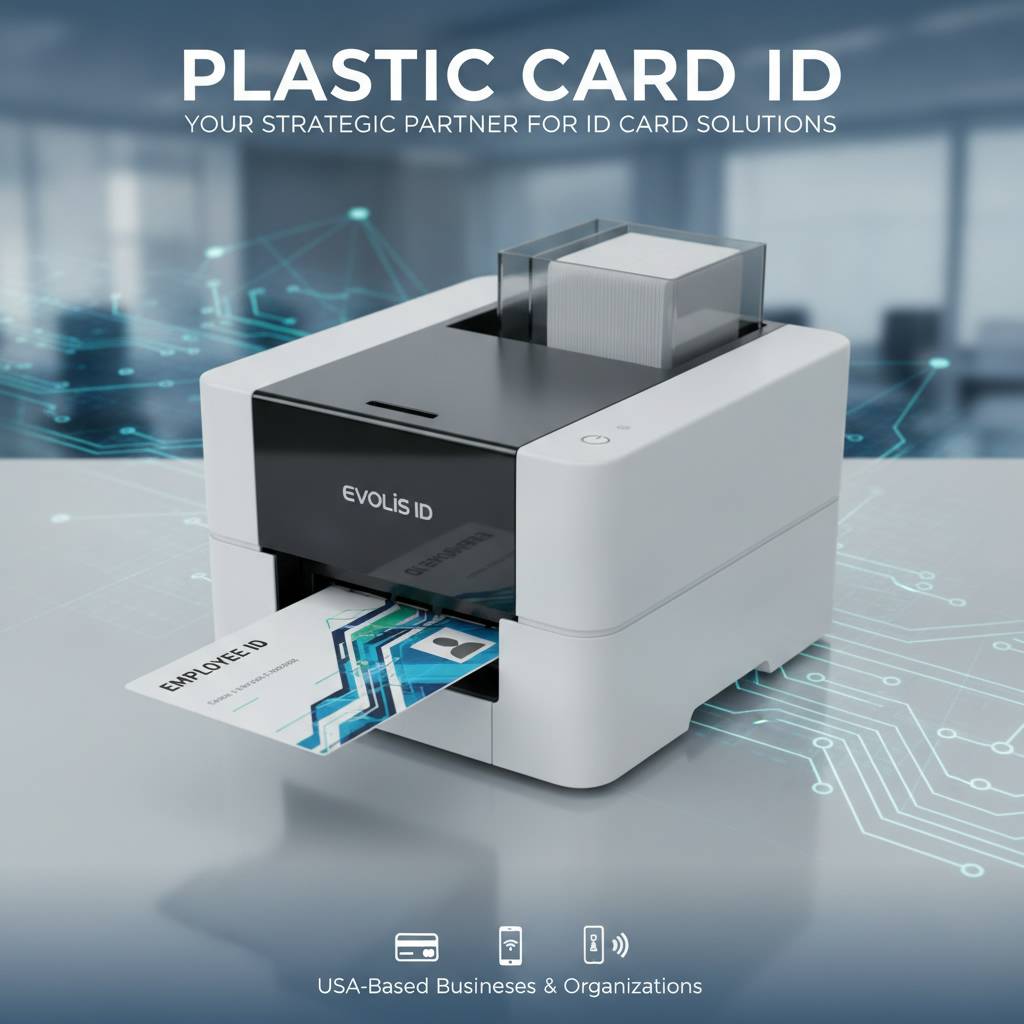 The printer you choose sets the ceiling on what your program can accomplish. Get it right, and everything downstream - card quality, encoding capability, throughput - falls into place. Get it wrong, and you are reprinting, troubleshooting, and eventually shopping for a replacement anyway.
CPE carries a curated lineup of card printers from three industry-leading brands: Evolis, Zebra, and Fargo. Each manufacturer offers models suited to different volume levels, feature requirements, and budget ranges. Understanding the distinctions helps you make an investment you will not regret.
Evolis Printers: Elegant Performance for Low to Mid-Volume Programs
Evolis printers have earned a strong reputation in the market for their compact footprint, intuitive operation, and consistently sharp output. Models like the Primacy and Badgy series are popular with schools, gyms, and small-to-medium businesses that need professional results without a complicated setup process.
Evolis printers are particularly well-suited to organizations printing under 5,000 cards annually. They handle single-sided and dual-sided printing, support magnetic stripe encoding, and integrate smoothly with most card design software platforms. If your team needs a printer that someone can learn in an afternoon, Evolis delivers that experience reliably.
Zebra Printers: Built for Demanding, High-Volume Environments
Zebra is the name that enterprise-level operations trust. Their card printers - including the ZC and ZXP series - are engineered for durability and high throughput, making them the right choice for corporations, universities, hospitals, and government agencies running continuous card issuance programs.
Zebra's ecosystem also supports a broader range of encoding options, including smart chip and RFID integration. For organizations where the card printer runs every day, the ZXP Series 7 and similar models offer the reliability and speed that justify the investment. Call 800.835.7919 to discuss which Zebra model fits your volume and encoding needs.
Fargo Printers: Security-Grade Output With Advanced Features
Fargo, now operating under the HID umbrella, brings high-security card production to in-house programs. Their HDP (High Definition Printing) technology applies color over the entire card surface before transferring the image, producing results that are genuinely difficult to counterfeit - an important consideration for government IDs, access credentials, and high-security employee badges.
Fargo printers support lamination modules, holographic overlays, and smart card encoding, making them the tool of choice when card security is non-negotiable. The HDP5000 and FARGO DTC series cover a wide spectrum of organizational needs, from mid-volume programs to the most demanding issuance environments.
How to Match Printer to Volume
A simple starting framework: organizations printing fewer than 500 cards per month can typically meet their needs with an entry-level or mid-range Evolis or Fargo DTC model. Organizations in the 500-2,000 cards per month range should evaluate mid-range Zebra or Fargo HDP options. Above 2,000 cards monthly, high-throughput Zebra or HDP units deliver the reliability and speed to keep pace.
Volume is just one variable. Encoding requirements, dual-sided printing needs, lamination, and integration with existing access control or HR systems all influence the right choice. CPE's team understands these intersections and can help you identify the printer that fits not just your current volume, but where your program is headed.
Selecting the Right Blank Cards for Your In-House Program
The printer does the work, but the card stock determines the result. Blank cards are not all identical - material composition, thickness, and any pre-applied technology (magnetic stripe, RFID chip, smart chip) all affect what you can do with them and how well the finished card performs.
Standard CR80 cards at 30 mil thickness follow the ISO 7810 standard - the same dimensions as a credit card. That is the baseline. From there, options branch out considerably, and choosing the right substrate for your application makes a meaningful difference in card longevity and functionality.
Standard Blank PVC Cards: The Reliable Workhorse
Blank white CR80 PVC cards are the foundation of virtually every in-house card program. They accept dye-sublimation and direct-to-card printing beautifully, allow full-color artwork on both sides, and hold up to the everyday handling that badges and loyalty cards endure.
Blank PVC cards offer the lowest per-unit cost of any card type, making them the right starting point for most programs. Buy in quantities of 500, 1,000, or higher to drive per-card costs down further. For organizations printing employee IDs, event credentials, membership cards, or simple access cards, blank PVC is the go-to choice.
Magnetic Stripe Cards: HiCo vs. LoCo
When your card needs to store data - a loyalty account number, an access code, a hotel room authorization - a magnetic stripe card is often the most practical solution. The stripe encodes and reads quickly, integrates with a wide range of readers, and adds minimal cost per card.
HiCo (high coercivity) stripes are more resistant to demagnetization from everyday sources like magnetic closures on bags and wallets. LoCo (low coercivity) stripes are sufficient for short-term applications like hotel key cards or event passes where longevity is less critical. Choosing the right stripe matters - HiCo for long-life cards, LoCo where cost efficiency on short-lived cards is the priority.
RFID, Proximity, and Smart Chip Cards
Contactless technology is not a luxury anymore - it is increasingly standard in access control and loyalty applications. Proximity cards (125 kHz) are the workhorses of most legacy access control systems. RFID smart cards operating at 13.56 MHz, including MIFARE DESFire variants, offer higher security and greater data capacity for modern deployments.
Smart chip cards with embedded integrated circuits support complex data storage and encryption, making them appropriate for multi-function credentials, healthcare ID programs, and casino player cards. CPE stocks the full spectrum of contactless card technology, so your program can integrate seamlessly with your existing infrastructure or the new systems you are planning.
| Card Type | Best Applications | Key Benefit |
|---|---|---|
| Blank PVC CR80 | Employee ID, loyalty, membership | Lowest cost, full print quality |
| HiCo Magnetic Stripe | Long-life loyalty, access credentials | Demagnetization resistance |
| LoCo Magnetic Stripe | Hotel keys, short-term event passes | Cost efficiency |
| Proximity (125 kHz) | Legacy access control systems | Broad reader compatibility |
| RFID Smart Card (13.56 MHz) | Modern access, multi-function ID | High security, greater data capacity |
| Clear / Frosted PVC | VIP cards, premium membership | Distinctive, premium appearance |
Setting Up Your Card Design and Printing Workflow
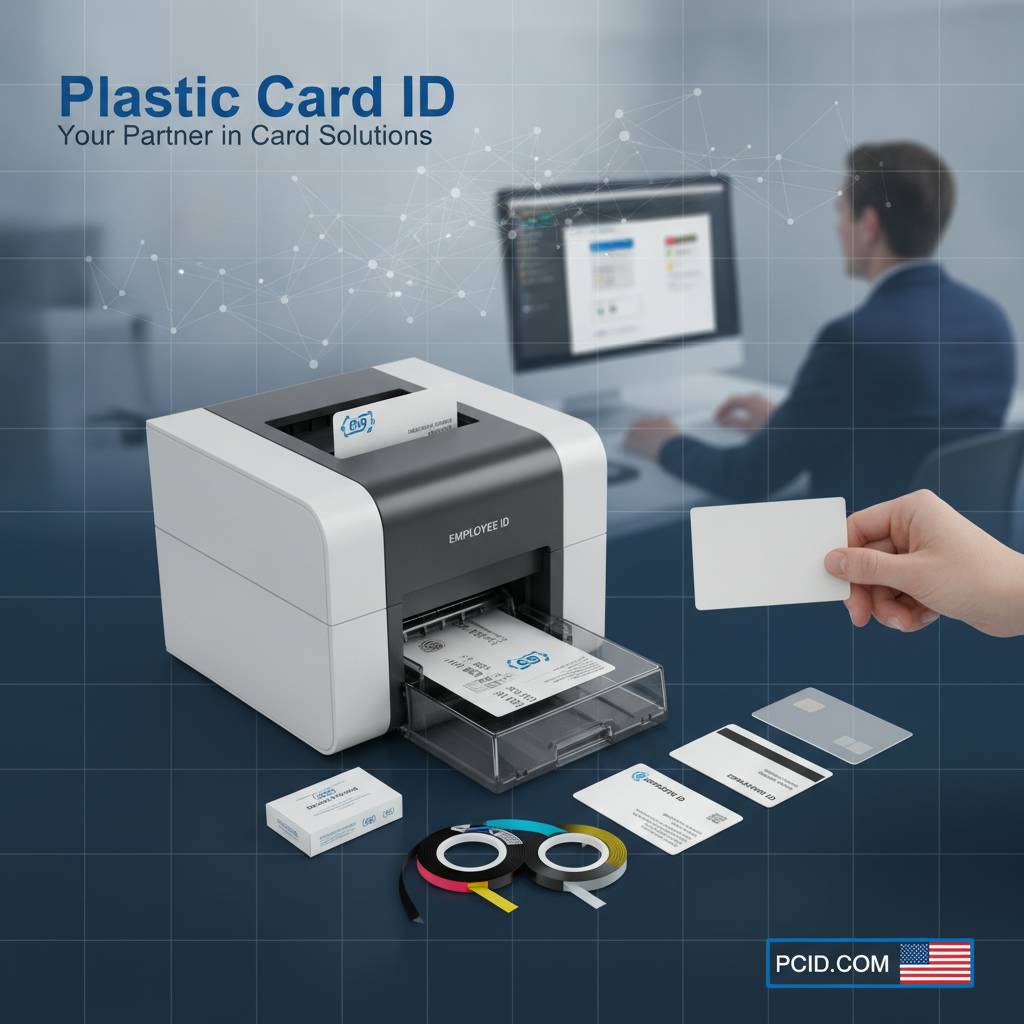 Hardware and card stock are the foundation, but your workflow - how data flows from your systems into finished cards - determines whether your program operates smoothly day after day or becomes a source of frustration. A well-designed workflow eliminates bottlenecks and makes card issuance something your team handles effortlessly rather than dreads.
Most organizations start simpler than they expect to. A card design software package, a database of cardholders, and a printer driver that supports encoding are usually all you need for a fully functional program. Complexity can be added as your needs grow - it does not have to be present from day one.
Card Design Software: What You Need to Know
Card design software ranges from basic layout tools bundled with entry-level printers to enterprise-grade platforms that integrate with HR databases, Active Directory, or custom cardholder management systems. Evolis, Zebra, and Fargo all offer their own software options, and third-party tools like Matica ID or CardPresso provide additional flexibility.
At minimum, your software should support variable data printing - the ability to pull a name, photo, and card number from a database and print each card uniquely in a single batch run. Variable data printing is what transforms a design template into hundreds of personalized credentials without manual data entry for each card.
Photography and Data Capture for ID Programs
If your program includes photo ID cards - employee badges, student IDs, membership cards with photos - you need a reliable data and photo capture process. A simple webcam or digital camera integrated with your card software is often sufficient for small programs. Larger deployments may warrant a dedicated capture station with controlled lighting for consistent results.
Keep the process as streamlined as possible for your staff. The fewer steps required to issue a card, the more consistently the program runs. Consider templates that auto-populate fields from your existing HR or membership database, reducing manual entry errors and speeding up each issuance session.
Printer Ribbons and Consumables: Keeping Your Program Running
A card program that runs out of ribbon mid-batch is a frustrated program. Stocking an appropriate ribbon inventory is a simple operational practice that prevents unnecessary delays. Full-color YMCK ribbons handle most standard ID card printing. KO (black resin) ribbons are ideal for single-color text-only applications at a lower cost per card. Holographic and overlay ribbons add protection and security features when needed.
Cleaning kits are equally important - a clean printer produces consistent print quality and extends the life of the printhead, which is the most expensive component in your machine. Scheduling regular cleaning cycles according to the manufacturer's recommendation is a low-effort habit that pays long-term dividends. 800.835.7919 can help you set up a recurring consumables supply so you never face an unexpected stock-out.
Specialty Card Options That Elevate Your Program
Standard white PVC handles most applications well. But some programs call for something that signals premium quality, serves a specific technical function, or simply stands out in a wallet. The range of specialty card options available through CPE gives you real choices when your program demands something beyond the standard.
From clear and frosted cards to luxury metal formats, specialty stock is not just about aesthetics - it is about communicating value and permanence to the people who carry your cards. The physical quality of a card shapes the perception of the organization that issued it. That connection is worth taking seriously.
Clear and Frosted Plastic Cards
Transparent and frosted PVC cards create a visual impact that white stock simply cannot match. A clear loyalty card with opaque printed elements has a high-end feel that encourages cardholders to keep it and show it. Frosted cards soften the look while still standing apart from standard white - popular with spas, boutique fitness studios, and upscale retail programs.
Both clear and frosted formats are fully compatible with standard card printers, though print opacity and color rendering differ from white stock and may require design adjustments. CPE can advise on the right approach for your specific design goals and printer model.
Casino Player Cards and Hotel Key Cards
Casino player cards are a specialized application where card durability, encoding precision, and physical appearance all matter at a high level. Players handle these cards constantly, and the card is a tangible extension of the casino's brand identity. Getting casino card specifications right demands a supplier who understands the application - not just someone selling generic PVC stock.
Hotel key cards present their own requirements - most properties use LoCo magnetic stripe cards with encodings written fresh at check-in. The cards need to be reliable through thousands of encode-and-erase cycles and hold up to the conditions of daily hospitality use. CPE supplies both categories with the quality and consistency that demanding programs require.
Luxury Metal Cards: Stainless Steel, Brass, and Gold
Metal cards occupy a category of their own. A stainless steel membership card or a brushed gold VIP credential communicates exclusivity in a way that no plastic card can replicate. The weight alone signals that the issuing organization values its relationship with the cardholder enough to invest in something exceptional.
Metal card options available through CPE include stainless steel, brass, and gold formats, with custom laser engraving and specialty finishes. These are appropriate for premium loyalty tiers, executive membership programs, VIP club credentials, and corporate gifting contexts where the card itself is part of the value proposition.
Card Accessories, Fulfillment, and Program Support
A complete card program does not end when the card comes out of the printer. Getting cards into the right hands - protected, professional, and on time - is part of the value you deliver to cardholders. The accessories and fulfillment services available from CPE close the loop on every stage of the card lifecycle.
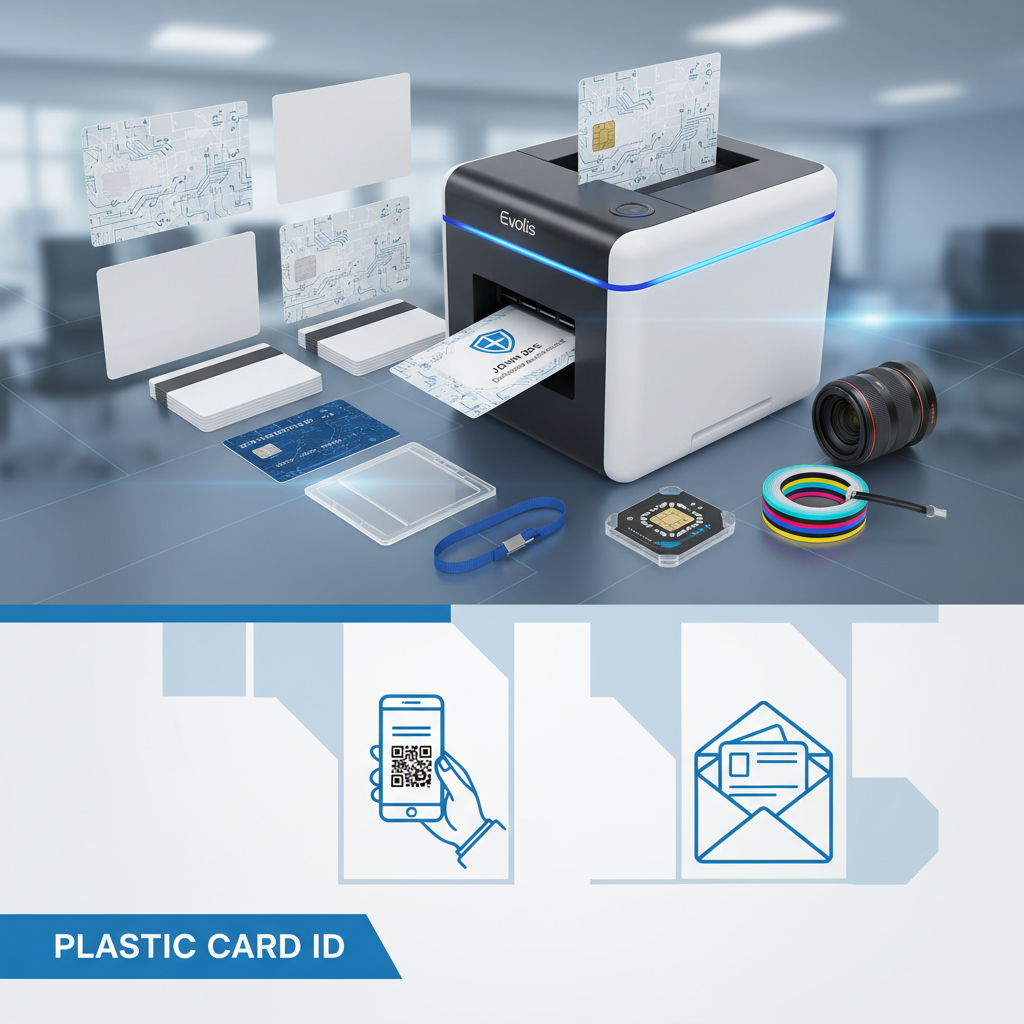
Card carriers, sleeves, lanyards, badge holders, and clip hardware protect cards and make them easier to use in the field. For programs that mail cards to customers or members, card affixing and mailing services eliminate the need to build that capability internally. A true one-stop-shop model means you can source everything your program needs from a single trusted supplier - fewer vendors, simpler logistics, better accountability.
Card Carriers and Protective Sleeves
Card carriers are the folded paper or cardstock inserts used to present a card when mailing it to a recipient. They provide context, instructions, and branding in a professional package. Protective sleeves - clear vinyl or polypropylene pockets - prevent scratches and demagnetization during transit and storage.
These are small investments that reflect meaningfully on your organization. A loyalty card that arrives in a professional carrier with clear activation instructions creates a far better first impression than a bare card stuffed into an envelope. The entire receiving experience shapes the cardholder's first impression of your program.
Card Affixing and Mailing Services
For programs that distribute cards by mail - whether to new members, new employees at remote locations, or loyalty customers - affixing and mailing services handle the production side so your team does not have to. Cards are affixed to carriers, addressed, and sent through USPS or your preferred carrier without you managing the process internally.
Outsourcing the fulfillment step while keeping card production in-house is a practical hybrid approach many organizations use effectively. You control design and printing; CPE handles the distribution logistics. Call 800.835.7919 to learn how affixing and mailing services can simplify your distribution process.
Frequently Asked Questions About Starting a Card Program
- How many cards do I need to print monthly to justify an in-house printer? Even 50 cards per month makes in-house printing cost-competitive over a 12-month horizon when you factor in per-card vendor costs and shipping fees.
- What is the typical cost range for a card printer? Entry-level models start around $300-$500. Mid-range professional printers typically run $800-$2,500. High-volume or dual-sided security printers with lamination run $3,000-$8,000 or higher.
- Can I print RFID cards in-house? Yes, with the right printer model. Printers with integrated smart card encoding modules can encode RFID and smart chip cards at the time of printing.
- Do I need special software? Basic programs can run with software bundled with most printers. Variable data printing at scale benefits from dedicated card management software, which CPE can help you select.
- What card thickness should I use? Standard CR80 at 30 mil matches the ISO 7810 standard and is compatible with all major card printer brands. Some specialty applications use 20 mil or 10 mil cards - check your printer specifications before ordering.
- Can I order blank cards in small quantities? Yes. CPE supplies cards in quantities appropriate for small programs as well as large-scale orders. You do not need to commit to bulk quantities before your program is established.
Partner With Plastic Card ID to Build Your Card Program Right
Twenty-five years and more than 50 million cards issued across the United States represents a body of knowledge that is genuinely difficult to replicate. CPE has worked with organizations at every scale - from a single-location gym issuing 50 member cards a month to enterprise operations printing tens of thousands of credentials - and that breadth of experience informs every recommendation the team makes.
The right card program does not happen by accident. It happens when you combine the right hardware, the right card stock, the right workflow, and the right supplier relationship. That combination is exactly what Plastic Card ID is built to provide - not as a one-time transaction, but as an ongoing strategic partnership that grows with your program over time.
Ready to launch your in-house ID card printing program? Contact Plastic Card ID today at 800.835.7919 and speak with a card program specialist who can help you choose the right printer, card stock, and accessories for exactly what you need.
Previous Page