Blank Plastic Cards for Time and Attendance Systems
Table of Contents []
- Blank Plastic Cards for Time and Attendance Systems - Plastic Card ID
- Why the Card You Choose Matters More Than You Think
- Building Your Time and Attendance Card Program from Scratch
- Smart Cards and RFID for Advanced Time and Attendance Needs
- Buyer's Guide - What to Order and How Much
- Frequently Asked Questions About Blank Cards for Time and Attendance
- Partner with Plastic Card ID for Your Time and Attendance Card Supply
Blank Plastic Cards for Time and Attendance Systems - Plastic Card ID
Time slips, paper punch cards, manual sign-in sheets - they all have one thing in common: they fail at exactly the wrong moment. A blank plastic card encoded for your time and attendance system does not crumple, smear, or get "lost" on a Monday morning. It works. Every swipe, every scan, every punch - reliable, repeatable, traceable. That reliability is what Plastic Card ID has been delivering to businesses across the United States for over 25 years.
Whether you manage a single facility with 30 employees or oversee multi-site operations tracking thousands of workers daily, the foundation of an effective time and attendance system starts with the card itself. The right card stock, the right encoding, the right thickness - these details are not trivial. They determine whether your system runs smoothly for years or frustrates your staff and your HR department every single week.
| Card Type | Common Use | Encoding Option |
|---|---|---|
| Blank CR80 PVC Cards | Employee ID and badge printing | None / Print-only |
| HiCo Magnetic Stripe Cards | Time clocks, access readers | High-coercivity magnetic stripe |
| LoCo Magnetic Stripe Cards | Short-term or indoor use systems | Low-coercivity magnetic stripe |
| Proximity Cards (Prox) | Contactless time and attendance | 125kHz RFID |
| MIFARE Smart Cards | Advanced multi-application systems | 13.56MHz contactless chip |
Why the Card You Choose Matters More Than You Think
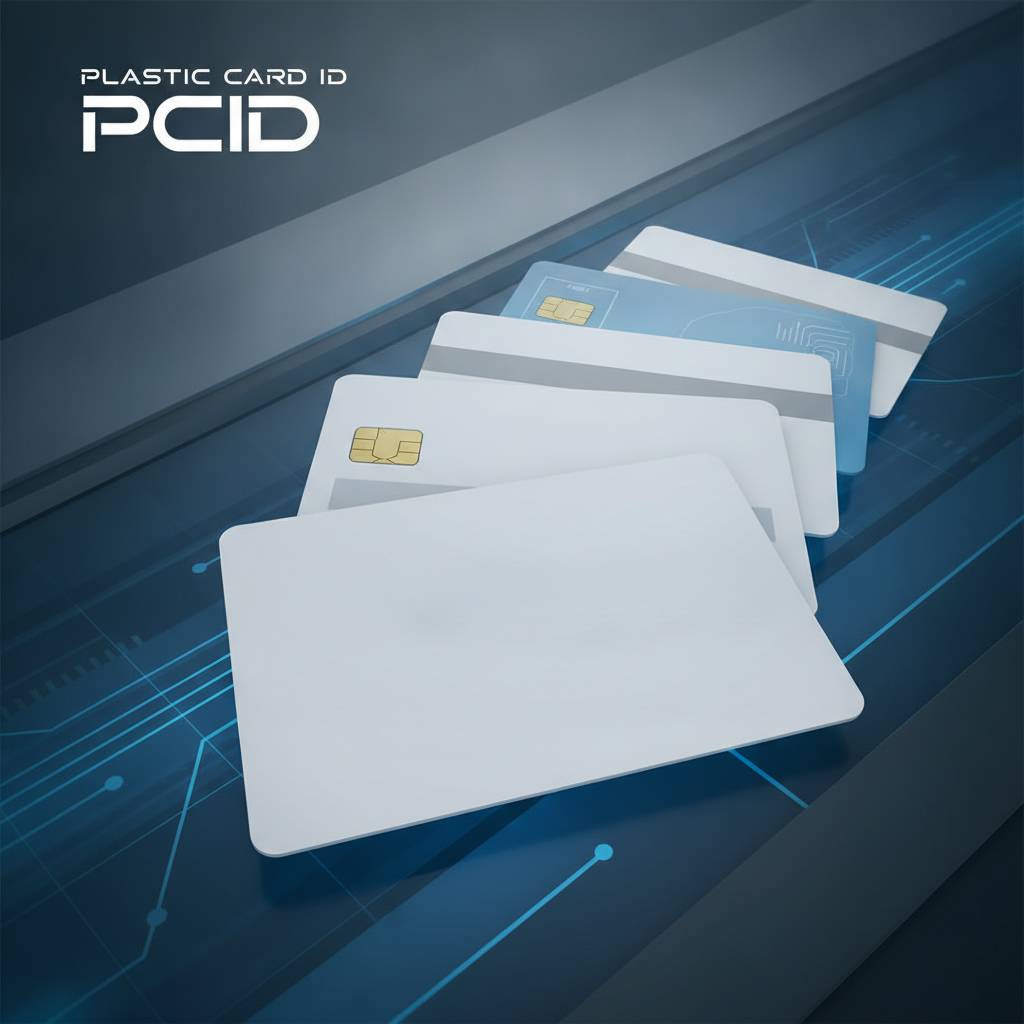 Most purchasing decisions about time and attendance cards get made in five minutes - someone searches online, sees the lowest price, and clicks buy. What that approach misses is the compatibility question: does this card actually work with your reader? Does the magnetic stripe coercivity match your clock terminals? Is the RFID frequency right for your proximity readers? These are the questions that separate a smooth deployment from a support nightmare.
Getting the specification right the first time saves real money. Returns, re-orders, system downtime, frustrated employees swiping cards that don't register - these have costs that dwarf the per-card price difference between options. CPE exists precisely to help businesses avoid those pitfalls, providing expert guidance alongside the cards themselves.
The CR80 Standard and Why It Dominates
CR80 is the ISO 7810 standard card size - the same dimensions as a credit card, 3.375 x 2.125 inches at 30 mil thickness. It is the universal standard because every card printer, every badge holder, every card reader, and every wallet slot is engineered around it. When you stock CR80 blank cards, everything downstream just works.
For time and attendance programs specifically, the 30 mil CR80 card threads through magnetic stripe readers, sits cleanly in proximity readers, and survives the daily handling that comes with shift workers swiping in and out multiple times a day. Thinner cards flex and degrade faster. Durability is not a luxury - it is a performance specification.
HiCo vs. LoCo Magnetic Stripe - Picking the Right One
High-coercivity (HiCo) magnetic stripes are encoded at 2750 Oersteds - they resist magnetic interference and hold their data reliably even when cards are kept near phones, keys, or other common sources of magnetic fields. For time and attendance systems, HiCo is almost always the right choice. Your employees carry these cards everywhere.
Low-coercivity (LoCo) stripes, encoded at 300 Oersteds, are more economical and work well in controlled environments where cards aren't exposed to everyday magnetic interference. If your system is entirely internal and cards rarely leave the facility, LoCo can be a cost-effective option. When in doubt, choose HiCo. The small price difference is worth the long-term reliability.
Proximity Cards for Contactless Time Tracking
Proximity cards - often called "prox cards" - operate at 125kHz and allow employees to clock in with a simple card tap or even a wave near the reader. No swipe, no insertion, no physical contact. For high-traffic entry points with dozens of employees clocking in at shift changes, this speed and convenience is meaningful. Lines disappear. Bottlenecks clear.
These cards are also substantially more durable in terms of the card reader interaction itself - because there is no physical friction between card and reader, wear patterns that eventually degrade magnetic stripe cards simply do not occur. For organizations running 24/7 operations or high-turnover environments, proximity cards often pay for themselves in reduced card replacement frequency alone.
Building Your Time and Attendance Card Program from Scratch
Starting a card-based time and attendance program is a project with several moving parts, but none of them are complicated if you approach them in order. The first decision is hardware: what time clock or reader system are you using, or planning to use? The card specification must match the reader technology. Everything else follows from that.
Once you know your reader technology, the card order is straightforward. Blank cards give you maximum flexibility - you print employee information, photos, and any branding in-house on demand, which means new hires get badged on day one rather than waiting for an outside print run. Organizations printing their own cards almost always report faster onboarding and better security, since there are no delays waiting on an outside vendor.
Choosing the Right Card Printer for Your Volume
Plastic Card ID carries a full lineup of card printers from Evolis, Zebra, and Fargo - three of the most trusted names in the industry. Evolis printers are often favored for small-to-midsize programs with excellent print quality and intuitive operation. Zebra printers are workhorses built for high-volume environments. Fargo printers are popular in organizations requiring high-security encoding alongside printing.
Printer selection should be based on three factors: daily print volume, card encoding needs, and budget. A small company printing 10-20 cards a month has very different needs from a manufacturing facility onboarding 200 employees a quarter. Matching the printer to your real-world workload prevents both under- and over-investment. CPE can help you identify the right fit.
Ribbon and Supply Planning
A blank card program only runs smoothly when your supplies don't run out unexpectedly. Printer ribbons, cleaning kits, and card stock all need to be in inventory. The per-card cost of printing in-house drops significantly when you buy supplies in appropriate quantities - and Plastic Card ID makes it easy to stock everything from one source rather than juggling multiple vendors.
Cleaning kits deserve more attention than they usually get. A dirty printer produces cards with streaks, voids, and poor encoding reliability. A routine cleaning schedule - documented and assigned to a specific staff member - keeps your card program running without surprises. Preventive maintenance on your printer is the single best way to protect your card program investment.
Card Carriers, Sleeves, and Distribution
Once printed, employee time and attendance cards need to get to employees cleanly and professionally. Card carriers and sleeves protect freshly printed cards during distribution and storage, preventing scratches that can interfere with magnetic stripe reads or just make your program look sloppy. First impressions of a card program matter - especially when you want employees to treat their cards with care.
For programs distributing cards by mail - remote workers, multi-location employees, or new hires receiving credentials before their first day - Plastic Card ID offers card affixing and mailing services that take the logistics burden off your team entirely. Everything from card to mailbox, handled.
Smart Cards and RFID for Advanced Time and Attendance Needs
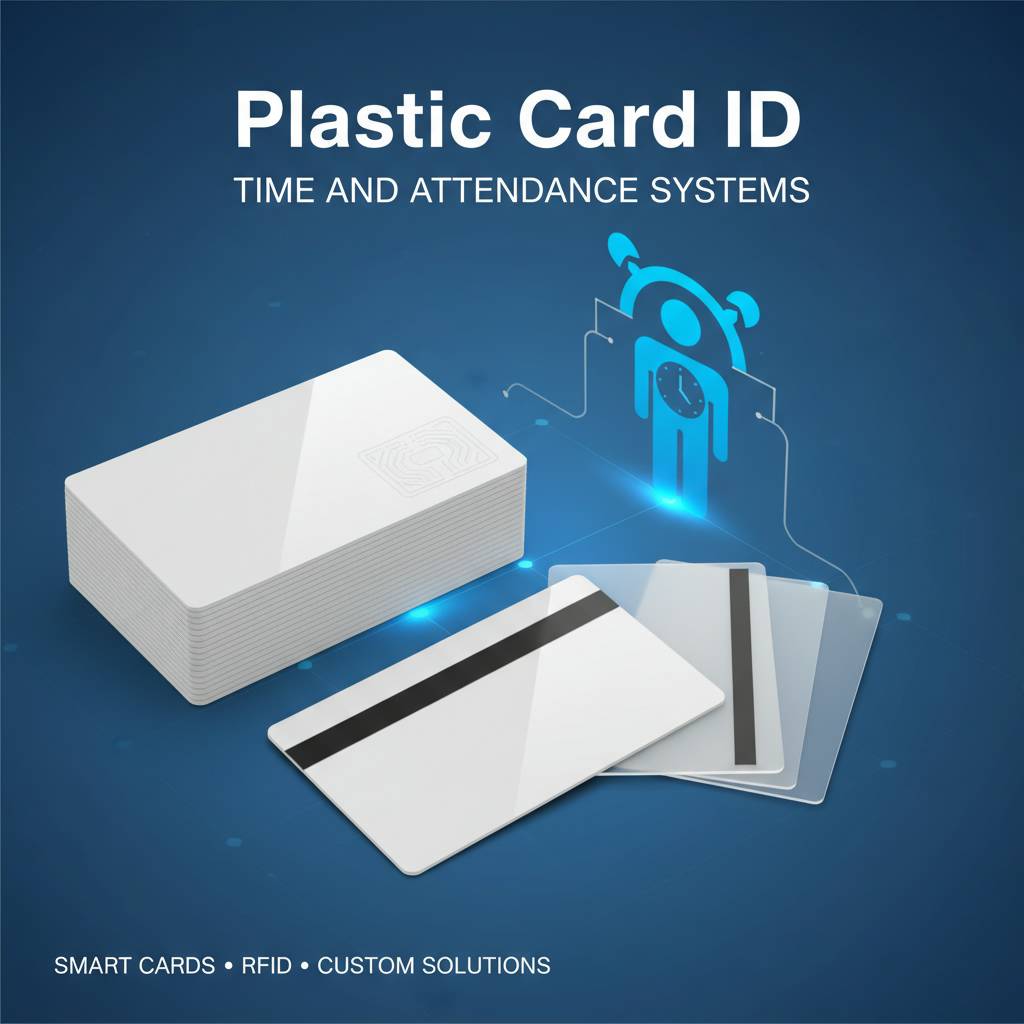 Some organizations need more from their time and attendance cards than a simple clock-in record. Access control integration, multi-factor authentication, cafeteria payments, parking management - when a single card needs to do several jobs, smart card technology is the answer. MIFARE DESFire cards operating at 13.56MHz are increasingly the preferred choice for enterprise environments that demand both security and flexibility.
The advantage of a smart chip card is its onboard memory and cryptographic capability. Unlike a magnetic stripe that simply stores a static number, a smart card can carry encrypted credentials, update records dynamically, and support multiple independent applications. One card can manage time tracking, door access, and meal credits simultaneously - dramatically simplifying your employee credential ecosystem.
MIFARE DESFire for High-Security Applications
MIFARE DESFire is not just a contactless card - it is a platform. Its segmented memory architecture allows different applications to share the same card without accessing each other's data. This matters enormously for organizations where time and attendance data should not be accessible to the cafeteria payment system, or where HR data needs to remain isolated from physical access logs.
DESFire cards also support AES encryption, making them resistant to the cloning attacks that have compromised older proximity card formats. If your organization has experienced card cloning or buddy-punching issues with older systems, upgrading to DESFire-based smart cards is among the most effective countermeasures available. Security and convenience do not have to trade off against each other here.
Proximity Cards and Legacy System Compatibility
Many facilities run time and attendance systems installed years ago that use the older 125kHz proximity card format - HID, EM4100, or similar. These systems still work, and replacing functional hardware purely to upgrade card technology is often difficult to justify. The good news: blank 125kHz proximity cards are widely available, cost-effective, and continue to function perfectly with existing readers.
Plastic Card ID stocks proximity cards compatible with the most common reader formats in use across U.S. facilities. You don't need to rip and replace to modernize your card supply - you just need the right cards in the right format, ordered in quantities that match your actual program scale.
Combining Time and Attendance with Access Control
Call 800.835.7919 to discuss multi-technology card options that serve both your time tracking and your door access systems simultaneously.
The combination of time and attendance with physical access control on a single card is increasingly common - and practical. Employees carry one card that logs their arrival, grants access to secured areas, and identifies them on site. Fewer cards means less confusion, less loss, and better compliance with badging policies. When your card program doubles as your access control credential, employees are far more motivated to keep track of it.
Buyer's Guide - What to Order and How Much
Ordering blank plastic cards for the first time involves a few simple decisions that dramatically affect your cost-per-card and your operational flexibility. Getting these right from the start means you won't be re-ordering prematurely or overstocking cards that sit in a drawer for three years. Here's how experienced program managers think about it.
- Know your annual volume: Count active employees plus projected new hires plus expected replacements. Double that number if cards are used hard in physical environments.
- Match card type to reader: Confirm with your time clock vendor whether you need magnetic stripe (HiCo or LoCo), proximity (125kHz), or contactless smart card (13.56MHz) before placing any order.
- Buy in quantity brackets: Per-card costs drop meaningfully at common quantity breaks - 500, 1000, 2500, 5000. Calculate your 12-month need and buy accordingly.
- Keep a buffer stock: Running out of cards on a Monday when you have new hires starting is a real operational problem. A 10-15% buffer on hand is good practice.
- Don't over-spec the card: If your system uses basic magnetic stripe readers, you don't need MIFARE smart cards. Align specification to actual system requirements.
Pricing Expectations for Blank Time and Attendance Cards
Blank PVC CR80 cards without any encoding are the most economical option, with pricing scaling favorably at higher quantities. Basic magnetic stripe cards - either HiCo or LoCo - carry a modest premium reflecting the added layer. Proximity and smart card options are priced higher, reflecting their embedded technology, but still represent excellent value when measured against the full cost of the systems they support.
For most small-to-midsize time and attendance programs, the annual card supply budget is a very manageable line item - often $75-$200 for a 500-card supply of magnetic stripe blanks, scaling to larger investments for smart card or proximity formats. The card is never the expensive part of a time and attendance system. Hardware and software dwarf card costs. Don't compromise on the right card to save a few cents per unit.
Minimum Orders and Scalability
CPE serves programs as small as 50 cards a month and scales to mass production orders in the tens of thousands. There is no program too small to be taken seriously here. A 25-person manufacturing company deserves the same card quality and specification guidance as a multi-site enterprise. That philosophy has driven over 50 million cards sold across more than 100,000 U.S. customers.
Scalability matters in the other direction too. If your organization grows, your card program needs to grow with it cleanly - same card format, same supplier relationship, increasing quantities without having to renegotiate or re-evaluate from scratch. Building a long-term supplier relationship from day one is the smartest procurement decision you can make for your card program.
Frequently Asked Questions About Blank Cards for Time and Attendance
Organizations setting up or scaling time and attendance card programs tend to run into the same questions. The answers below reflect the most common points of confusion - and getting clarity on these issues up front saves significant time and avoids costly mistakes down the road.
Can I Print on Magnetic Stripe or Proximity Cards?
Yes - and this is one of the most important advantages of buying blank cards. Magnetic stripe cards and proximity cards can both be printed on the face with any design, employee photo, name, title, or barcode your program requires. The encoding (magnetic stripe data or RFID chip content) is entirely separate from the printed surface. Your card printer handles the visual print; a separate encoder or your time clock system handles the data.
Some card printers include integrated encoders that write magnetic stripe data at the same time as printing - a significant workflow efficiency if you're producing personalized, encoded cards in-house. Check whether your printer includes encoding capability if simultaneous print-and-encode is important to your program.
What Happens When an Employee Loses Their Card?
This is exactly where in-house card printing earns its value. When an employee loses a card, you print a new one immediately - no waiting on an outside vendor, no gap in their ability to clock in or access secured areas. Your card stock is on the shelf, your printer is ready, and the replacement takes minutes. Same-day card replacement is a genuine operational advantage that organizations switching from outsourced card programs consistently cite as a top benefit.
Lost card replacement also has a security dimension. When you control card production in-house, you can deactivate the lost card in your system and issue a new one with a new credential number - closing the security window that exists while an unaccounted card is outstanding. This is particularly important in access-controlled environments where a found card represents a real intrusion risk.
Are Blank Cards Compatible with All Time Clock Brands?
The compatibility question comes down to technology format, not brand. A 125kHz proximity card works with any reader designed for 125kHz proximity - regardless of whether the time clock is manufactured by Kronos, ADP, Paychex, or any other major brand. Similarly, HiCo magnetic stripe cards work with any magnetic stripe reader configured to read standard tracks.
Where brand compatibility becomes relevant is in RFID card formats - specifically the Facility Code and Card Number encoding structure used by certain access control systems. If your time clock uses a proprietary card format or requires specific encoding parameters, that information needs to be confirmed before ordering. When uncertain, contact CPE with your reader make and model - the team can confirm compatibility before you commit to an order.
Partner with Plastic Card ID for Your Time and Attendance Card Supply
Twenty-five years of supplying blank and custom plastic cards across the United States has given Plastic Card ID a perspective on what actually makes card programs succeed - and what causes them to stumble. It is almost never the technology. It is the supply chain: cards arriving on time, in the right specification, at pricing that makes program management predictable and affordable. That is what CPE delivers, order after order, for programs of every scale.
From the first 500-card order for a growing small business to ongoing mass production supply for enterprise operations, the relationship model is the same: understand your program, match the right product to your real requirements, and make reordering simple. A card program that never runs out of cards, never receives the wrong specification, and never has to scramble for a different vendor is a program that just works.
One Source for Cards, Printers, and Supplies
The operational advantage of sourcing everything from one supplier is underestimated until you've experienced the alternative - juggling separate vendors for cards, ribbons, printers, and accessories, each with different lead times, minimum orders, and customer service contacts. Plastic Card ID covers every element of your card program: blank cards in every format, card printers from Evolis, Zebra, and Fargo, printer ribbons, cleaning kits, card sleeves, carriers, and mailing services.
When something needs troubleshooting - a ribbon compatibility question, a card specification confirmation, a printer maintenance issue - there is one call to make. Simplicity in your supply chain is a form of operational excellence that pays dividends every month your program runs smoothly without interruption.
Getting Started is Simple
Starting a new time and attendance card program or switching your existing card supply to Plastic Card ID is genuinely straightforward. Know your reader technology, estimate your annual card volume, and reach out. The rest is a conversation - one that results in the right card, the right quantity, and the right price for your specific program.
The best time and attendance programs are built on reliable cards, reliable supply chains, and a supplier who treats your program as a long-term partnership rather than a one-time transaction. That is the CPE model, and it has worked for more than 100,000 U.S. businesses and organizations over the past 25 years.
Ready to Order or Need Expert Guidance?
Reach the team directly at 800.835.7919 - whether you have a specific card specification in mind, need help confirming compatibility with your time clock hardware, or are building a card program from the ground up, the conversation starts here.
Don't let the wrong card specification cost your organization time, money, and operational headaches. Get it right the first time with a supplier who has been doing exactly this - supplying the right blank plastic cards to the right programs, at the right price - for over two and a half decades.
Contact Plastic Card ID today at 800.835.7919 and put 25 years of card program expertise to work for your time and attendance system.
Previous Page