Blank Plastic Cards for Loyalty Programs: Reward Your Customers
Table of Contents []
- Why Plastic Card ID Is the Smart Choice for Blank Plastic Cards for Loyalty Programs
- The Real Science Behind Loyalty Card Programs That Work
- Choosing the Right Blank Card Specifications for Your Loyalty Program
- Card Printers That Power Your Loyalty Program In-House
- Frequently Asked Questions About Blank Plastic Loyalty Cards
- Building Long-Term Loyalty Program Success With Plastic Card ID
Why Plastic Card ID Is the Smart Choice for Blank Plastic Cards for Loyalty Programs
Loyalty programs live or die by one deceptively simple factor: whether customers actually carry the card. A paper punch card gets lost in a junk drawer, soaked in a rain shower, or crumpled beyond recognition within weeks. A rigid, professional plastic card? That earns a permanent slot in a wallet - and every time it's spotted, it quietly nudges the cardholder back toward your business. The physics of customer retention are not complicated; the execution is where most businesses stumble.
Plastic Card ID has spent over 25 years solving exactly that problem for businesses across the United States. With more than 100,000 customers served and over 50 million cards delivered, CPE is not a vendor you call once and forget. It's a strategic partner that helps organizations build card programs that actually work - from boutique coffee shops running 50 cards a month to national retail chains ordering tens of thousands at a clip. The catalog is deep, the expertise is real, and the results speak loudly.
This page exists to walk you through everything you need to know about blank plastic cards for loyalty programs - what they are, why they outperform alternatives, how to choose the right spec, and what CPE brings to the table that nobody else quite matches. If you're building a loyalty program from scratch or scaling an existing one, you're in exactly the right place.
| Card Type | Key Feature | Best For | Encoding Option |
|---|---|---|---|
| Blank PVC CR80 | Standard 30 mil thickness | General loyalty programs | Print-ready, no encoding |
| Magnetic Stripe (LoCo) | Low-coercivity stripe | Loyalty point tracking | Swipe-based POS systems |
| Magnetic Stripe (HiCo) | High-coercivity, durable | Heavy-use environments | Swipe-based POS systems |
| RFID / Proximity | Contactless technology | Access loyalty combos | Contactless readers |
| Clear / Frosted PVC | Distinctive visual style | Premium brand positioning | Print-ready or encoded |
| Colored PVC Stock | Pre-colored base | Brand color matching | Print-ready, no encoding |
The Real Science Behind Loyalty Card Programs That Work
 There's a well-documented psychological phenomenon at play when a customer holds a physical loyalty card: ownership effect. Once someone has that card in their wallet, they feel invested. They track their progress. They return not merely out of habit but out of a genuine desire to complete something they've started. Paper alternatives simply cannot replicate this dynamic - there's no perceived value in a flimsy slip of paper, and customers treat it accordingly.
Businesses that transition from paper-based systems to plastic loyalty cards routinely report dramatic shifts in engagement. Retailers making the switch see sales increases in the range of 35-50%, and that figure is not a rounding error - it reflects a fundamental change in how customers interact with the brand. When the card feels real, the loyalty feels real. When the card disappears, so does the customer.
What the Numbers Actually Tell Us
Loyalty programs powered by plastic cards generate repeat visit rates that paper programs simply cannot match. A customer who carries your card sees it every time they open their wallet. That's dozens of brand impressions per week, all at zero additional marketing cost. The compounding effect over months is significant and measurable.
Industry data consistently shows that increasing customer retention by just 5% can grow profits by 25-95%. Plastic loyalty cards are one of the most cost-effective tools for driving that retention, especially when combined with a thoughtful rewards structure. CPE helps businesses get the card infrastructure right so the program itself can shine.
Why Blank Cards Give You the Edge
Blank PVC cards represent a strategic choice, not a compromise. When you purchase blank CR80 cards and print in-house using a card printer, you control every design element, every batch, every update. Need to refresh the look for a seasonal promotion? Print a new batch this afternoon. Need to add a barcode or membership number? Done instantly, without waiting on an outside vendor.
The per-card cost over time is also dramatically lower when printing in-house. While the upfront investment in a card printer is real, organizations that run ongoing loyalty programs find that the break-even point arrives faster than most expect - often within the first few months of operation. CPE can walk you through the math on your specific volume before you commit to anything.
Plastic vs. Paper: A Side-by-Side Reality Check
Paper cards warp, tear, fade, and become unreadable. Plastic cards don't. Paper cards get thrown away; plastic cards get kept. Paper cards signal "this is temporary"; plastic cards signal "we're serious about your business." The perceived value gap between the two formats is enormous, and customers pick up on it immediately, even if they never consciously articulate it.
For membership organizations, professional associations, and loyalty-driven retailers, the card itself is a brand ambassador. A flimsy card reflects poorly on the entire organization. A solid, well-printed plastic card communicates professionalism, stability, and respect for the customer's investment in the relationship. That's not a minor distinction - it's often the difference between a program people ignore and one they talk about.
Choosing the Right Blank Card Specifications for Your Loyalty Program
Not all blank plastic cards are created equal, and matching the right spec to your program requirements is where things get interesting. The standard CR80 card format (3.375 inches by 2.125 inches, 30 mil thick) is the ISO 7810 workhorse - it fits every standard wallet slot and every standard card printer. Most loyalty programs start here and never need to go anywhere else. But the options available within that footprint are broader than many buyers realize.
Plastic Card ID stocks an extensive range of blank card formats precisely because one size does not fit every program. A spa loyalty card for a high-end clientele might benefit from a frosted or clear card stock to signal premium quality. A grocery store loyalty program might prioritize magnetic stripe HiCo encoding for seamless POS integration. A gym membership might want an RFID card that doubles as an access credential. The right card is the one that fits your program's technical and brand requirements simultaneously.
Magnetic Stripe Cards: HiCo vs. LoCo Explained
Magnetic stripe loyalty cards come in two flavors: High-Coercivity (HiCo) and Low-Coercivity (LoCo). HiCo stripes are more resistant to accidental erasure from everyday magnetic fields - the kind found in purses next to phones, car keys, and other cards. For a loyalty card that will be used frequently over months or years, HiCo is generally the smarter choice. LoCo cards are suitable for shorter-term or lower-use applications.
HiCo magnetic stripe blank cards are among the most popular items in the CPE catalog, precisely because they combine durability with broad compatibility. Most modern card readers handle HiCo without issue, and the encoding process is straightforward with the right printer. When in doubt, go HiCo - the incremental cost difference is minimal relative to the reliability benefit.
RFID and Proximity Cards for Loyalty Programs
Contactless technology is no longer exotic. RFID-enabled loyalty cards allow customers to tap rather than swipe, which speeds up checkout interactions and reduces card wear. For businesses that also need access control - gyms, coworking spaces, residential communities with retail components - an RFID card can elegantly serve both functions on a single credential.
Plastic Card ID offers proximity cards and smart cards with various chip configurations, including advanced MIFARE DESFire technology for applications requiring higher data security. The ability to combine loyalty tracking with access control on one card is a genuine operational efficiency gain that many businesses underestimate until they experience it firsthand.
Specialty Card Stocks Worth Considering
Clear plastic cards, frosted cards, and colored stock options give loyalty programs a visual dimension that plain white cards cannot offer. A restaurant with a sleek, minimalist brand might issue a frosted clear card that feels distinctive in the hand. A children's retail brand might choose a bright-colored stock to align with their visual identity. These choices seem cosmetic but carry real weight in how customers perceive and value the card.
For organizations that want to make an exceptional impression, CPE also offers luxury metal cards in stainless steel, brass, and gold finishes. These are not gimmicks - they are genuine brand statements used by premium clubs, VIP programs, and high-end hospitality operations. When a customer receives a metal card, the program immediately feels elite, and that perception drives engagement in ways that no paper alternative could ever approach.
| Factor | Blank Cards In-House Printer | Pre-Printed Custom Cards |
|---|---|---|
| Design Flexibility | Change any time, any batch | Fixed once ordered |
| Per-Card Cost (Long Term) | Lower with volume | Variable by order size |
| Speed to Issue | Immediate, on demand | Lead time required |
| Personalization | Names, numbers, barcodes | Generic or batch-specific |
| Minimum Order | Low (as few as needed) | Often higher minimums |
Card Printers That Power Your Loyalty Program In-House
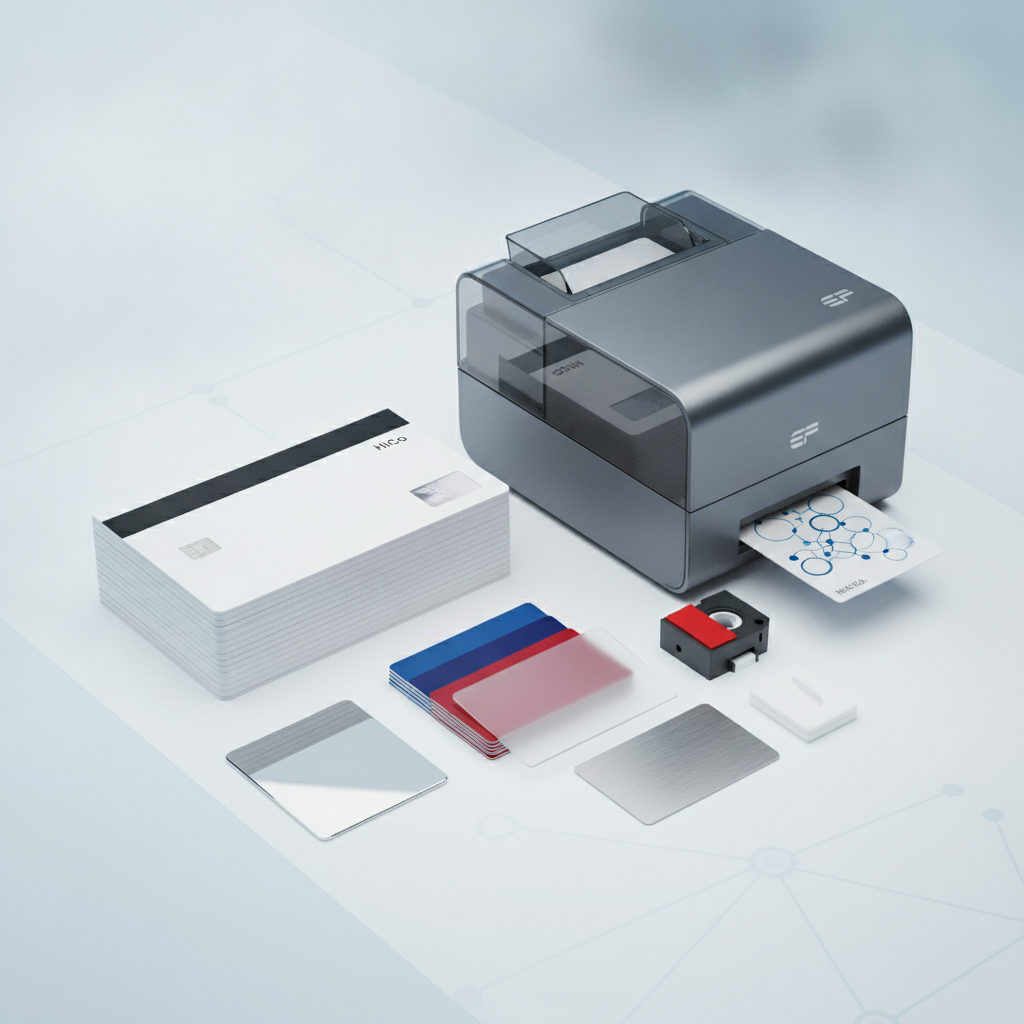 Blank cards are only half the equation. The other half is the printer that turns them into finished, branded loyalty cards. Plastic Card ID carries a full lineup of card printers from three of the industry's most trusted brands: Evolis, Zebra, and Fargo. Each brand has strengths that map to different organizational needs, and choosing correctly from the start saves considerable frustration down the line.
Evolis printers are known for their elegant design and user-friendly operation - ideal for retail environments where staff with minimal technical background will be running the printer daily. Zebra printers bring industrial-grade reliability and are a natural fit for high-volume operations that cannot afford downtime. Fargo printers excel in security-sensitive environments where encoding and lamination features matter as much as print quality. The right printer makes a loyalty card program feel effortless to operate, even when it's producing hundreds of cards per week.
Matching Printer Capacity to Program Volume
A boutique yoga studio issuing 50 loyalty cards a month has very different needs than a regional grocery chain managing 5,000 new member cards per week. Entry-level card printers handle low-volume programs beautifully and cost far less upfront. Mid-range and high-volume models offer features like dual-sided printing, built-in encoding modules, and lamination capabilities that become essential at scale.
CPE helps buyers assess their realistic volume needs before recommending a model. Overbuying a printer is wasteful; underbuying creates bottlenecks that frustrate staff and delay card issuance. The consultation process is thorough, practical, and focused on your specific program requirements, not on moving the most expensive unit possible.
Ribbons, Supplies, and Ongoing Support
A card printer without a steady supply of ribbons and cleaning kits is a paperweight. Plastic Card ID stocks compatible ribbons for all the printer brands it carries, along with cleaning kits, card sleeves, and card carriers. Keeping a well-maintained printer running cleanly extends its service life and keeps print quality consistently high - something that matters enormously when the card represents your brand.
Card printers require periodic cleaning to prevent debris from affecting print heads and card transport mechanisms. Regular maintenance using the right cleaning kits is the single most effective way to protect your printer investment. CPE makes it easy to stay stocked with everything needed to keep operations running smoothly, without hunting across multiple vendors for compatible supplies.
Getting Started With a Call to 800.835.7919
Selecting the right printer for a new loyalty program can feel overwhelming given the number of options available. The fastest path to clarity is a direct conversation with someone who has helped thousands of organizations make this exact decision. CPE's team is reachable at 800.835.7919, and the conversation is always practical, never pressured.
Whether you're starting completely from scratch or looking to upgrade an aging system, the team at CPE can quickly assess your program requirements and match you with the right printer, blank card stock, and supplies to build a complete in-house card operation that runs reliably from day one.
Frequently Asked Questions About Blank Plastic Loyalty Cards
After more than two decades in the business, Plastic Card ID has fielded virtually every question a buyer could ask about blank plastic cards for loyalty programs. The questions that come up most often tend to cluster around a handful of themes: cost, compatibility, encoding, and minimum order quantities. Addressing them directly here saves time and helps buyers arrive at decisions with genuine confidence.
What's notable about the loyalty card category specifically is how many buyers underestimate the breadth of what "blank" actually means. A blank card isn't just a white rectangle - it can be clear, frosted, colored, magnetic-stripe-enabled, RFID-embedded, or any combination of the above. Understanding the full range of options prevents the common mistake of settling for a card that works adequately when a better-matched option was available all along.
Common Buyer Questions Answered
- What is the standard loyalty card size? CR80, measuring 3.375 x 2.125 inches at 30 mil thickness - the same size as a standard credit card. This ensures compatibility with all wallet slots and most card printers.
- What's the minimum order quantity? CPE accommodates programs of virtually any size, from small runs suitable for a local boutique to mass production orders for national chains.
- Can I print on both sides of a blank card? Yes, provided you're using a dual-sided card printer. Plastic Card ID carries dual-sided models and can recommend the right one for your volume.
- Do magnetic stripe cards work with my existing POS system? Most modern POS systems that accept card swipes are compatible with standard HiCo or LoCo magnetic stripe cards. Confirm the track configuration with your POS provider before ordering.
- What's the difference between proximity cards and RFID smart cards? Proximity cards typically operate at 125 kHz and store a fixed ID number. Smart cards operate at 13.56 MHz and can store and process more complex data, including encrypted loyalty point balances.
- Can I mail loyalty cards directly to customers? Yes - CPE offers card affixing and mailing services, handling fulfillment so your team doesn't have to.
Understanding Card Encoding for Loyalty Tracking
Encoding refers to the process of writing data to a magnetic stripe, RFID chip, or smart card chip. For a basic loyalty program that tracks visits with a simple swipe at the point of sale, LoCo or HiCo magnetic stripe encoding is usually sufficient. The encoding happens during the printing process if your card printer has an integrated encoding module, or it can be done as a separate step with a standalone encoder.
Choosing the right encoding format from the start prevents expensive card replacements later. If your loyalty platform vendor specifies a particular track configuration or frequency, CPE can ensure the cards you order are compatible before you commit to a large batch. This kind of upstream coordination is exactly where an experienced partner adds value that a generic supplier cannot.
Card Carriers, Sleeves, and Fulfillment Services
Issuing a loyalty card is not just about the card itself - it's about the entire experience of receiving it. Cards delivered in quality card carriers or sleeves arrive looking professional and protected. Plastic Card ID stocks a full range of card presentation accessories that transform a simple card handoff into a brand moment.
For organizations with large member bases who need cards mailed to recipients, CPE's card affixing and mailing services handle the logistics end-to-end. Rather than pulling staff off productive work to stuff envelopes, businesses can hand off the fulfillment entirely and focus on the parts of the loyalty program that actually require their attention and creativity.
Building Long-Term Loyalty Program Success With Plastic Card ID
A loyalty program is not a one-time project - it's an ongoing commitment that evolves as the business grows and customer expectations shift. The card infrastructure supporting it needs to be equally adaptable. Plastic Card ID is structured precisely to support that kind of long-term, evolving relationship. Customers who start with a small blank card order often grow into full in-house card printing operations, expanded product lines, and multi-location card programs, all managed through a single trusted partner.
The breadth of CPE's catalog means that as your program matures, the same supplier can grow with you. Starting with basic blank white CR80 cards and scaling to RFID-enabled cards with a full-color in-house printing setup is a natural progression - and one that CPE has guided hundreds of organizations through without missing a beat. The consistency of that partnership is itself a competitive advantage that business owners often only fully appreciate in retrospect.
Scaling From Small Programs to Enterprise Operations
Many of the largest loyalty card programs in CPE's customer base started with an order of a few hundred blank cards and a single entry-level printer. As the program proved its value and customer enrollment grew, the infrastructure expanded to match. This organic scaling path is common, well-understood, and supported at every stage by CPE's product lineup and team expertise.
The ability to grow without switching suppliers is more valuable than it might initially appear. Every vendor transition introduces risk, learning curves, and compatibility questions. Organizations that build their card program on a reliable foundation from the beginning - with a partner who stocks everything they'll ever need - avoid those disruptions entirely. That's a competitive moat that compounds quietly over years of operation.
Beyond Loyalty: Expanding Your Card Program's Role
Blank plastic cards have a remarkable versatility that pure loyalty programs sometimes underutilize. The same card stock, the same printer, and the same printer ribbons that produce loyalty cards can also produce employee ID badges, event credentials, access control cards, membership cards, and marketing gift cards. Organizations that recognize this operational overlap and invest in a capable in-house card printing setup often discover they've solved multiple problems with a single infrastructure investment.
A gym, for example, might use the same blank RFID cards for member loyalty tracking and facility access control. A hotel might use identical card stock for guest key cards and staff ID badges. This kind of cross-program efficiency is a hallmark of organizations that treat their card program as a serious operational asset rather than a peripheral afterthought. CPE helps buyers identify and capitalize on these overlaps during the initial planning process.
The CPE Difference: Depth, Experience, and Partnership
A quarter century of serving US-based businesses has given CPE a depth of practical knowledge that simply cannot be replicated by a generalist supplier or an online marketplace. The team understands which card types fail in which environments, which printer models hold up under which use conditions, and which program structures produce the best long-term engagement results. That accumulated expertise is available to every customer, regardless of order size.
Being a strategic partner means saying the honest thing, not just the convenient thing. If a buyer is considering a card spec that won't serve their actual needs, CPE's team will say so and suggest a better option. That kind of candor builds the kind of long-term trust that turns first-time buyers into decade-long clients - and that outcome, repeated across 100,000 customers, is what has made Plastic Card ID what it is today.
Ready to build a loyalty program that customers actually participate in? The right blank plastic card is the foundation - and Plastic Card ID has every option you need, backed by the expertise to help you choose correctly.
Call 800.835.7919 today and speak with a card program specialist who understands your business and will help you get it right the first time.
Contact Plastic Card ID now at 800.835.7919 - your loyalty program deserves a foundation built on 25 years of plastic card expertise, real partnership, and a product catalog that covers every need from first card to millionth.
Previous Page