What Is a LoCo Magnetic Stripe Card: Key Facts
Table of Contents []
- What Is a LoCo Magnetic Stripe Card? Your Complete Guide From Plastic Card ID
- The Science Behind LoCo: What "Low Coercivity" Actually Means
- Where LoCo Cards Shine: The Right Applications for Low Coercivity
- When to Choose HiCo Over LoCo: An Honest Breakdown
- LoCo Card Specifications: What to Know Before You Order
- Frequently Asked Questions About LoCo Magnetic Stripe Cards
- Build Your Card Program the Right Way With Plastic Card ID
What Is a LoCo Magnetic Stripe Card? Your Complete Guide From Plastic Card ID
Most people have swiped a card without ever wondering what happens in that fraction of a second between swipe and transaction. Buried in that thin dark stripe on the back of the card is a surprisingly nuanced technology - and not all magnetic stripes are created equal. If you've been researching card programs for your business and stumbled onto terms like "LoCo" and "HiCo," you're in the right place.
A LoCo magnetic stripe card is a plastic card encoded with a low-coercivity magnetic stripe, typically rated at around 300 Oersteds (Oe). That number matters more than it sounds. It defines how easily the stripe can be written to and erased - a characteristic that determines whether LoCo is the right fit for your specific application or a liability waiting to happen. Understanding the distinction helps you build a smarter, more cost-effective card program.
| Feature | LoCo (Low Coercivity) | HiCo (High Coercivity) |
|---|---|---|
| Coercivity Rating | 300 Oe | 2750 Oe or higher |
| Rewrite Ease | Very easy to rewrite | Requires stronger encoder |
| Magnetic Durability | Lower resistance to demagnetization | High resistance to demagnetization |
| Common Applications | Hotel keys, gift cards, short-term use | ID cards, loyalty cards, long-term use |
| Stripe Color | Brown/amber | Dark brown to black |
| Cost | Slightly lower | Slightly higher |
The Science Behind LoCo: What "Low Coercivity" Actually Means
 Coercivity is a measure of magnetic resistance - specifically, how much magnetic force is required to alter the data encoded in a stripe. A LoCo stripe, sitting at roughly 300 Oe, has relatively weak magnetic resistance. That's intentional. The design philosophy behind LoCo is ease of encoding and re-encoding, not permanence. In many applications, that's exactly what you need.
Think about a hotel key card. Guests check in, get a card encoded for their room and their stay duration, then check out. The next guest gets the same card, re-encoded with new access data. That cycle can happen hundreds of times. A HiCo stripe, while more durable against accidental demagnetization, would require a more powerful encoder to reset - an unnecessary overhead for this kind of revolving use case.
How Encoding Works on a LoCo Card
When you encode a LoCo magnetic stripe card, a magnetic read/write head in your card printer or encoder applies a targeted magnetic field to align tiny iron oxide particles embedded in the stripe coating. Each alignment pattern corresponds to binary data - the foundation of whatever information you're storing. Because LoCo stripes require less force to manipulate, standard card printers with built-in encoders handle them with ease.
Most card printers from Evolis, Zebra, and Fargo - brands stocked by CPE - can handle LoCo encoding without any special hardware modifications. This accessibility is a major reason LoCo cards dominate short-cycle applications where frequent reprogramming is part of the workflow.
The Brown Stripe Tell
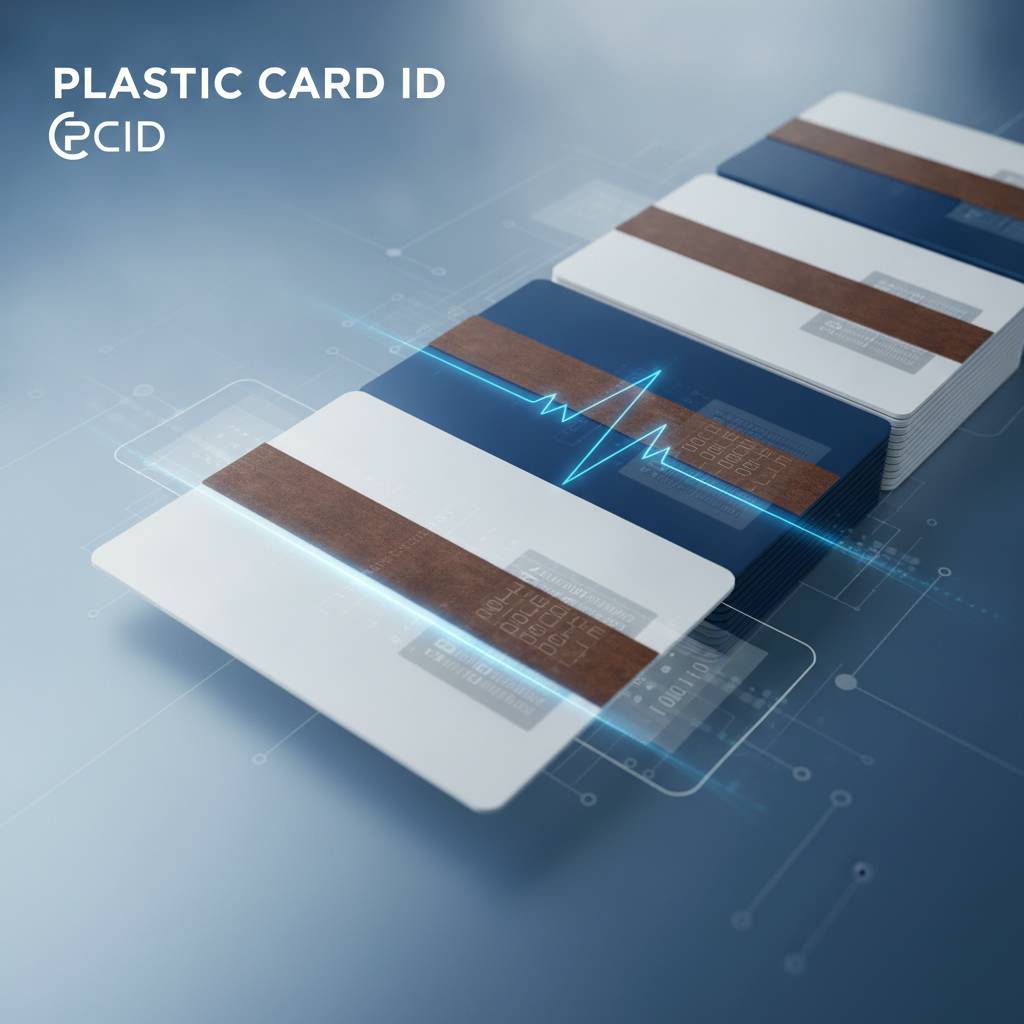
One quick way to identify a LoCo card is by the color of its magnetic stripe. LoCo stripes typically appear brown or amber, a natural result of the lower-density iron oxide composition. HiCo stripes, by contrast, are almost always a deep, near-black color due to the higher concentration and coercivity of the magnetic material.
This visual shorthand matters if you're managing a mixed card inventory or troubleshooting encoding issues. Accidentally trying to encode a LoCo card with settings optimized for HiCo - or vice versa - can result in data errors, unreadable cards, or unnecessary wear on your encoder head. Always match your encoder settings to your stripe type.
Magnetic Track Layout: Tracks 1, 2, and 3
A standard CR80 magnetic stripe card can hold up to three data tracks. Track 1 holds alphanumeric data and is most often used for names and account numbers. Track 2 is numeric only and is the most widely read track in retail and access control systems. Track 3 allows for read-write operations and is less commonly used in modern card programs.
LoCo cards support all three tracks, just like their HiCo counterparts. The difference is never in what data can be stored, but in how resilient that data is over time and in varying environments. For programs where cards live in wallets for years, HiCo wins. For short-term, high-turnover programs, LoCo is the smarter and often more economical choice.
Where LoCo Cards Shine: The Right Applications for Low Coercivity
Choosing the wrong stripe type for your card program is a surprisingly common and costly mistake. Organizations sometimes default to HiCo across the board, assuming "stronger" always means "better." But LoCo magnetic stripe cards have a distinct set of use cases where they outperform - not in durability, but in flexibility, cost efficiency, and system compatibility.
The secret is matching the card to the lifecycle of the application. LoCo cards are purpose-built for environments where cards are reused frequently with new data, used briefly and discarded, or where the encoding system already runs on LoCo-compatible infrastructure.
Hotel Key Cards and Hospitality Access
The hotel industry is arguably the most recognizable home of LoCo magnetic stripe cards. Property management systems encode room access data at check-in, and those same cards are reclaimed at checkout, wiped, and reused for the next guest. The entire hospitality key card ecosystem - from Assa Abloy to Onity lock systems - is designed around LoCo stripe compatibility.
For hotel operators managing hundreds or thousands of room assignments daily, the re-encodability of LoCo is not just convenient - it's essential to operations. Attempting to run that same workflow with HiCo cards would require encoder upgrades and introduce unnecessary complexity with no operational benefit.
Gift Cards and Short-Term Retail Programs
Gift card programs represent another major domain for LoCo magnetic stripe cards. When a retailer activates a gift card at the point of sale, the card's magnetic stripe is encoded with a balance or account link. That data doesn't need to survive years of aggressive wallet use - it needs to survive until the card is redeemed, which often happens within weeks or a few months of purchase.
Retailers who switch from paper gift certificates to plastic gift cards - even LoCo versions - see measurable lifts in sales. Studies have shown sales increases of 35-50% when businesses make that switch. The card itself signals value and permanence in a way paper simply cannot. LoCo cards deliver all of that at a price point that keeps the program financially sensible.
Event Credentials and Temporary Access
Trade shows, conferences, corporate campuses, and entertainment venues frequently issue temporary access credentials that need to function for a day, a weekend, or a week - and then be done. LoCo magnetic stripe cards are a natural fit here. They can be pre-encoded in batches, distributed at registration, and collected (or discarded) at the event's conclusion.
Because the data only needs to survive the duration of the event, the lower magnetic durability of LoCo is not a drawback. It's irrelevant. What matters is the cost per card, the ease of batch encoding, and the ability to quickly produce credentials at scale - all areas where CPE is equipped to support organizations of any size, from 50 cards for a small corporate seminar to tens of thousands for a national convention.
When to Choose HiCo Over LoCo: An Honest Breakdown
 There's no universal best choice between LoCo and HiCo - only the right choice for a given program. Honesty here matters more than a sales pitch. If your cards are going to live in wallets for two or three years, ride alongside credit cards with powerful magnets, or pass through industrial environments, HiCo is the appropriate choice. Durability and data integrity over time are where HiCo earns its place.
Employee ID cards, long-term loyalty cards, and membership cards with multi-year lifecycles all benefit from HiCo stripes. The slightly higher cost is offset by lower replacement rates and fewer frustrated cardholders dealing with demagnetized stripes. It's a lifetime value calculation, not just a unit cost comparison.
Long-Term Loyalty and Membership Cards
A loyalty card that earns punches or points over 18 months, living in a wallet alongside a smartphone and various retail cards, needs robust magnetic encoding. HiCo cards are significantly more resistant to the stray magnetic fields generated by phone cases, security systems, and even other cards. For this reason, loyalty programs with serious retention goals almost always default to HiCo.
That said, loyalty programs built around newer technology - RFID chips, QR codes, or app-based scanning - may not use magnetic stripes at all. If you're building a new loyalty program, it's worth evaluating whether a magnetic stripe is even the right data layer for your infrastructure before debating LoCo versus HiCo.
Employee and Staff ID Badges
Access control systems for office buildings, manufacturing plants, hospitals, and schools typically require cards that last through an employee's tenure - often years. Swiping a card at a reader dozens of times per day adds up to thousands of swipes annually. A LoCo stripe would be prone to degradation under that kind of use, while a HiCo stripe holds its integrity through daily, repeated interaction with read heads and environmental factors.
For employee ID programs, the card isn't just a functional tool - it's a statement of professional identity. A well-printed, durable ID card signals legitimacy and belonging in a way that a lanyard insert or printed paper tag cannot. HiCo magnetic stripe encoding ensures the access function matches the professional impression the card makes.
Knowing When to Call for Guidance
Many card buyers aren't sure which stripe type they need until they've had a conversation with someone who understands the application. That's not a knowledge gap to be embarrassed by - it's simply the nature of a nuanced product category. Reach out to CPE directly at 800.835.7919 to talk through your specific use case before placing an order.
Getting the stripe type right from the start saves time, money, and the headache of reprinting or re-ordering. Whether you're running a 100-card hotel pilot or scaling a multi-location gift card program to 50,000 units, the right stripe type is a foundational decision worth five minutes of expert conversation.
LoCo Card Specifications: What to Know Before You Order
Purchasing LoCo magnetic stripe cards without understanding the spec sheet is like buying printer paper without knowing your printer tray size. The details matter, and getting them right the first time eliminates waste. CR80 is the standard card size - identical in dimensions to a credit card at 3.375 inches by 2.125 inches - and 30 mil thickness is the industry standard for most applications.
Beyond size and thickness, the magnetic stripe itself has specs worth reviewing. Stripe location (typically centered at 0.223 inches from the card edge), track configuration, and encoding density (bits per inch) all influence compatibility with your existing card readers and printers. Most commercial deployments use standard track formatting, but specialty applications - like casino player cards or access control systems with proprietary readers - may require custom configurations.
Stripe Types and Specialty Formats
LoCo stripes come in standard full-length formats as well as shorter "mini-stripe" configurations used in some niche applications. The vast majority of business card programs will use the full ISO 7811 standard stripe, which spans the width of the card and supports all three tracks. If your card readers were purchased within the last decade, they almost certainly read this format without issue.
Some specialty LoCo cards include additional features - signature panels printed over part of the stripe on the back, custom artwork on the front, or pre-printed numbering for inventory control. These are all available options, and CPE can source cards with or without these features depending on your program requirements.
Blank vs. Pre-Printed LoCo Cards
Organizations with in-house card printing capability typically prefer blank LoCo magnetic stripe cards, which offer total design control and lower per-card cost over time. You purchase the blank card stock, load it into your card printer, and customize each card - printing names, logos, photos, or barcodes - while simultaneously encoding the magnetic stripe in one pass.
For organizations without a card printer, pre-printed LoCo cards with variable data are also available through fulfillment services. This approach works well for gift card programs where the card art is consistent but each card needs unique encoding. Both paths are valid; the right choice depends on your volume, design requirements, and whether on-demand or batch printing better suits your workflow.
Compatible Card Printers for LoCo Encoding
Not all card printers include magnetic stripe encoding as a standard feature - it's often an add-on module or a configuration option at the time of purchase. When selecting a printer for a LoCo program, confirm that the encoding module supports low-coercivity stripes (most do, since LoCo is the lower-energy format). Printers from Evolis, Zebra, and Fargo all offer models with LoCo/HiCo encoding capabilities.
- Evolis Primacy 2: Single or dual-sided printing with optional LoCo/HiCo magnetic encoding module.
- Zebra ZC300: Compact desktop printer with encoding support for both LoCo and HiCo stripes.
- Fargo HDP5000: High-definition retransfer printer with encoding module support, ideal for higher-volume programs.
- Evolis Zenius: Entry-level single-sided printer with encoding module available, suited for small-scale LoCo programs.
- Zebra ZC100: Budget-friendly single-sided option with optional magnetic stripe encoding for LoCo cards.
Frequently Asked Questions About LoCo Magnetic Stripe Cards
Buyers new to magnetic stripe technology tend to arrive with similar questions. Rather than burying the answers in technical documentation, it's worth addressing them directly. The more clearly you understand LoCo cards, the better equipped you are to build a card program that works from day one - and keeps working without expensive surprises down the road.

Clarity breeds confidence, and confidence leads to better purchasing decisions. Here are the questions that come up most often when businesses start exploring LoCo magnetic stripe cards for the first time.
Can a LoCo Card Be Accidentally Erased?
Yes - and this is arguably the most important practical consideration for LoCo card programs. Because LoCo stripes require relatively little magnetic force to alter, they are more vulnerable to demagnetization from everyday sources: proximity to a smartphone, contact with another card's stripe, or passing near a magnetic clasp on a bag or wallet. This is why LoCo is not ideal for cards intended for long-term daily carry.
In controlled environments - a hotel room key that lives in a dedicated key envelope, a gift card used within weeks of purchase, or an event badge worn around a neck - accidental demagnetization is rarely an issue. The risk scales up when cards are expected to survive unpredictable daily life in a packed wallet for extended periods. Know your use case, and the risk calculus becomes straightforward.
Can I Switch From LoCo to HiCo Mid-Program?
Technically yes, but it requires attention to your reader infrastructure. If your card readers are calibrated to read LoCo stripes and you introduce HiCo cards encoded at a different signal level, you may experience read errors. In most cases, modern card readers auto-detect and accommodate both, but older or proprietary systems may not. Always test a sample of HiCo cards in your existing readers before committing to a full transition.
The encoding settings on your card printer will also need to change - most printers allow you to switch between LoCo and HiCo in software settings or via physical DIP switches. If you're unsure about the transition process, CPE can walk you through compatibility checks before you invest in new card stock.
What Quantities Are Available for LoCo Cards?
LoCo magnetic stripe cards are available from CPE in a wide range of quantities - from small starter orders for businesses launching a new program to large-volume orders for established operations running tens of thousands of cards per year. Pricing scales with volume, and there are significant per-card savings when ordering in bulk.
Whether you're running a pilot program to test a new loyalty initiative or you're a regional hotel chain placing a quarterly resupply order, the ordering process is the same: choose your card specs, confirm your quantity, and get your cards delivered ready to encode. No minimum order barrier. No unnecessary complexity in the process.
Build Your Card Program the Right Way With Plastic Card ID
A well-executed card program is not just a stack of plastic. It's infrastructure. It's the physical touchpoint between your brand and your customers, your organization and its members, your facility and the people who access it. Getting the foundational decisions right - including something as specific as LoCo versus HiCo magnetic stripe selection - determines whether that program runs smoothly or generates a steady stream of avoidable headaches.
Plastic Card ID has spent over 25 years helping businesses across the United States make exactly these decisions. More than 100,000 customers and 50 million cards later, the expertise is real, the catalog is comprehensive, and the commitment to long-term partnership remains unchanged. From blank LoCo card stock to fully outfitted printer systems, ribbons, cleaning kits, and card carriers - everything your program needs is in one place.
One-Stop Support for Every Card Program Need
The true value of a single supplier who understands your entire program cannot be overstated. When your card stock, your printer, your ribbons, and your encoding settings all come from a source that knows how they interact, troubleshooting becomes faster and ordering becomes simpler. No finger-pointing between vendors. No compatibility guessing games.
CPE supports card programs at every stage - from initial consultation and product selection through ongoing resupply and program scaling. Whether you're printing 50 cards per month in-house or outsourcing a fulfillment run of 20,000 pre-encoded gift cards, the infrastructure to support you is already in place.
Value-Added Services That Complete the Program
Beyond card stock and printers, CPE offers the accessories and services that turn a card order into a complete, deployable program. Card carriers and sleeves protect cards during distribution. Cleaning kits keep printer heads performing at peak accuracy. Card affixing and mailing services handle the logistics of getting cards into customers' hands - a significant operational lift for programs distributing cards at scale.
These services matter more than many buyers initially realize. A loyalty card that arrives in a quality card carrier feels like a premium product - because it is. The unboxing moment is part of the experience, and CPE makes it easy to get that moment right without adding complexity to your internal operations.
Ready to Talk Through Your LoCo Card Program?
Every card program has its own requirements, and a brief conversation can prevent weeks of trial-and-error. Contact CPE at 800.835.7919 to discuss your application, your volume, and which magnetic stripe configuration makes the most sense for what you're building.
The catalog is extensive, the expertise is genuine, and the commitment is to your program's long-term success - not just the next transaction. That's a promise backed by 25 years of doing this work across the full range of industries that rely on plastic cards every single day.
Connect with Plastic Card ID today and call 800.835.7919 - your card program deserves a partner who gets it right from the start.