Blank Plastic Cards for RFID Access Systems: Easy Setup
Table of Contents []
- Blank Plastic Cards for RFID Access Systems - Plastic Card ID
- Why Blank RFID Cards Are the Foundation of Smart Access Programs
- The Full Catalog: What Blank RFID Cards Are Available
- Card Printers, Ribbons, and Supplies That Complete the Program
- Buyer's Guide: Selecting the Right Blank RFID Card for Your System
- Industries That Rely on Blank RFID Cards Every Day
- Get Your RFID Card Program Running at Full Strength with Plastic Card ID
Blank Plastic Cards for RFID Access Systems - Plastic Card ID
Walk into any modern office building, university campus, or healthcare facility, and you will almost certainly encounter an RFID access system humming quietly in the background. The blank plastic card in someone's wallet - the one that unlocks a door, logs attendance, or grants elevator access - is the physical key to that entire infrastructure. What most people never consider is how those cards get sourced, what specifications actually matter, and why choosing the right supplier changes everything about how a card program performs over time.
Plastic Card ID has spent more than 25 years answering exactly those questions for businesses across the United States. With over 100,000 customers served and more than 50 million cards shipped, the depth of knowledge here is not theoretical. It is the kind of expertise built card program by card program, across industries ranging from corporate campuses to hotel chains to healthcare networks. If your organization runs an RFID access system, this page is worth reading carefully.
| Card Type | Frequency | Common Use Case | Read Range |
|---|---|---|---|
| 125kHz Proximity Card | Low Frequency (LF) | Building entry, parking gates | Up to 6 inches |
| 13.56MHz RFID Smart Card | High Frequency (HF) | Secure access, cashless vending | Up to 4 inches |
| MIFARE DESFire EV2/EV3 | 13.56MHz HF | Multi-app campus cards, transit | Up to 4 inches |
| HID-Compatible Prox Card | 125kHz LF | HID reader-equipped facilities | Up to 6 inches |
| Dual Interface Smart Card | Contact Contactless | High-security ID, government | Variable |
Why Blank RFID Cards Are the Foundation of Smart Access Programs
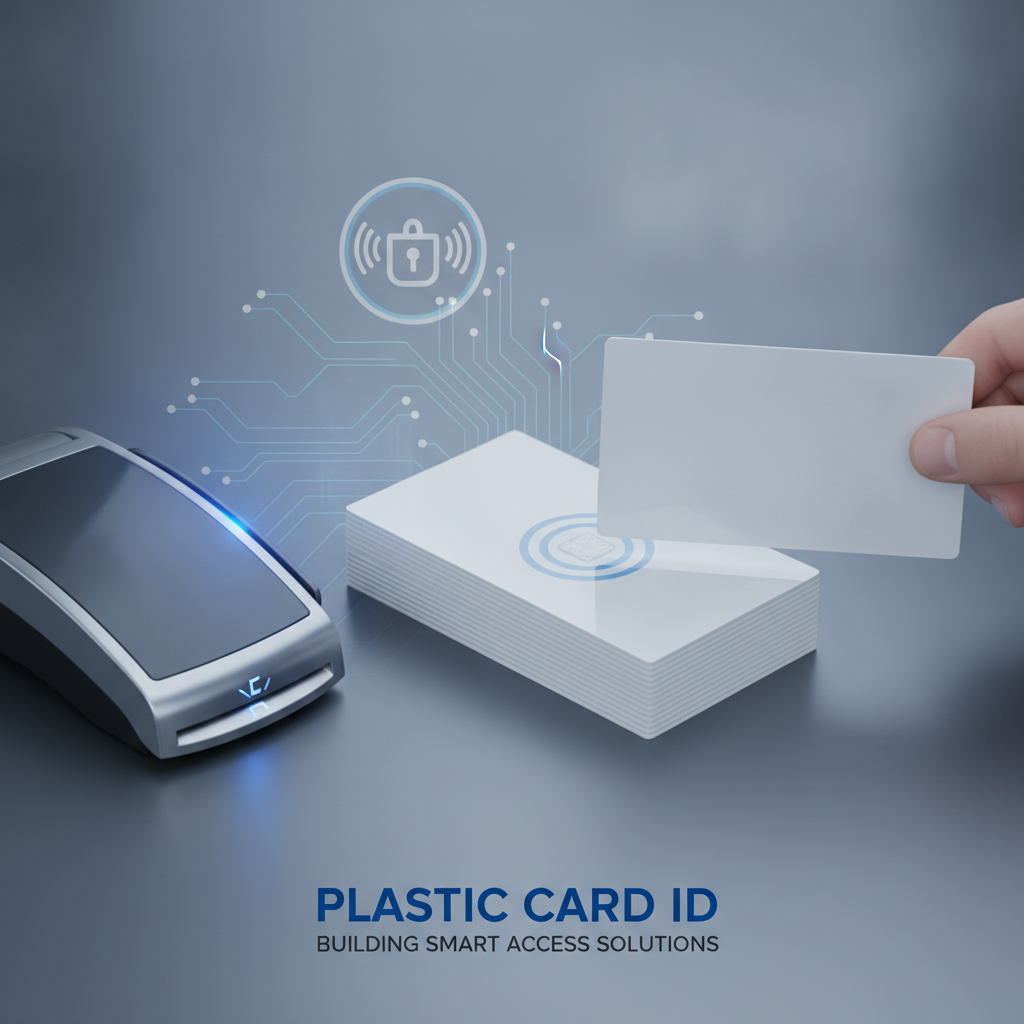 There is a subtle brilliance in the blank card concept that many organizations only appreciate after they have tried the alternative. Pre-printed cards from a single vendor lock you into a design, a timeline, and a pricing structure that rarely favors the buyer. Blank RFID cards give your organization total control - print in-house, update artwork when needed, encode credentials on demand, and scale without renegotiating a contract every quarter.
The economics shift meaningfully when you move to blank cards. Per-unit cost drops. Lead times compress. And the flexibility to issue a card the moment a new employee walks in on their first day? That is operationally transformative. Organizations running anything from 50 cards a month to production runs in the tens of thousands have discovered that the blank-card model simply works better over time.
The CR80 Standard and Why It Matters for RFID
Every blank plastic card sold by CPE conforms to the CR80 standard - 3.375 inches by 2.125 inches, 30 mil thick, compliant with ISO 7810. This is the same form factor as a standard credit card, which matters enormously for RFID access. Reader slots, card holders, lanyards, wallets - everything is engineered around this size. Deviating from it creates compatibility headaches that compound over time.
RFID inlays embedded within CR80 cards are precisely positioned to ensure consistent read performance across standard reader geometries. Whether the card is tapped against a wall-mount reader or passed through a turnstile gate, the antenna placement within that 30 mil laminate is what determines reliability. Precision manufacturing is not optional in RFID - it is the entire product.
Low Frequency vs. High Frequency: Choosing the Right Blank Card
The 125kHz proximity card is the workhorse of legacy access control. It is simple, rugged, and compatible with the enormous installed base of HID-compatible and EM-format readers found in facilities built over the last two decades. If your building already uses 125kHz readers, a 125kHz blank prox card is the straightforward answer. No reader upgrades, no re-provisioning headaches.
The 13.56MHz category opens a wider world. Cards at this frequency can store significantly more data, support encryption, and run multiple applications simultaneously. A single 13.56MHz smart card can serve as a door credential, a cashless vending token, a library card, and a time-attendance marker - all on one piece of plastic. That kind of multi-application flexibility is increasingly what modern organizations demand.
MIFARE DESFire: Enterprise-Grade Security in a Blank Card
For organizations where security is non-negotiable - think healthcare systems, financial services campuses, government contractors - MIFARE DESFire EV2 and EV3 cards represent the current standard of excellence. AES-128 encryption, mutual authentication, and application isolation make these cards genuinely difficult to clone or compromise. The blank format means your security team encodes credentials, and no third party ever handles that sensitive data.
DESFire cards are particularly valuable in multi-tenant environments where different departments or organizations share physical infrastructure but require logical separation of access privileges. One card, multiple access levels, cryptographic separation between each - it is the kind of elegant solution that large-scale deployments require. Plastic Card ID carries these cards in stock, ready for programs of any size.
The Full Catalog: What Blank RFID Cards Are Available
Sourcing everything from one supplier is not just convenient - it eliminates compatibility uncertainty. When your cards, your printer ribbons, and your card printers all come from the same knowledgeable partner, the risk of a mismatch that disrupts your program drops to near zero. CPE stocks a comprehensive range of RFID and proximity card types to match virtually any access control infrastructure in use across the United States today.
The catalog breadth also means organizations can evolve. Start with proximity cards on an existing 125kHz infrastructure, and when the time comes to upgrade readers, transition smoothly to smart cards without changing card suppliers, card programs, or printing workflows. That continuity has real value - measured in avoided downtime, avoided retraining, and avoided budget surprises.
Proximity Access Cards (125kHz)
Clamshell and thin-format proximity cards in standard CR80 are available in quantities from small pilot runs to full production volumes. Both EM4100-format and HID-compatible configurations are stocked, covering the two most prevalent 125kHz reader ecosystems in commercial and institutional facilities. These are the cards that open millions of doors every day across America.
Thin proximity cards - sometimes called prox cards in ISO card format - are the preferred choice for organizations that need to print cardholder photos, names, and access-level graphics directly onto the card surface. The 30 mil profile runs through most standard card printers without issue, keeping your existing printing infrastructure fully usable. Call 800.835.7919 to discuss the right proximity card configuration for your reader environment.
Smart Cards and Contactless RFID (13.56MHz)
The 13.56MHz smart card lineup includes MIFARE Classic, MIFARE Plus, MIFARE DESFire EV2 and EV3, as well as NTAG-series and other NFC-compatible formats. Each serves a different security and data storage profile. A facilities manager running a simple door-access-only program has very different needs from a university deploying a multi-application campus card - and the catalog reflects that range.
Dual-interface cards, which combine a contactless antenna with an embedded contact chip, are available for programs that need to serve both tap-and-go readers and chip-reader terminals. These are particularly common in healthcare and government settings where maximum interoperability across multiple reader types is a firm requirement rather than a nice-to-have.
Specialty Blanks: Clear, Frosted, and Custom Configurations
Not every RFID access card needs to look the same. Clear plastic RFID cards - where the substrate is transparent, making the embedded antenna faintly visible - create a distinctive aesthetic that some organizations specifically want for premium card programs. Frosted cards split the difference, offering a semi-opaque finish that pairs beautifully with both full-color digital printing and minimalist designs.
Custom die-cut shapes are available for organizations whose brand identity extends to card form factor. And for the rare program where the card itself needs to signal extraordinary status - think executive access credentials or VIP event passes - luxury metal cards in stainless steel, brass, and gold with embedded RFID inlays represent the absolute premium tier. Plastic Card ID handles these specialty requests with the same professionalism applied to every program.
Card Printers, Ribbons, and Supplies That Complete the Program
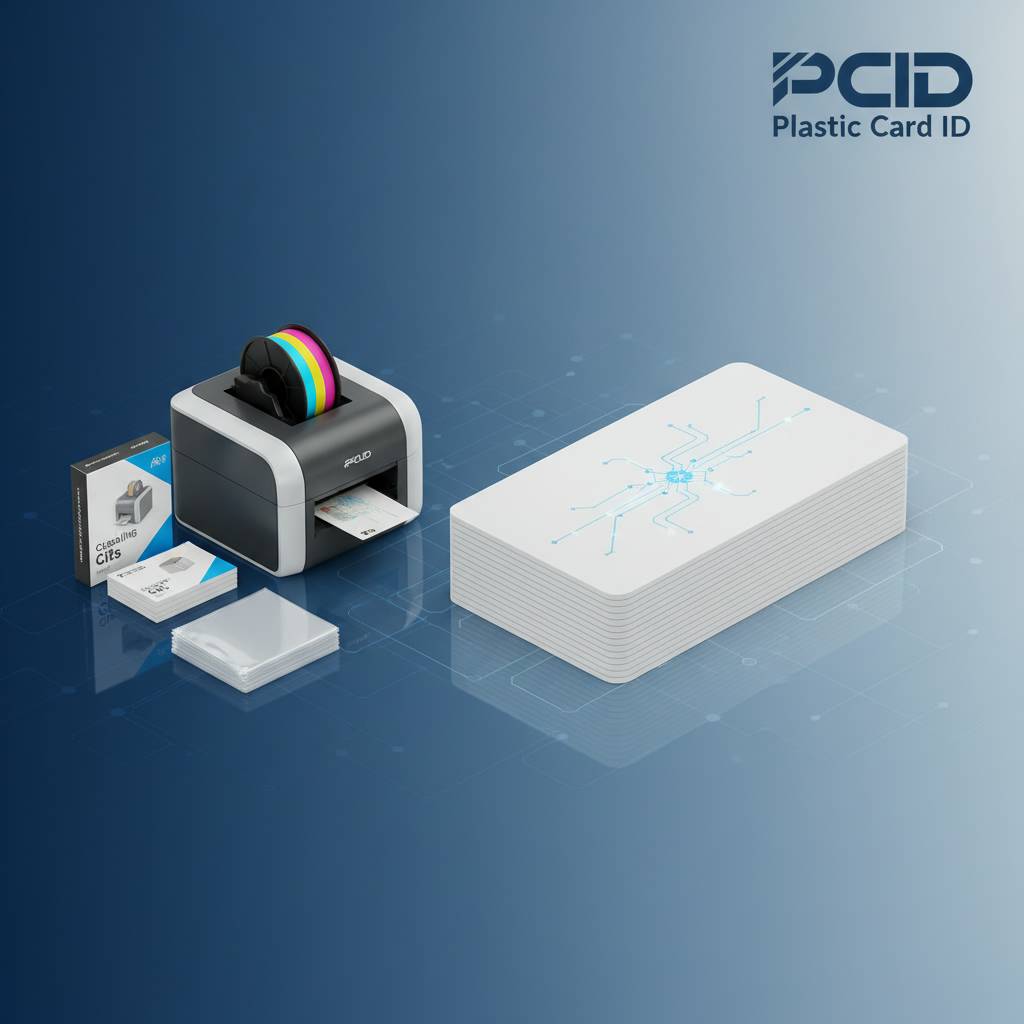 A blank RFID card is the raw material. A card printer is the manufacturing tool. Getting both from the same source is not just efficient - it ensures that the cards running through your printer are tested and validated for that printer's specifications. Feed problems, color accuracy issues, and laminate adhesion failures are almost always traced back to a card-printer mismatch that a knowledgeable supplier would have caught before the order shipped.
CPE carries a full lineup of card printers from three industry-leading brands: Evolis, Zebra, and Fargo. Whether you need a single-sided desktop printer for occasional badge production or a high-volume dual-sided printer with lamination for a large enterprise card program, the right hardware is available - along with the ribbons, cleaning kits, and maintenance supplies to keep it running at peak output.
Evolis, Zebra, and Fargo Printers
Evolis printers are a favorite among organizations that value sleek hardware design alongside solid performance. The Primacy and Zenius models handle everything from basic employee ID printing to advanced encoding workflows. Zebra's ZC and ZXP series are the industrial-strength choice - built for high-volume, high-durability environments where the printer runs multiple shifts and reliability is paramount. Fargo's HDP series brings retransfer printing to programs that require edge-to-edge image quality and superior card durability.
Each printer brand has a distinct sweet spot, and matching the right printer to your card volume, encoding requirements, and security features is exactly the kind of guidance Plastic Card ID provides as a strategic partner. This is not a transactional relationship - it is an ongoing program-support commitment that most card suppliers simply cannot match.
Ribbons, Cleaning Kits, and Card Accessories
Printer ribbons are consumables that directly affect card quality and printer longevity. Using off-brand or incompatible ribbons voids printer warranties and introduces print quality problems that are difficult to diagnose. Plastic Card ID stocks OEM-quality ribbons for every printer model in the lineup - YMCKO full-color, monochrome black, and specialty overlay panels that add UV security features to finished cards.
Cleaning kits are unglamorous but critically important. A card printer that is not cleaned on schedule produces cards with streaks, spots, and encoding errors that become apparent at the worst possible moment - during a high-volume issuance run before a major event or facility opening. Card carriers and sleeves round out the accessory lineup, protecting finished cards during distribution and extending the functional life of the card in the cardholder's possession.
Card Affixing and Mailing Services
For organizations that need to distribute RFID access cards to employees or members across multiple locations, the card affixing and mailing service eliminates a significant logistical burden. Cards are affixed to carrier documents, inserted into mailers, and dispatched to individual addresses - the entire fulfillment workflow handled by the same partner who supplied the cards. This end-to-end capability is a genuine differentiator that separates CPE from simple card vendors.
The mailing service is particularly valuable for hotel chains distributing key cards to newly enrolled loyalty members, healthcare networks issuing access credentials to distributed staff, and corporate campuses onboarding employees across multiple regional facilities. One call, one order, one shipment cycle - and hundreds or thousands of cardholders receive their credentials without the issuing organization touching a single envelope.
Buyer's Guide: Selecting the Right Blank RFID Card for Your System
Buying blank RFID cards without a clear specification checklist is an invitation to expensive mistakes. The card must match the reader, the reader frequency, the expected data format, the printer's card-feed mechanism, and the organization's security policy. Each of these variables is a potential failure point when a supplier does not ask the right questions upfront. Plastic Card ID starts every new program with a needs assessment - because selling the wrong card cheaply is not a service, it is a liability.
Key Specifications to Verify Before Ordering
- Reader frequency: Confirm whether your installed readers operate at 125kHz (LF) or 13.56MHz (HF) before selecting any card. These are not interchangeable.
- Data format and facility code: 125kHz proximity cards encode a facility code and card number in a specific bit format (26-bit Wiegand is the most common). Ensure the blank card supports your format.
- Memory capacity: For smart card programs, determine how much data each card must store and select the MIFARE chip tier accordingly (Classic 1K, Classic 4K, DESFire, etc.).
- Print compatibility: Verify that the card surface finish (gloss, matte, or frosted) is compatible with your printer's dye-sublimation or retransfer print process.
- Security requirements: Programs with cryptographic access control requirements must specify the encryption standard the card chip supports before purchase.
- Quantity and lead time: Blank RFID cards are stocked in volume, but specialty configurations may require a production lead time. Plan accordingly for large rollouts.
Pricing and Volume Considerations
Blank RFID proximity cards typically range from $0.75-$2.50 per card depending on card type, frequency, and order volume. Smart cards with advanced MIFARE chips and higher memory capacities sit at a higher price point, generally $1.50-$5.00 per card for standard quantities. Specialty cards - dual interface, DESFire EV3, clear substrate - are priced on configuration. The per-card cost drops meaningfully as order volume increases, making bulk ordering the economically rational choice for established programs.
Organizations managing card programs at any scale - from a small business issuing 50 employee badges to a university ordering 20,000 cards for a semester rollout - will find that volume pricing at Plastic Card ID is structured to reward commitment. There is no punitive minimum and no obscure setup fee attached to every reorder. Reach out to 800.835.7919 for current pricing on the specific card type your program requires.
Common Mistakes Organizations Make When Sourcing RFID Cards
The most frequent and costly error is ordering cards based on a photo rather than a specification sheet. Two cards that look identical may carry entirely different chip configurations and be completely incompatible with the same reader. The second most common mistake is ordering cards from a supplier who does not also supply printers and ribbons - and then discovering that the cards do not feed cleanly or print correctly on the hardware already in place.
Third - and this one damages programs quietly over months rather than causing an immediate failure - is underestimating card volume. Running out of blank RFID cards mid-program causes delays, security gaps when credentials cannot be issued on schedule, and the operational scrambling that erodes confidence in the entire card program. Order with a buffer. Reorder before you are out. A reliable supplier makes this easy with consistent stock and fast turnaround.
Industries That Rely on Blank RFID Cards Every Day
RFID access control is not a niche application. It is woven into the daily operational fabric of industries as varied as hospitality, healthcare, education, manufacturing, and commercial real estate. The blank card model serves all of them, because the underlying need is identical across sectors: issue a credential, control access, manage identity. What varies is the specific card type, encoding scheme, and cardholder experience - and CPE has navigated every one of these environments across 25 years of program support.
Corporate and Enterprise Campuses
Multi-building corporate campuses represent some of the most complex RFID access deployments in existence. Different buildings may have different access reader generations. Different departments may require different security clearance tiers. Executive floors may mandate encrypted credentials while general employee areas run on legacy 125kHz proximity. Blank RFID cards that span multiple configurations allow IT and facilities teams to manage a single card program rather than maintaining separate inventories for each reader generation.
Corporate campuses also benefit from the printability of blank cards - embedding photo ID, department information, and access tier indicators on the card surface alongside the embedded RFID credential. A single card serves as identity document and access key simultaneously, reducing the number of physical items employees carry and improving the coherence of the security program overall.
Healthcare Facilities and Hospitals
Healthcare access control carries stakes that most industries do not face. Medication storage rooms, patient record areas, sterile environments - each requires precise control over who can enter and when. Blank smart cards with DESFire encryption are the preferred credential type for high-security healthcare environments, because cryptographic authentication is significantly harder to defeat than simple card-number-based proximity access.
Staff turnover in healthcare is also higher than most industries, making fast card issuance and equally fast card deactivation non-negotiable operational requirements. In-house card printing with blank RFID cards is the only model that keeps pace with healthcare's staffing dynamics. A new traveling nurse starts on Monday; her access credential is issued Monday morning, not after a two-week wait for a third-party print run to arrive.
Hotels, Resorts, and Hospitality
Hotel key cards are among the most recognizable RFID applications in consumer life. Most guests have no idea that the card opening their room is a 13.56MHz RFID smart card encoded at check-in by an encoder integrated into the front desk system. What they experience is seamless, reliable access. What the hotel needs is a supply of blank cards that is always available, always consistent, and always compatible with their property management system's encoder.
Hospitality organizations running branded loyalty card programs alongside their key card programs particularly benefit from sourcing both from Plastic Card ID. The loyalty card - which may carry a magnetic stripe alongside an RFID chip - and the hotel key card can come from the same supplier, ensuring consistent card quality, consistent print performance, and a single vendor relationship to manage rather than two.
Get Your RFID Card Program Running at Full Strength with Plastic Card ID
The blank plastic card sitting in an access control system is doing quiet, essential work every single day. It is keeping unauthorized people out of secure areas, creating audit trails of who accessed what and when, and serving as a physical token of organizational membership and trust. The quality of that card - its RFID reliability, its print surface, its dimensional consistency - determines whether that trust is well-placed.
Over 100,000 customers across the United States have discovered that CPE is not simply a card vendor. The relationship is operational, ongoing, and built around the success of your specific program - not a one-time transaction. From the first order of blank proximity cards to a full enterprise smart card deployment complete with printers, ribbons, and mailing fulfillment, every element is available from one knowledgeable source with 25 years of context.
Whether your RFID access system is legacy 125kHz or cutting-edge DESFire EV3, whether you issue 50 cards a month or 50,000, the right blank card is in stock and the right expertise is available by phone right now. Do not let card supply become the weak link in a security program that is working hard to protect your people and your assets.
Contact Plastic Card ID today at 800.835.7919 and let a team with over 25 years of experience build the blank RFID card solution your access control program deserves. The call takes minutes. The results last years.
Previous Page