Security Features Available on Blank Plastic Cards Explained
Table of Contents []
- Security Features Available on Blank Plastic Cards - Plastic Card ID
- What Makes a Blank Card Secure Before Anything Is Printed
- Magnetic Stripe Technology: HiCo vs. LoCo Explained
- RFID and Proximity Cards: Contactless Security Done Right
- Holographic Overlaminates and UV Security Features
- Specialty Formats: Clear, Die-Cut, and Metal Cards
- Building a Multi-Layer Security Architecture for Your Card Program
- Work With Plastic Card ID to Secure Your Card Program
Security Features Available on Blank Plastic Cards - Plastic Card ID
Think blank means basic? Think again. The world of blank plastic cards is far more sophisticated than most buyers realize when they first start building a card program. What looks like a simple white rectangle can carry layers of embedded and surface-level security features that protect your organization, deter fraud, and signal professional credibility the moment someone holds the card in their hand.
Plastic Card ID has spent over 25 years helping businesses across the United States understand exactly which security features matter for their specific use case - whether that is access control at a corporate campus, loyalty card programs at retail locations, or membership credentials for professional associations. With more than 100,000 customers and 50 million cards shipped, we have seen what works and what gets overlooked.
| Security Feature | Best Application | Difficulty to Counterfeit | Reader Required? |
|---|---|---|---|
| Magnetic Stripe (HiCo) | Access, Loyalty, Hotel Keys | Moderate | Yes |
| RFID / Proximity Chip | Access Control, Smart Systems | High | Yes |
| Signature Panel | ID Cards, Membership | Moderate | No |
| Smart Chip (MIFARE DESFire) | High-Security Access, Casino | Very High | Yes |
| Holographic Overlay | ID, Credentials, Badges | High | No |
| UV / Invisible Ink | Event Passes, Employee Badges | High | UV Light Only |
What Makes a Blank Card Secure Before Anything Is Printed
 There is a common misconception that security features only come into play after a card is personalized with a name, photo, or barcode. In reality, many of the most powerful security elements are built directly into the blank card stock itself - embedded at the manufacturing stage, before your printer ever touches the surface. Understanding this distinction is crucial when sourcing cards for any serious card program.
The CR80 standard (30 mil thickness, ISO 7810 compliant) is not just a size specification - it is a durability and consistency baseline that makes card readers, printers, and encoding systems work reliably. When your blank cards meet this standard, you are starting with a foundation that security features can actually perform on. Cut corners here and everything built on top becomes unreliable.
The Physical Card Construction Itself
Standard PVC card construction involves multiple laminated layers fused under heat and pressure. This lamination process is what makes tamper-evident security possible - attempts to peel apart or alter the card surface become immediately visible as delamination. Cards manufactured to proper ISO standards resist this kind of manipulation in ways that flimsy alternatives simply cannot.
Core card thickness matters more than most buyers think. At 30 mil, a card resists bending, warping, and the kind of physical stress that leads to magnetic stripe failure or chip damage. A card that holds its shape reliably is also a card that is harder to replicate convincingly with consumer-grade equipment.
Pre-Embedded Security Elements in Card Stock
Some blank card stocks are manufactured with security features already embedded - things like UV-reactive materials woven into the PVC layers themselves, visible only under ultraviolet light. These are entirely invisible during normal handling and inspection but reveal themselves instantly under a UV lamp, offering a fast verification layer for event staff, security personnel, or retail employees.
Specialty card constructions can also include holographic laminates bonded during manufacturing, not applied afterward as an overlay. This is a significantly higher barrier to counterfeiting because it cannot be replicated simply by acquiring a holographic sticker from a craft store. The difference in security posture is substantial.
Why Card Quality Directly Affects Security
Cheap cards crack, fade, and delaminate - and every one of those failure modes is also a vulnerability. A cracked magnetic stripe can be re-encoded. A delaminated surface can be tampered with. Starting with high-quality blank card stock is your first line of defense, not an afterthought. This is something CPE emphasizes to every new client who asks why price differences between card suppliers exist.
When you buy blank cards from a supplier with 25 years of experience and 50 million cards in circulation, you are buying consistency. Consistent thickness, consistent surface quality, consistent performance across every card in every order. For organizations printing employee badges or access credentials in-house, that consistency is not a luxury - it is a security requirement.
Magnetic Stripe Technology: HiCo vs. LoCo Explained
Magnetic stripe cards remain one of the most widely used encoded card formats in the United States, and for good reason - the technology is mature, reliable, and supported by an enormous ecosystem of readers and encoders. But not all magnetic stripes are equal, and choosing between HiCo and LoCo is a security decision, not just a technical one.
Both High Coercivity (HiCo) and Low Coercivity (LoCo) stripes encode data magnetically, but they differ in how resistant that encoded data is to accidental erasure. The choice between them should be driven by where and how the card will be used, how long it needs to function reliably, and what the cost of a data wipe would be in your specific program.
High Coercivity (HiCo) Magnetic Stripes
HiCo stripes require a significantly stronger magnetic field to encode - which also means they resist erasure from everyday magnetic sources like phones, bag clasps, and proximity to other cards. This makes HiCo the standard choice for access control, hotel key systems, loyalty programs, and any card that will be carried in a wallet for months or years. The encoded data remains stable through thousands of swipes and ordinary daily exposure.
For organizations managing employee access or long-term loyalty programs, HiCo is almost always the right specification. The slight premium over LoCo is trivial compared to the cost of re-issuing cards because data was corrupted. CPE stocks HiCo blank cards in standard black stripe and a range of colored card stocks for organizations that want visual differentiation between card types or security tiers.
Low Coercivity (LoCo) Magnetic Stripes
LoCo magnetic stripes use a lower magnetic field intensity, which makes them faster and cheaper to encode but significantly more vulnerable to accidental erasure. They are appropriate for short-term applications - event passes, temporary visitor badges, one-time-use credentials, and gift card programs where the card has a defined lifespan measured in weeks rather than years.
The cost difference between HiCo and LoCo is real but not dramatic. For high-volume temporary credential programs like conference lanyards or single-event access cards, LoCo is entirely adequate. The mistake organizations make is using LoCo for programs where longevity matters - and then wondering why cards stop working six months into a two-year loyalty program.
Encoding Security and Data Integrity
The data encoded on a magnetic stripe is not inherently encrypted - it is readable by any compatible reader. This is why magnetic stripe technology is typically paired with back-end system authentication: the card presents a number, the system validates whether that number corresponds to an authorized record. Security lives in the system, not just the stripe.
For applications requiring true data security on the card itself, magnetic stripe technology has limitations. This is where RFID and smart chip technology offer meaningful advantages - particularly for high-security environments like casinos, corporate campuses with multi-zone access, or healthcare facilities managing sensitive areas. Understanding this distinction helps organizations choose the right card type rather than over-specifying or under-specifying security features.
RFID and Proximity Cards: Contactless Security Done Right
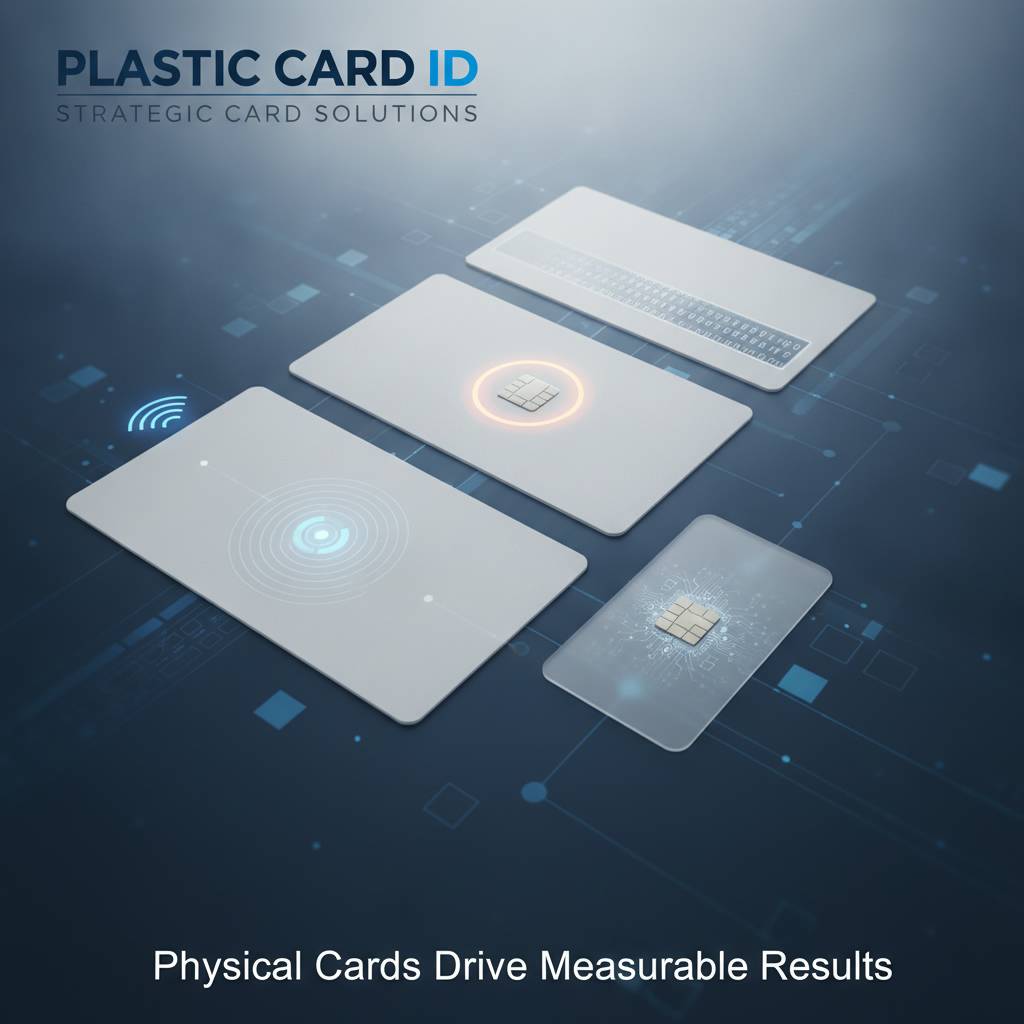 Contactless card technology has moved well beyond novelty status. RFID and proximity cards now represent the backbone of access control systems across commercial real estate, healthcare, hospitality, education, and enterprise environments throughout the United States. The ability to authenticate without physical contact is both a convenience feature and a security feature - cards that never wear out from repeated insertion cannot develop the readability failures that plague swipe-based systems over time.
The range of contactless card technologies is broader than many buyers initially expect, and each technology tier offers a different balance of security, compatibility, and cost. Getting this specification right at the sourcing stage - before cards are issued - avoids expensive card replacement cycles down the road.
125kHz Proximity Cards for Standard Access Control
Standard 125kHz proximity cards (often called prox cards) transmit a fixed, read-only identification number when passed near a compatible reader. These are the workhorses of building access control systems - simple, reliable, and compatible with the vast majority of legacy and current-generation access control infrastructure deployed across U.S. commercial buildings. They are typically blank CR80 format, printable on standard card printers, and can carry visual credential information alongside their embedded function.
The limitation of standard proximity cards is that their identification numbers cannot be changed or encrypted - they broadcast a static number that the access control system either recognizes or does not. For most commercial access applications, this is entirely adequate. For high-security environments, it is worth considering the next tier of contactless technology.
Smart Chip Cards and MIFARE DESFire Technology
Smart chip cards bring a fundamentally different security model to the table. Rather than broadcasting a fixed number, smart chips engage in encrypted mutual authentication with the reader - each transaction involves a cryptographic exchange that cannot be replicated simply by capturing and replaying the card's signal. MIFARE DESFire, in particular, uses AES-128 encryption and is widely specified in government, casino, and enterprise environments where the cost of a security breach significantly outweighs the cost of the cards themselves.
Casino player cards represent one of the most demanding use cases for smart chip technology - these cards must track complex player behavior across systems, resist duplication that could compromise rewards program integrity, and survive the physical stress of daily handling in a high-volume environment. CPE supplies smart chip cards for exactly these environments, and the same technology that protects a casino floor can protect a corporate campus or healthcare facility.
Choosing the Right RFID Frequency for Your System
- 125kHz (LF): Standard proximity cards, maximum compatibility with legacy readers, read-only fixed ID, ideal for basic building access programs.
- 13.56MHz (HF): Smart cards including MIFARE Classic, MIFARE DESFire, and ISO 14443 compliant chips - supports encryption and read/write capability.
- Dual-frequency cards: Carry both 125kHz and 13.56MHz technology, enabling transition from legacy to modern infrastructure without forcing immediate reader upgrades.
- Read range considerations: Standard proximity reads at 2-4 inches; some HF systems read at up to 12 inches depending on reader configuration and card antenna design.
- System compatibility: Always verify card technology against your existing reader infrastructure before ordering - mixing incompatible frequencies is the most common and most avoidable sourcing mistake in access control programs.
Holographic Overlaminates and UV Security Features
Visual security features occupy a special role in any card program - they provide instant authentication without any reader, scanner, or electronic system. A trained eye or even a casual glance can confirm authenticity or flag a suspicious card. For event credentials, employee badges, and membership cards that move through environments where electronic verification is impractical, visual security features are not optional - they are essential.
The good news is that these features integrate seamlessly into standard card printing workflows. Organizations using in-house card printers can apply holographic overlaminates during the printing process, creating professional-grade security output without industrial-scale equipment or external fulfillment delays.
Holographic Overlaminates Applied via Card Printers
Modern card printers from manufacturers like Evolis, Zebra, and Fargo support holographic laminate overlays as part of their ribbon and panel systems. A holographic overlaminate simultaneously protects the printed surface and adds a visual security layer that is extraordinarily difficult to replicate without the same industrial lamination equipment. The iridescent, shifting appearance of a holographic finish is visually distinctive and nearly impossible to convincingly fake with consumer printing equipment.
These overlaminates also extend card life substantially - protecting printed surfaces from abrasion, UV fading, and the general wear of daily handling. For employee ID programs where cards need to remain legible and professional-looking for 12-36 months, holographic overlaminates deliver double value: security and durability simultaneously. This is the kind of feature that pays for itself quickly in reduced card replacement costs.
UV Fluorescent Ink and Hidden Security Marks
UV fluorescent printing adds a hidden verification layer invisible under normal lighting conditions and immediately visible under a UV lamp. Event staff, security personnel, and retail employees can authenticate cards in seconds with a simple handheld UV light - no reader, no network connection, no system dependency. For high-traffic scenarios like concerts, conferences, or venue access, this speed advantage is operationally significant.
UV ink features can encode anything from simple organizational logos to complex patterns, serial numbers, or authentication codes. The information revealed under UV light can be standardized across a card program so that any staff member with a UV light can authenticate any card in seconds. Combined with a magnetic stripe or RFID chip, UV features create a multi-layer security architecture that is genuinely difficult to defeat.
Signature Panels and Tamper-Evident Surfaces
Signature panels are a low-cost, high-value security feature often underestimated by organizations sourcing blank cards for the first time. A properly manufactured signature panel has a tamper-evident surface that visibly shows signs of alteration attempts - the material is designed so that any attempt to erase or modify a signature leaves permanent visible damage. This is an ISO standard feature on credential and ID cards and signals that the card was issued by an organization that takes identity management seriously.
Tamper-evident surfaces extend beyond signature panels. Some blank card stocks feature surface treatments that cause irreversible discoloration or delamination if someone attempts to chemically alter printed information. For organizations issuing high-value credentials - professional licenses, security clearance badges, or access credentials to sensitive facilities - these surface treatments add meaningful protection at minimal additional cost per card.
Specialty Formats: Clear, Die-Cut, and Metal Cards
Standard white PVC cards are the right choice for most programs. But specialty card formats extend the security and branding possibilities dramatically for organizations where differentiation matters. Clear and frosted cards, custom die-cut shapes, and luxury metal card options all serve specific use cases where a standard card format would underperform - either visually, functionally, or both.
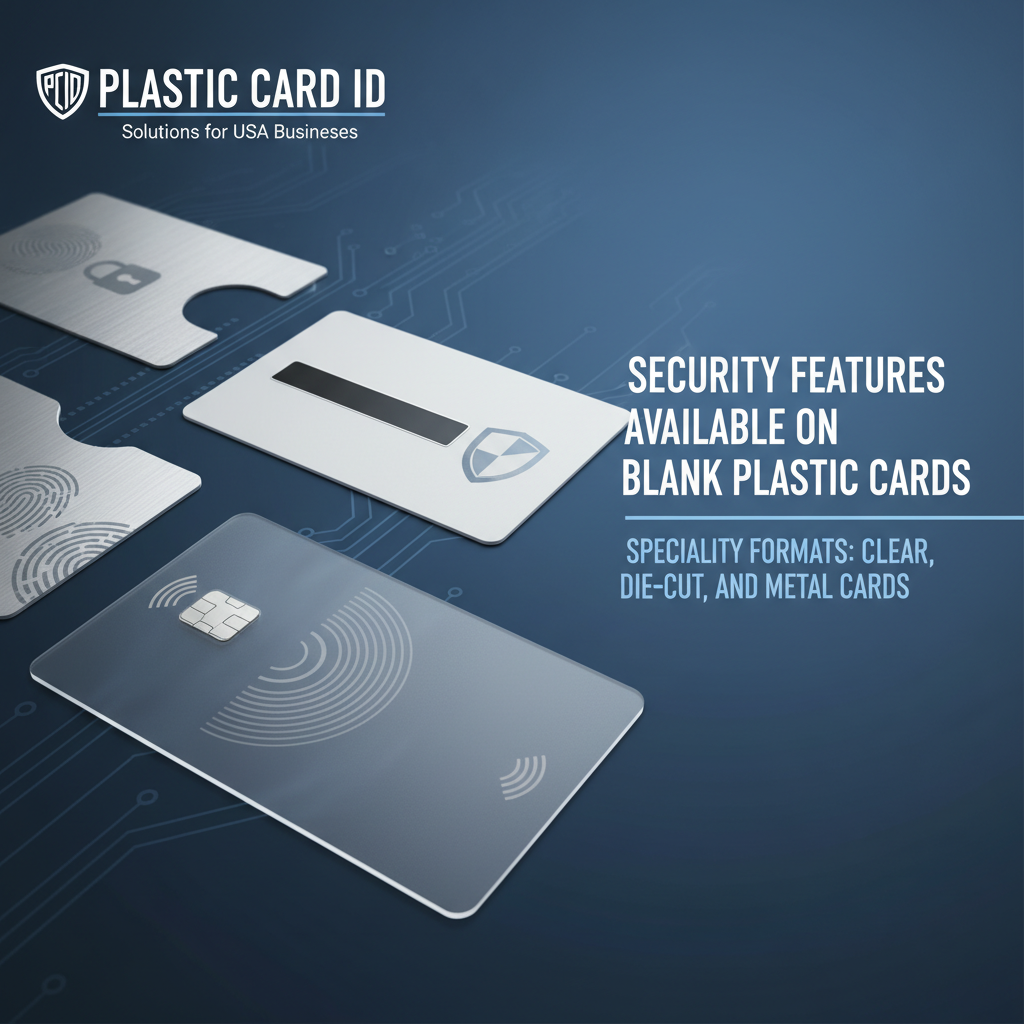
These formats are not just aesthetic choices. Clear cards, for example, make certain types of tampering or alteration more visible. Metal cards carry a physical weight and durability profile that makes counterfeiting through standard card printing equipment essentially impossible. Understanding the security implications of specialty formats helps organizations make smarter sourcing decisions.
Clear and Frosted Plastic Cards
Clear PVC and frosted card stocks offer a visual distinctiveness that standard white cards cannot match - but they also provide a subtle security advantage. Any alteration to a clear or frosted card surface is far more visible than on an opaque white background, because the transparency of the substrate makes adhesive residue, surface damage, and re-lamination attempts obvious under basic inspection. Organizations issuing credentials in environments with active fraud risk find this property genuinely useful.
Clear cards also enable design approaches where the card holder's hand or background shows through the card itself - creating a visual effect that is inherently difficult to replicate without access to the same card stock. For VIP programs, exclusive membership credentials, and premium loyalty cards, this visual distinctiveness is both a security feature and a brand statement.
Metal Cards: Maximum Durability and Counterfeiting Resistance
Stainless steel, brass, and gold metal cards represent the high end of the card format spectrum, and their security profile matches their premium appearance. Metal cards cannot be produced on consumer-grade printing equipment - the manufacturing requirements are fundamentally different from PVC card printing, which means the barrier to counterfeiting is not just high, it is practically insurmountable for opportunistic fraud attempts.
For casino VIP programs, exclusive membership clubs, financial advisory firms, and executive credential programs, metal cards deliver a physical and psychological security signal that plastic alternatives cannot replicate. The weight, the texture, and the visual quality of a metal card communicate permanence and exclusivity - and they back up that communication with genuine durability that outlasts virtually any other card format in regular use.
Custom Die-Cut Shapes and Unique Form Factors
Non-standard card shapes - key fob formats, rounded cards, shaped credentials - are not just design choices. Custom die-cut shapes require specialized production equipment and cannot be replicated using standard CR80 card printers, which adds an immediate production barrier to anyone attempting to counterfeit the card. The unusual form factor also makes unauthorized duplicates visually obvious to anyone familiar with your legitimate card program.
For access tokens, VIP passes, and specialty credentials where visual distinctiveness is part of the security strategy, custom die-cut formats are worth exploring. CPE works with organizations across the United States to identify which format serves their specific security and operational requirements - and with 25 years of experience in the space, the guidance you receive is grounded in real program outcomes, not theoretical specifications.
Building a Multi-Layer Security Architecture for Your Card Program
The most resilient card programs do not rely on a single security feature - they layer multiple features so that defeating any one of them does not compromise the whole system. This multi-layer approach is standard practice in high-security environments and increasingly accessible to organizations of any size as card printing technology advances and component costs decline. Whether you are running a 200-card employee badge program or a 50,000-card loyalty program, layered security is achievable and practical.
Plastic Card ID helps clients design card specifications that achieve the right level of security for their risk profile without over-engineering programs that do not require it. A regional gym chain does not need MIFARE DESFire encryption on its membership cards. A corporate campus managing access to server rooms does. Matching security architecture to actual risk is how you get programs that work well and remain cost-effective over time.
Combining Physical, Encoded, and Visual Security
The ideal combination for most serious card programs involves three layers: a physical security feature visible to the naked eye, an encoded feature verifiable by a reader or system, and a covert feature detectable only with specialized equipment. A holographic overlaminate satisfies the first layer. A HiCo magnetic stripe or RFID chip satisfies the second. UV fluorescent printing satisfies the third. Together, these three layers create a security profile that requires defeating all three independently - a task beyond casual counterfeiters and operationally expensive even for sophisticated fraud attempts.
Card programs built on this three-layer model also have natural response flexibility. If one layer is ever compromised - say, a stripe encoding pattern becomes widely known - the other layers continue to function and can be updated independently without requiring a complete card program redesign. This architectural resilience is one of the most underappreciated benefits of multi-layer security design.
System Integration and Back-End Authentication
No card security feature is as strong as the system that validates it. The card is an authentication token - the system is the authority. Organizations that invest in well-designed card features but deploy them against weak back-end systems create a false sense of security. RFID chips that encrypt beautifully but connect to databases with no audit trails, for example, miss half the security equation. Card program security is always a combination of what is on the card and what the system does with it.
CPE supplies the hardware, card stock, ribbons, and accessories that make in-house card programs run. For organizations ready to contact us about specifications that match their specific security requirements, the conversation is always worth having before orders are placed. Retroactively adding security features to a deployed card program is significantly more expensive than specifying them correctly at the start.
Printer Ribbons and Overlaminates That Support Security Features
- YMCKO ribbons: Include a K panel for crisp black text and an O panel for a clear protective overlaminate - the baseline for professional card output.
- YMCKOK ribbons: Add a second K panel for back-side printing without switching ribbons, increasing throughput for dual-sided credential programs.
- Holographic overlaminate ribbons: Replace the standard O panel with a holographic overlaminate, adding visual security in the same pass as printing.
- UV panel ribbons: Include a UV fluorescent panel for covert printing in the same print pass as standard color output.
- Security overlaminate films: Standalone overlaminate cartridges for printers with separate lamination modules, enabling thicker, more durable security laminates.
Selecting the right ribbon configuration for your printer and card program is a decision that affects both security output quality and per-card cost. Plastic Card ID supplies ribbons for Evolis, Zebra, and Fargo printers and can help organizations match ribbon specifications to card program security requirements precisely.
Work With Plastic Card ID to Secure Your Card Program
 Security features on blank plastic cards are not one-size-fits-all - they are a set of tools, and the right tools depend entirely on what you are protecting, who you are issuing to, and what your operational environment looks like. Getting these specifications right before you order saves significant time, money, and headache down the road. It is the difference between a card program that runs smoothly for years and one that requires constant intervention, replacement cycles, or reactive security upgrades.
With over 25 years of experience, more than 100,000 customers served, and over 50 million cards shipped across the United States, Plastic Card ID brings a depth of practical knowledge to every card program conversation that generic suppliers simply cannot match. We are a strategic partner, not just a vendor - and the distinction matters enormously when your card program is the face of your organization's security posture.
Ready to build a card program with the right security features for your needs? Contact Plastic Card ID today at 800.835.7919 and speak with a specialist who understands both the technology and the real-world programs that depend on it. Your next card program starts with a single conversation - make it count.
Previous Page