How Long Do Blank Plastic Cards Last: Durability Guide
Table of Contents []
- How Long Do Blank Plastic Cards Last? What Plastic Card ID Wants You to Know
- The Lifespan Fundamentals Every Card Buyer Should Understand
- What Shortens the Life of a Blank Plastic Card
- How Different Card Types Compare on Longevity
- Extending Card Life: Practical Strategies for Organizations
- Card Program Planning: Matching Longevity to Use Case
- Partner With Plastic Card ID for Cards That Go the Distance
How Long Do Blank Plastic Cards Last? What Plastic Card ID Wants You to Know
Ask a sharp operations manager what keeps a card program running smoothly, and they will almost always circle back to the same question: how long will these cards actually hold up? It sounds simple. The answer, though, depends on a web of variables - card composition, print method, usage environment, handling frequency, and storage conditions. Getting this wrong means reprinting cards on a tighter timeline than you budgeted for. Getting it right means building a program that runs for years without friction.
Blank PVC plastic cards - the CR80, 30 mil variety that meets ISO 7810 standards - are engineered for durability far beyond what paper, cardstock, or laminated alternatives can deliver. When stored properly and handled reasonably, a quality blank plastic card can remain printable and structurally sound for a decade or longer. That figure surprises people. It should not. PVC is a resilient polymer, and cards manufactured to tight tolerances simply do not fall apart easily.
This page walks through the real-world lifespan of blank plastic cards, how different card types compare, what shortens or extends that lifespan, and how partnering with CPE helps organizations make smarter, longer-lasting card program decisions from the very start.
| Card Type | Typical Shelf Life (Unprinted) | In-Use Lifespan | Common Applications |
|---|---|---|---|
| Blank PVC CR80 (30 mil) | 7-10 years | 3-7 years active use | ID badges, loyalty, membership |
| Magnetic Stripe (HiCo) | 7-10 years | 5-10 years active use | Gift cards, hotel keys, access |
| RFID / Proximity Cards | 5-10 years | 3-8 years active use | Access control, contactless ID |
| Smart Chip Cards | 5-8 years | 3-5 years active use | Secure access, campus ID |
| Clear / Frosted PVC | 5-8 years | 2-5 years active use | VIP cards, specialty branding |
The Lifespan Fundamentals Every Card Buyer Should Understand
 Durability is not a single measurement. It encompasses physical integrity, surface printability, magnetic or chip functionality, and visual appearance - and each of these can degrade at different rates. A card can look flawless long after its magnetic stripe has degraded, or a card's surface can show cosmetic wear while the chip inside still reads perfectly. Understanding which aspect of longevity matters most for your specific use case shapes every purchasing decision downstream.
For organizations running high-volume card programs, these distinctions translate directly to cost. Buying cheaper cards that degrade quickly means cycling through replacements, reprinting, re-encoding, and re-issuing - expenses that compound fast. Investing in cards with proper durability specs upfront consistently delivers better total cost of ownership, even when the per-card price is marginally higher.
Physical Structural Integrity of PVC Cards
Standard CR80 cards at 30 mil thickness are designed to flex without cracking under normal wallet and pocket conditions. The composite PVC laminate structure resists delamination - the peeling apart of card layers that plagues lower-quality alternatives. Under normal handling, a well-manufactured PVC card will not crack, warp, or structurally fail for years.
Extreme temperatures can challenge this. Leaving cards in a hot vehicle for extended periods will cause warping in nearly any card format. Cold does less damage structurally, but repeated freeze-thaw cycling in outdoor environments can stress the card body over time. Storing cards in climate-controlled environments between print runs dramatically extends their usable life.
Surface Quality and Printability Over Time
Blank cards waiting to be printed are only useful if their surfaces remain clean, scratch-free, and properly receptive to dye-sublimation or direct-to-card thermal printing. Dust, oils from fingerprints, and micro-scratches are the silent enemies of print quality. Cards stored in sealed packaging, away from direct handling, maintain their surface receptivity across that 7-10 year shelf-life window with remarkable consistency.
Once printed, the longevity of the image layer depends heavily on whether an overlay or laminate is applied. Cards printed with a protective overlay resist fading, scratching, and UV degradation far better than unprotected prints. For ID badges and membership cards intended to last 3-5 years, applying a laminate overlay during the printing step is practically non-negotiable.
Encoding and Functional Component Lifespan
Magnetic stripes operate on a different lifespan curve than the card body itself. HiCo magnetic stripes - the high-coercivity variety used in access cards, gift cards, and hotel keys - resist accidental erasure and maintain reliable data integrity far longer than LoCo alternatives. A HiCo stripe stored correctly can remain fully functional for a decade or more without data loss.
RFID and smart chip components introduce additional variables. The embedded antenna in a proximity card can tolerate significant physical stress, but deliberate bending, drilling, or puncture will disable it. Smart chips with contact pads can suffer wear at the contact surface from repeated insertions. Usage intensity matters enormously here - a card swiped daily in an access control system will show more wear in two years than a card used weekly for five years.
What Shortens the Life of a Blank Plastic Card
There is a gap between what plastic cards are capable of lasting and what they actually last in real-world deployment. That gap is almost always created by avoidable handling and storage errors. The most common card longevity killers are entirely preventable once an organization knows what to watch for, which is exactly the kind of guidance a seasoned partner like CPE provides alongside every order.
Organizations that treat card inventory management with the same discipline they apply to other supply chain assets routinely get the maximum lifespan out of every card they purchase. Those that leave cards sitting loose in boxes, exposed to light and humidity, often find themselves repurchasing far earlier than necessary - a cost that never shows up as a line item until it becomes a pattern.
Storage Conditions That Damage Card Inventory
Blank cards should be stored horizontally in their original sealed packaging, in a cool, dry location away from direct sunlight. Humidity above 60% over extended periods can cause slight dimensional changes and surface tackiness. Temperature swings above 95 degrees Fahrenheit are particularly damaging to both the card substrate and any pre-applied magnetic stripe or chip components.
Cards stored near strong magnetic fields - think heavy electrical equipment, industrial magnets, or even certain older computer hardware - risk degradation of magnetic stripe data before the cards are ever printed. This is an easy oversight in warehouse or back-office storage environments. Keeping card stock in enclosed storage away from magnetic sources is a simple precaution with meaningful long-term benefits.
Handling Errors That Accelerate Surface Wear
Human skin oils are one of the most consistent causes of print adhesion problems and surface degradation on blank cards. Cards should always be handled by the edges when being loaded into printers or inspected before printing. A single thumbprint in the center of a blank card can create a visible defect in the final printed output and reduce the bonding of protective overlays.
Card printer cleaning is the other half of this equation. Dirty rollers and printheads transfer contaminants onto card surfaces, shortening both the life of the card and the life of the printer itself. Plastic Card ID stocks complete printer cleaning kits specifically formulated for Evolis, Zebra, and Fargo printers, making it straightforward to maintain both cards and equipment in peak condition simultaneously.
Environmental Exposure During Active Use
Once a card is issued and in active use, its longevity depends heavily on what it encounters. Cards used outdoors - event credentials, parking passes, outdoor access control - face UV exposure, moisture, and temperature variation that indoor cards do not. Laminate overlays provide significant protection here, but card sleeves and carriers add another layer of defense for cards that need to survive genuinely harsh conditions.
Wallet wear is underappreciated as a lifespan factor. A card carried daily in a wallet experiences thousands of insertion and removal cycles over its life, plus constant low-level abrasion from contact with other cards. High-quality PVC cards handle wallet wear gracefully for years, while thinner or lower-grade alternatives can delaminate or crack at corners within months.
How Different Card Types Compare on Longevity
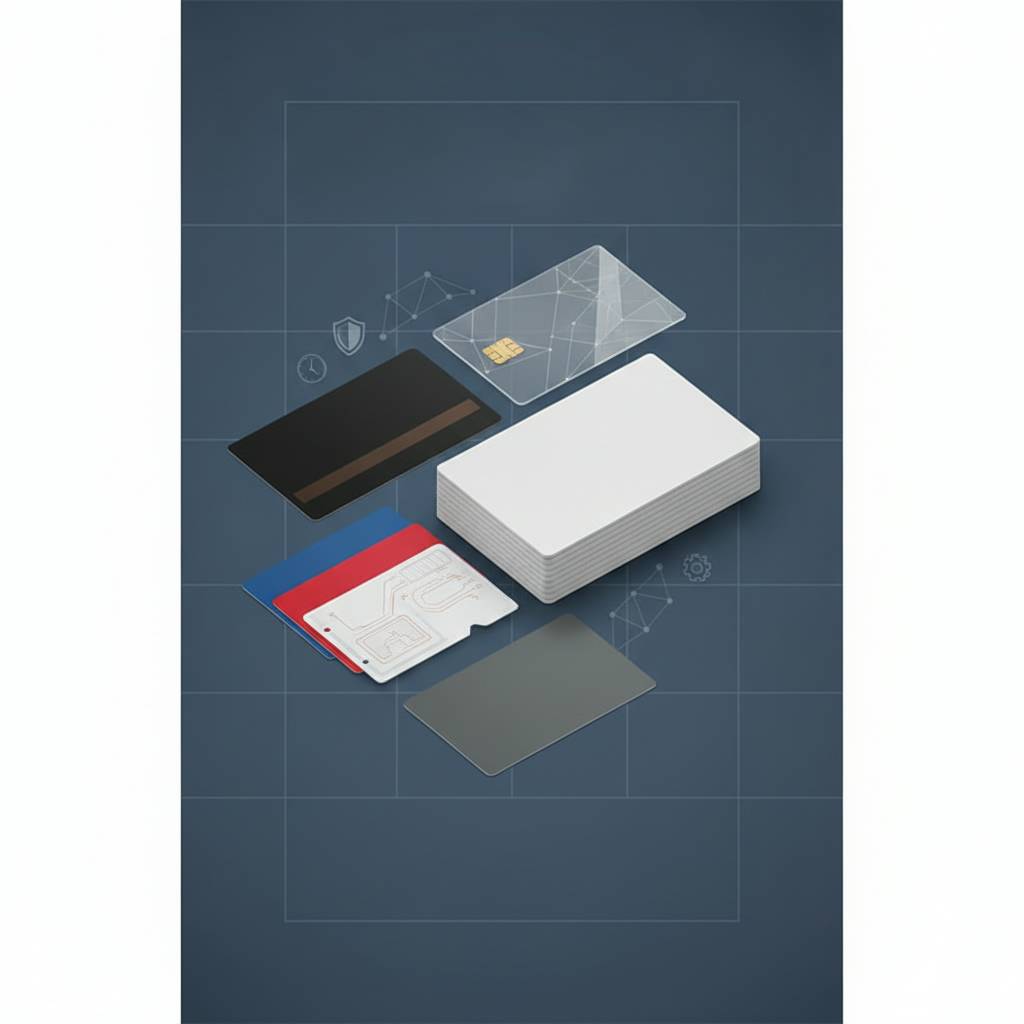 Not all plastic cards are built the same, and longevity varies meaningfully across card categories. Choosing the right card type for a given application is partly a durability decision, not just a functional one. Matching card specifications to the actual demands of your program prevents premature replacement cycles and reduces total program costs.
The diversity of CPE's catalog - spanning blank PVC, HiCo and LoCo magnetic stripe, RFID proximity, smart chip, clear, frosted, colored, and specialty formats - exists precisely because different programs have genuinely different durability requirements. One size does not fit all, and experienced buyers know the difference.
Blank PVC Cards Versus Specialty Cards
Standard blank CR80 PVC cards are the most resilient format for general-purpose use. Their homogeneous laminate construction has no embedded components to fail, making structural integrity their primary longevity factor. Well-stored blank PVC cards have been reliably printed after 8 or more years in storage - a testament to how stable the base material is when handled correctly.
Specialty cards like clear PVC and frosted cards introduce slightly different surface chemistry. Clear cards are visually striking but can show scratching more obviously than opaque cards because the defects have less visual context to hide in. Clear and frosted cards are best used in lower-friction applications such as VIP passes, collector items, or prestige membership programs where visual impact outweighs the need for heavy daily use durability.
Magnetic Stripe Card Longevity: HiCo vs. LoCo
- HiCo (High Coercivity) stripes require stronger magnetic fields to encode and are far more resistant to accidental erasure from everyday magnetic sources. Ideal for long-term programs where cards circulate for years.
- LoCo (Low Coercivity) stripes are easier to encode and re-encode, making them suitable for hotel key cards or short-term event credentials where the card is reused or reassigned frequently.
- HiCo stripes in well-manufactured cards can maintain data integrity for 10 years or more under normal conditions.
- LoCo stripes are more vulnerable to accidental erasure from proximity to other magnetic sources, including some phone cases and magnetic closures on bags.
- For any program where card longevity beyond 2-3 years is a priority, HiCo is the correct choice - the small price difference is negligible against the cost of card replacement cycles.
RFID and Smart Card Durability Considerations
RFID proximity cards and smart chip cards embed active components within the card body, which introduces failure modes that standard PVC cards simply do not have. The embedded antenna in a proximity card is designed to tolerate flex and stress, but extreme bending - particularly crease-bending - can fracture the antenna loop and permanently disable the card. Proximity cards should be stored flat and issued in protective sleeves for maximum lifespan.
MIFARE DESFire and similar advanced contactless smart cards are engineered to high reliability standards and perform consistently across thousands of read cycles. Their lifespan in access control environments is typically 3-8 years of active use, depending on read frequency and handling conditions. Organizations running high-security access programs should plan for periodic card refresh cycles as part of normal program management rather than waiting for failures.
Extending Card Life: Practical Strategies for Organizations
Getting the maximum usable life from a card program is partly about buying the right cards and partly about building the right operational habits around them. Organizations that implement simple card management protocols consistently outperform those that treat cards as a disposable commodity. The investment in protocols pays back quickly in reduced reorder frequency and lower per-card program costs over time.
The following strategies are drawn from the experience of working with over 100,000 customers across every industry segment - retail, healthcare, hospitality, corporate, education, events, and more. These are not theoretical recommendations; they are what actually works in real card programs across the United States.
Protective Overlays, Sleeves, and Carriers
Applying a protective topcoat overlay during printing is the single highest-impact action an organization can take to extend the in-use lifespan of a printed plastic card. Overlays seal the printed surface against UV fading, abrasion, and moisture. Cards printed with a full overlay laminate can last twice as long in active daily use as unprotected cards under identical conditions.
For cards that face particularly demanding environments, card sleeves and carriers provide an additional physical barrier. Plastic Card ID stocks a full range of card sleeves, carriers, and holders designed to complement every card format in the catalog. These accessories are especially valuable for event credentials, outdoor access cards, and employee badges in industrial environments.
Printer Maintenance as a Card Quality Factor
A poorly maintained card printer does more than produce lower-quality prints - it physically damages cards during the printing process. Dirty rollers create drag that can cause micro-abrasions on card surfaces. Contaminated printheads transfer debris that compromises image bonding and surface quality. Regular printer cleaning is directly linked to card longevity, not just print quality.
Running cleaning cards through the printer at manufacturer-recommended intervals, combined with periodic deep cleaning using cleaning kits, keeps card surfaces pristine throughout the printing process. CPE offers cleaning kits and ribbons for all major printer brands in the catalog, making it easy to maintain a consistent maintenance schedule without sourcing from multiple vendors.
Inventory Rotation and Storage Best Practices
Card inventory should be rotated on a first-in, first-out basis. While blank PVC cards can remain printable for a decade under ideal conditions, using older stock first is simply sound inventory management. Cards stored at the back of a supply room for years while newer inventory is pulled from the front creates unnecessary age variation in card stock.
Seal opened packages of blank cards in resealable bags between print runs to prevent dust and humidity exposure. Store vertically only if space demands it, and only in short stacks - long-term vertical storage can cause slight warping in larger quantities. Horizontal flat storage in sealed packaging remains the gold standard for preserving blank card quality across any storage duration.
Card Program Planning: Matching Longevity to Use Case
One of the most practical questions a card program manager can ask is: how long does this card actually need to last? The answer drives card specification, print method, overlay choice, and reorder cadence. Overspending on longevity for a short-term promotional card is wasteful; underspecifying durability for a multi-year employee ID program is costly in a different way.
Retailers who switched from paper gift card programs to plastic have documented sales increases of 35-50% - a compelling number that changes how organizations think about card investment. When a card drives that kind of revenue impact, getting the durability specification right is not a minor operational detail. It is a business performance decision.
Short-Term Cards: Events and Promotions
Event credentials, short-term promotional cards, and single-season loyalty cards do not need to be built for a decade of use. LoCo magnetic stripe cards, standard uncoated PVC, or even clear cards can serve these applications effectively at lower per-card cost. The goal here is visual impact and functional reliability for the duration of the program, not long-term durability.
For these applications, buying in quantities that match the program duration rather than stocking multi-year inventory is the smarter approach. CPE supports programs of every scale - from 50 cards per month up to tens of thousands for high-volume campaigns - making right-sizing orders for short-term programs completely practical.
Long-Term Cards: ID, Access, and Loyalty Programs
Employee ID badges, membership cards, and access control credentials are typically expected to last 2-5 years per issuance cycle. For these applications, HiCo magnetic stripe or RFID cards with full overlay printing are the appropriate specification. The total cost of a properly spec'd card program - including the higher per-card cost of durable cards - is consistently lower than the cost of a cheap card program with frequent replacement cycles.
Loyalty cards that live in customers' wallets serve double duty: they function as a transaction tool and as a persistent brand reminder every time the wallet opens. Plastic loyalty cards dramatically outperform paper punch cards in both redemption rates and customer retention metrics. The durability of plastic is inseparable from that performance difference.
Specialty and Prestige Cards
Casino player cards, hotel key cards, and VIP membership credentials have specific durability requirements shaped by their usage intensity. Casino cards are handled multiple times daily and benefit from robust PVC construction with HiCo encoding and full overlay protection. Hotel key cards are typically LoCo and designed for frequent re-encoding - their lifespan is measured in program cycles rather than calendar years.
Luxury metal cards in stainless steel, brass, or gold represent the extreme end of the longevity spectrum. These cards can last indefinitely in physical terms - they simply do not degrade the way polymer cards can. Metal cards are the premium choice for prestige memberships, exclusive loyalty programs, and high-value client relationships where the card itself communicates status and permanence.
Partner With Plastic Card ID for Cards That Go the Distance
After more than 25 years and over 50 million cards supplied to businesses and organizations across the United States, the team at Plastic Card ID has developed a depth of product knowledge and program experience that generic card suppliers simply cannot match. Every card recommendation is backed by real-world deployment data across hundreds of industries and program types. That is the difference between buying cards and building a card program.
Whether your organization needs 50 blank PVC cards per month for in-house employee badge printing or tens of thousands of HiCo magnetic stripe cards for a nationwide retail loyalty program, Plastic Card ID operates as a strategic partner at every scale. Cards, printers, ribbons, cleaning kits, sleeves, carriers, and mailing services are all available from a single source - eliminating the complexity of managing multiple vendors for what should be a seamless operation.
Ready to build a card program that lasts? Connect with the team at Plastic Card ID today. Call 800.835.7919 and speak with a card program specialist who can match your specific application requirements to the right card specification, quantity, and accessories - the first time.
Call Plastic Card ID at 800.835.7919 today and discover why over 100,000 customers trust us as their long-term card program partner across the United States.
Previous Page