What Are Blank Plastic Cards? A Simple Guide
Table of Contents []
- What Are Blank Plastic Cards? Everything Plastic Card ID Wants You to Know
- The Full Spectrum of Blank Card Varieties
- Why Businesses Choose Blank Cards Over Pre-Printed Alternatives
- Card Printers and the Blank Card Ecosystem
- Specialty Card Options That Go Beyond the Basics
- Building a Long-Term Card Program Partnership With Plastic Card ID
What Are Blank Plastic Cards? Everything Plastic Card ID Wants You to Know
Ask ten people what a blank plastic card is, and you might get ten different answers - an employee badge waiting to be printed, a hotel key that hasn't been encoded yet, a loyalty card with a clean canvas. They're all right. Blank plastic cards are the foundational building block of nearly every card program in existence, and understanding them deeply can save your organization money, sharpen your operations, and open possibilities you didn't know were available.
The short answer: a blank plastic card is an unprinted, unengraved card - typically manufactured to ISO 7810 CR80 standards - ready to accept whatever identity, branding, or data your program requires. The long answer fills this entire page, and it's worth reading if you're responsible for any kind of card program, from a boutique gym to a regional retail chain.
Whether you're running a membership program, issuing staff credentials, or building a gift card campaign that actually moves product, the card you start with matters enormously. Let's unpack what these cards are, what's inside them, and why the right blank card changes everything downstream.
The CR80 Standard: Why Size Is Not an Accident
CR80 is the designation for the standard credit-card-sized format - 3.375 inches wide by 2.125 inches tall, at a thickness of 30 mil (0.030 inches). This is the ISO 7810 specification, the same dimension shared by every credit card, driver's license, and hotel key card you've ever held. Standardization isn't a technicality - it's a strategic advantage. Cards built to CR80 fit every wallet slot, every card holder, every printer tray, and every badge clip on the market.
When you purchase blank CR80 cards, you're buying a platform that plugs seamlessly into a global infrastructure of printers, laminators, ID systems, and cardholder accessories. Deviating from this standard requires custom manufacturing and custom hardware - costs that multiply fast. For most businesses, CR80 is the right call, full stop.
What's Actually Inside a PVC Blank Card
Polyvinyl chloride - PVC - is the dominant material in plastic card manufacturing for reasons that go beyond cost. PVC cards are dimensionally stable, heat-tolerant within normal operating ranges, resistant to flex cracking, and compatible with every major card printing technology. When you run a PVC card through a dye-sublimation printer, the dye bonds at a molecular level, producing images that don't fade, smear, or peel under normal conditions.
The construction is typically a laminated core - multiple thin layers fused under heat and pressure. This laminated structure is what gives blank cards their durability. A cheaply made card will delaminate, bow, or jam mid-print. Quality cards - the kind CPE supplies - stay flat, feed cleanly, and produce sharp results from the first card to the fifty-thousandth.
Blank vs. Pre-Printed: The Real Trade-Off
Pre-printed cards look great in the catalog. But they lock you into a design, a quantity, and a timeline that may not serve you well six months from now. Blank cards give your organization complete design control - print exactly what you need, when you need it, in the quantity that makes sense today. For organizations with in-house card printers, blank cards typically deliver a significantly lower per-card cost over time.
The calculation shifts when quantities climb into the tens of thousands and designs don't change. At that scale, pre-printed or fully custom-manufactured cards can offer unit cost advantages. The key is knowing which scenario fits your program - and CPE can help you model both paths honestly before you commit to either.
| Card Type | Common Use Case | Key Feature |
|---|---|---|
| Plain White PVC CR80 | ID cards, membership, loyalty | Universal printability |
| Magnetic Stripe (HiCo) | Gift cards, hotel keys, access | High coercivity, data-stable |
| Magnetic Stripe (LoCo) | Loyalty, membership, short-term use | Lower cost encoding |
| RFID / Proximity | Access control, attendance | Contactless read capability |
| Smart Chip (MIFARE DESFire) | Secure facility access, transit | Encrypted contactless data |
| Clear / Frosted PVC | Premium branding, VIP programs | Distinctive visual impact |
The Full Spectrum of Blank Card Varieties
 Not every blank card is a plain white rectangle. That's probably the most important misconception to clear up early. The "blank" designation simply means the card arrives without your specific printing or encoding - the substrate itself can carry built-in features that dramatically expand what that card can do once it reaches your printer or encoding station.
From magnetic stripes to embedded RFID chips to specialized finishes, the variety within the blank card category is genuinely broad, and matching the right card type to your application from the start avoids expensive reprints and system incompatibilities later. Let's walk through the major categories.
Magnetic Stripe Cards: HiCo vs. LoCo
Magnetic stripe cards arrive blank with a stripe already embedded - either High Coercivity (HiCo, typically 2750 Oe) or Low Coercivity (LoCo, typically 300 Oe). HiCo stripes resist accidental erasure from everyday magnetic fields, making them the right choice for hotel keys, gift cards, and any application where the card will live in a wallet near smartphones or other cards for extended periods.
LoCo cards encode at lower energy requirements, which can reduce encoding hardware costs, and are suited to shorter-duration use cases where data-stability over months isn't a priority. Understanding this distinction before you order your first batch prevents a frustrating cycle of guest complaints and reprints. CPE carries both, in quantity ranges that serve small programs and high-volume operations alike.
RFID and Proximity Cards
Proximity cards and RFID cards contain an embedded antenna and chip sealed inside the card body - completely invisible from the outside, completely functional at reader distances ranging from a few centimeters to a meter or more depending on frequency. These cards transform a simple plastic card into a hands-free access credential. No swipe, no insert - just tap or approach.
125 kHz proximity cards are the workhorses of traditional access control, compatible with the vast majority of installed door reader systems across commercial real estate. 13.56 MHz smart cards - including those carrying MIFARE DESFire encryption - operate at higher security levels and support multi-application use. A single card can control building access, track time and attendance, and interface with a cafeteria payment system simultaneously.
Clear, Frosted, and Colored Blank Cards
Sometimes the substrate itself is the statement. Clear PVC cards allow printed designs to appear suspended - logos, text, and images seem to float without a white background, creating a premium visual impression that standard cards simply can't replicate. Frosted cards split the difference, offering a semi-translucent, matte-tactile finish that photographs beautifully and feels distinct in the hand.
Colored PVC stock - available in black, gold, silver, and a range of solid colors - arrives pre-colored so that even a minimal print job produces a polished result. For VIP programs, executive access cards, or luxury retail gift card programs, these specialty substrates elevate perceived value in ways that are hard to quantify but immediately felt by the cardholder.
Smart Chip Cards and Advanced Secure Credentials
Smart chip cards carry an integrated circuit - a microprocessor - capable of storing and processing data securely. Unlike magnetic stripes, which are essentially passive storage, a smart chip actively participates in authentication transactions. This makes smart chip cards significantly harder to clone or counterfeit. For casinos, universities, healthcare systems, and government facilities, this distinction is non-negotiable.
MIFARE DESFire EV2 and EV3 chips represent the current standard for high-security contactless smart cards, offering AES encryption and mutual authentication protocols. If your access control system, loyalty platform, or casino player tracking program specifies a chip type, it's worth verifying compatibility before ordering at scale - a step CPE is positioned to help you navigate.
Why Businesses Choose Blank Cards Over Pre-Printed Alternatives
The economics of blank cards are compelling but rarely spelled out clearly. Let's do that here. When you control the printing in-house, you control the cost, the timing, and the data. There's no minimum order quantity holding your program hostage to a run of 5,000 cards you needed last Tuesday. There's no lag waiting for a vendor to print and ship when an employee starts Monday and needs a badge Friday.
In-house card programs built on blank card stock scale gracefully. Start with 50 cards a month. Grow to 500. The per-card cost of your blank stock doesn't jump significantly with volume, and your printer amortizes over a meaningful run. This is the model that keeps total cost of ownership manageable over a multi-year program life.
Control, Speed, and Flexibility
Retail gift card programs that migrated from paper certificates to plastic cards have consistently reported dramatic sales improvements. A 35-50% increase in gift card revenue is a well-documented outcome in that transition. Part of that improvement is psychological - plastic signals permanence and value in a way paper simply doesn't. Part is practical - a plastic card lives in a wallet and gets used, while paper certificates get lost in a drawer.
The flexibility argument extends to updates. When your logo changes, your color palette shifts, or you add a new partner to a co-branded loyalty card, reprinting is a print job, not a reorder campaign. That agility has real business value, especially in competitive retail and hospitality environments where brand consistency matters at every touchpoint.
Buyer's Guide: Choosing the Right Blank Card for Your Program
Selecting the wrong blank card type is a frustrating and avoidable mistake. Before placing any order, work through these key questions to identify the specification that fits your application precisely. Getting this right the first time saves significant cost and complexity down the line.
- What will the card do? Visual ID only? Data encoding? Contactless access? Each function points to a different substrate.
- What printer do you own or plan to purchase? Card printer compatibility affects which card thicknesses and coatings work correctly.
- How long will each card be active? Long-lived credentials benefit from HiCo stripes or chip-based encoding; short-term event passes may not.
- What volume do you need monthly? Volume informs whether blank cards plus in-house printing or bulk custom orders make more sense financially.
- Does the card need to work in existing reader infrastructure? Proximity and RFID cards must match the frequency and protocol your readers expect.
- Does branding or perceived value matter at the point of distribution? Clear, frosted, or colored substrates can carry significant brand weight without adding print complexity.
These aren't trick questions - but many card buyers skip them and pay the price in mismatched orders and wasted inventory. Working through this checklist before the first conversation with a supplier leads to better outcomes every time.
The Cost of Getting It Wrong
Ordering 10,000 LoCo magnetic stripe cards for a hotel key program sounds like a cost-saving move until you're fielding calls from guests whose keys stopped working by day two. Ordering plain white PVC when your access control system requires 125 kHz proximity means you've bought cards that can't do the job. Misspecification is expensive - both in direct replacement cost and in the operational disruption it causes.
The safest move is to buy sample quantities and test in your actual environment before committing to volume. CPE supports this approach - the catalog is built to serve programs at every scale, and there's no requirement to commit to mass quantities before you've validated the product in your workflow. Reach out at 800.835.7919 to discuss sample options for your specific application.
Card Printers and the Blank Card Ecosystem
 A blank card is half the equation. The other half is a printer capable of doing it justice. Dye-sublimation card printers from manufacturers like Evolis, Zebra, and Fargo are the industry standard for in-house card personalization, and they're designed specifically to work with CR80 PVC blank cards. Understanding how these components interact helps you build a program that performs reliably from day one.
Print resolution, ribbon type, lamination options, and encoding modules all vary by printer model and intended use case. A basic single-sided monochrome printer suits simple text-based ID cards at low volumes. A dual-sided full-color printer with an integrated laminator and magnetic stripe encoder suits a retail gift card or hotel key operation running hundreds of cards per week.
Matching Printer to Card Volume and Function
Entry-level card printers typically handle 100-500 cards per month comfortably, producing full-color output using YMCKO ribbons. Mid-range models with hopper capacities of 100 cards per load suit departments processing daily badge issuance or loyalty card enrollment. High-throughput retransfer printers produce edge-to-edge printing with superior image quality and durability, well-suited to programs where card appearance directly reflects brand quality.
The relationship between printer and blank card is tighter than most buyers initially realize. Card thickness, surface coating, and core material all affect how the printer feeds, images, and ejects each card. Using the right blank card specification for your printer model isn't optional for reliable operation - it's a fundamental requirement.
Ribbons, Supplies, and the Full Program Stack
Ribbons are the consumable that completes the printer-card relationship. YMCKO ribbons deliver full color plus a clear overlay panel that protects the printed surface. KO ribbons print monochrome with a clear overlay. Matching ribbon type to card application extends card life and maximizes print quality. Using generic or incompatible ribbons is a false economy - the resulting print quality and durability issues cost more in reprints than the ribbon savings ever deliver.
Beyond ribbons, a complete card program stack includes cleaning kits to maintain printer performance, card sleeves and carriers to protect cards in transit, and card affixing and mailing services for programs that distribute cards by mail. CPE stocks all of these - making the entire program manageable from a single supplier relationship rather than a patchwork of vendors.
Frequently Asked Questions About Blank Plastic Cards
Buyers new to in-house card programs often arrive with a consistent set of questions. Here are the most common, answered directly. Knowing these answers before you order prevents the most common first-time buyer frustrations.
- Can I print on blank magnetic stripe cards without damaging the stripe? Yes - standard dye-sublimation printing does not affect the magnetic stripe, provided you use compatible cards and ribbons.
- What is the shelf life of blank PVC cards? Properly stored - away from heat, direct sunlight, and static - blank PVC cards remain print-ready for years.
- Do blank RFID cards need to be encoded before printing? Encoding and printing are independent processes. Either can happen first, though encoding before printing is generally the safer workflow sequence.
- What minimum quantities can I order? CPE supports programs starting from very modest quantities - programs running 50 cards a month are as welcome as those running 50,000.
- Are there differences in print quality between card brands? Yes. Card surface consistency, coating uniformity, and core composition directly affect image density, color accuracy, and overlay adhesion.
If your question isn't on this list, the team at 800.835.7919 fields these conversations daily and can provide specific guidance for your application.
Specialty Card Options That Go Beyond the Basics
For programs where standard white PVC isn't enough, the catalog extends into territory that surprises many buyers. Luxury metal cards in stainless steel, brass, and gold-finish are available for programs where the card itself is a premium brand artifact. Executive membership programs, high-end hospitality, and VIP retail applications have used metal cards to create an unboxing and first-impression moment that plastic simply can't replicate.
Die-cut shapes take the form factor beyond CR80 into custom silhouettes - a key shape for a locksmith, a car outline for an automotive dealer loyalty program, a distinctive proprietary shape that becomes instantly recognizable as your brand's card. These options carry longer lead times and higher per-unit costs, but for the right program, the ROI in brand recognition and cardholder retention is significant.
Casino Player Cards and Hospitality Credentials
Casino player tracking cards operate in a high-throughput environment where cards are issued, used intensively, and reissued regularly. Durability, encoding consistency, and print clarity under volume conditions are non-negotiable requirements in gaming environments. The blank card specifications used in casino programs are tighter than general commercial applications - a detail that matters enormously when a card jam at the players' club desk creates a visible queue during peak hours.
Hotel key cards are another high-throughput application where HiCo magnetic stripe performance directly impacts guest experience. Every card issued must encode cleanly, hold its data reliably through a multi-night stay, and survive proximity to smartphones and room system deactivators. Selecting the right specification - and a supplier who stocks genuine HiCo product, not ambiguous commodity cards - is the difference between a smooth operation and a front-desk problem.
Colored Stock and Tiered Program Design
Tiered loyalty and membership programs use card color as an immediate visual signal of status. Gold stock for premium tier. Black for executive. Standard white or colored for base membership. When the card color itself communicates tier status, the card becomes a motivational tool - cardholders aspire to the next tier partly because of what that card looks like and what it signals to others.
This design approach requires accurate, consistent colored stock across reorders - a detail that varies with supplier quality. Cards printed months apart should match. Subtle color drift between production batches undermines the visual consistency your tiered program depends on. Sourcing from a supplier with consistent quality control across orders protects the integrity of your program design over time.
Building a Long-Term Card Program Partnership With Plastic Card ID
There's a meaningful difference between buying cards from a catalog and building a card program with a partner who understands your operation. Plastic Card ID has spent over 25 years and more than 50 million cards earning the right to call itself a strategic partner - not just a supplier. The catalog is extensive, but what's more valuable is the institutional knowledge behind it: which card works in which system, which printer suits which volume, which ribbon delivers the longest card life in your specific use case.
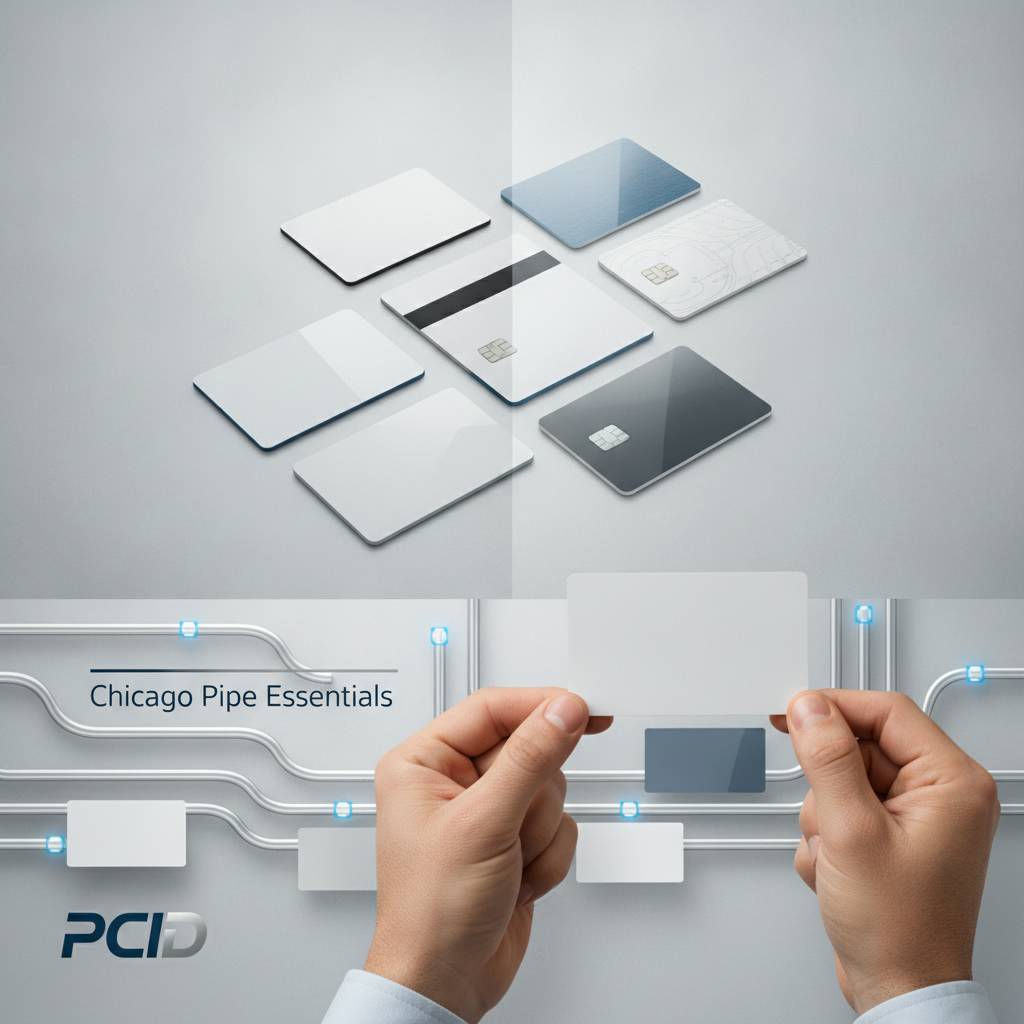
The over 100,000 customers served across that span represent every industry vertical you can imagine - retail, hospitality, healthcare, education, government, manufacturing, entertainment. The patterns that emerge from that breadth of experience are genuinely useful to a buyer who's building their first card program or optimizing a program that's grown beyond its original design.
Scalability From Day One
A program that starts at 50 cards a month may grow to 5,000 cards a month within two years. Building your program on a supplier and infrastructure that scales with you prevents the painful and expensive transition of rebuilding your card operation mid-growth. Printer models that scale, blank card stock available in a range of order quantities, and a supplier relationship that grows with you rather than forcing you to re-qualify every time your volume jumps - these are structural advantages worth factoring into your initial vendor selection.
The card program decisions you make at launch set the trajectory for everything that follows. Card type, printer platform, encoding method, and supplier relationship are all easier to get right the first time than to change mid-operation. Investment in getting these foundations correct pays forward continuously.
Support That Goes Beyond Order Fulfillment
Card program challenges don't always arrive at convenient times or fit neatly into FAQ categories. Having access to knowledgeable, responsive support from a supplier who has seen your problem before - and solved it - is a real operational asset. Whether the question is about encoder compatibility, troubleshooting a print quality issue, or identifying the right card specification for a new access control system, depth of expertise matters.
CPE has built its reputation on exactly this kind of support - the kind that treats a customer's operational problem as worth solving thoroughly, not just transferring to a knowledge base article. That approach, sustained over 25 years and more than a hundred thousand customer relationships, is what differentiates a strategic partner from a commodity supplier.
Getting Started: Your First Order
Starting is simpler than most buyers expect. Identify your card application, clarify your volume, confirm your printer model or discuss printer selection if you're starting fresh, and reach out. The first conversation typically resolves most of the specification questions - leaving you with a clear order path and a supplier who understands your program from the start.
Blank plastic cards are, at their core, a remarkably versatile tool. The right card, correctly specified and reliably supplied, powers employee badge programs, gift card campaigns, access control systems, loyalty programs, and membership credentials that run smoothly year after year. Starting that program on the right foundation is the most important single decision in the process.
Ready to build your card program on a foundation that scales? Contact Plastic Card ID today at 800.835.7919 - experienced, responsive, and ready to help you get your program running right from day one.
Previous Page