Blank Plastic Cards for Security Access Control Systems
Table of Contents []
- Blank Plastic Cards for Security Access Control - Plastic Card ID
- Why Blank Plastic Cards Are the Foundation of Smart Security Programs
- Magnetic Stripe Cards for Security and Access Applications
- RFID and Proximity Cards for Contactless Access Control
- Card Printers, Ribbons, and Supplies for Complete In-House Issuance
- Specialty Blank Cards: Clear, Frosted, Colored, and Custom Formats
- Building a Secure Card Program: Buyer Tips and Frequently Asked Questions
- Partner With Plastic Card ID for Blank Plastic Cards and Access Card Solutions
Blank Plastic Cards for Security Access Control - Plastic Card ID
Walk into nearly any modern office building, hospital, university, or government facility and you will notice something consistent: people are carrying plastic cards. Not paper. Not lanyards with printed tags. Plastic cards that open doors, confirm identities, and control who goes where. The infrastructure of physical security in America runs on these small, durable, precisely formatted credentials - and understanding what goes into them matters more than most organizations initially realize.
Plastic Card ID has spent over 25 years supplying blank plastic cards to businesses, institutions, and organizations across the United States. With more than 100,000 customers served and 50 million cards delivered, CPE knows what security-driven card programs need - and how to build them at any scale, from small office deployments to enterprise-wide rollouts covering thousands of employees or members.
| Card Type | Common Security Use | Technology | Typical Format |
|---|---|---|---|
| Blank PVC CR80 | ID Badges, Visual Verification | Printed Credentials | CR80, 30 mil |
| HiCo Magnetic Stripe | Time-Clock, Secured Entry | Magnetic Data Encoding | CR80, 30 mil |
| Proximity Cards | Door Access, Parking Control | 125kHz RFID | CR80, 30 mil |
| RFID Smart Cards | Multi-Layer Access Control | MIFARE, DESFire | CR80, 30 mil |
| Clear / Frosted Cards | VIP or Specialty ID | Printable PVC | CR80, 30 mil |
Why Blank Plastic Cards Are the Foundation of Smart Security Programs
 There is a reason organizations across every industry - healthcare, education, corporate, government, hospitality, manufacturing - have standardized on the CR80 plastic card format. At 3.375 inches by 2.125 inches and 30 mil thick, these cards conform to ISO 7810 standards, meaning they work seamlessly with virtually every card printer, reader, and access control system on the market. Standardization is not a limitation - it is a strategic asset.
Blank cards, specifically, give organizations the flexibility that pre-printed credential programs cannot. When you print in-house, you control the timing, the data, the design, and the distribution. An employee starts Monday? Their badge is ready Monday. A contractor's access expires Thursday? The card is reprogrammed or retired without waste or vendor delays. Blank cards are the raw material of a responsive, agile security operation.
The Economics of Buying Blank vs. Pre-Printed
Pre-printed or fully customized cards ordered from a vendor in bulk have their place, but they introduce lead times, minimum quantities, and inflexibility when details change. Blank cards purchased in volume and printed on-site using a desktop card printer shift control back to your organization entirely. The per-card cost drops significantly over time once a printer and ribbon supply chain is established.
Organizations running programs of 50 cards a month find that the investment in a card printer pays back within months when compared to outsourcing each print run. For programs producing thousands of cards monthly, the savings compound quickly. Plastic Card ID works with clients at both ends of this spectrum - helping them calculate break-even points and choose the right infrastructure for their actual volume.
CR80 Format: The Universal Credential Standard
Every blank card sold by CPE in the CR80 format matches the physical dimensions used in virtually every professional access control system deployed in the United States. This is not a coincidence - it is the result of decades of industry standardization. Whether your facility uses HID readers, Honeywell panels, or Bosch systems, a CR80 card fits the credential holder every time.
The 30 mil thickness matters too. Thinner cards - sometimes found at discount suppliers - flex and warp in readers, causing read errors or hardware jams. A properly spec'd 30 mil card maintains its rigidity through years of daily use, swipes, and handling. Quality at the card level prevents problems at the system level.
Blank Cards for In-House Printing Programs
When an organization decides to print credentials internally, blank PVC cards become the canvas. A desktop card printer from Evolis, Zebra, or Fargo takes that blank card and applies a full-color or monochrome print in seconds. Add a photo, a name, a department, a barcode, or an encoded magnetic stripe - all in one pass. The result is a professional, durable credential produced entirely under your control.
Plastic Card ID supplies the complete ecosystem: blank cards in the colors and finishes your program needs, compatible printer ribbons, cleaning kits to maintain print quality, and card sleeves or carriers for proper handling and distribution. Everything arrives from a single source, which simplifies procurement and ensures compatibility across every component.
Magnetic Stripe Cards for Security and Access Applications
Magnetic stripe technology has been part of access control and identity programs for decades, and for good reason - it works reliably, encodes substantial data, and integrates with an enormous installed base of readers and systems. HiCo and LoCo magnetic stripe cards serve different environments, and selecting the right coercivity level is one of the first decisions any security card program manager needs to make.
High coercivity (HiCo) cards resist accidental erasure from everyday magnetic interference - proximity to smartphones, desk magnets, and standard storage. These are the appropriate choice for security applications where cards are used frequently and need to hold their encoded data reliably over years of use. Low coercivity (LoCo) cards are suitable for shorter-term or lower-risk applications. Plastic Card ID supplies both, helping clients match the specification to the actual operating environment.
HiCo vs. LoCo: Making the Right Call
The coercivity rating of a magnetic stripe card determines how resistant it is to data corruption from external magnetic fields. HiCo cards, rated at 2750 Oe or higher, are the standard choice for employee badges, access cards, and any credential that will be carried in a wallet alongside other cards or near electronic devices. Choosing HiCo is simply the professional default for security access programs.
LoCo cards, at 300 Oe, are more economical and appropriate for applications like hotel room keys or event passes where the card lifecycle is measured in days rather than years. If your security program involves any card that will be used repeatedly over months, HiCo is the specification to request. CPE can help you evaluate your program requirements and land on the right specification before you order.
What Gets Encoded on a Security Magnetic Stripe Card
Magnetic stripes on access cards typically encode an employee ID number, a facility code, or a data string that the access control system interprets to grant or deny entry. This data lives on one or more of the three tracks available on a standard magnetic stripe. Track 1 and Track 2 are most commonly used in access and identity applications.
Blank magnetic stripe cards come with the stripe already applied but no data encoded - encoding happens at the printer or at a dedicated encoder station during card issuance. This approach lets organizations assign credentials in real time, update access levels without reissuing cards (in systems that allow re-encoding), and maintain a clean chain of custody from card stock to issued credential.
Contact CPE for Magnetic Stripe Card Specifications
The specifications for magnetic stripe cards matter - coercivity level, track configuration, card base color, quantity, and whether you need matching printer ribbons and encoders. Getting these details right before ordering prevents compatibility problems down the line. Call Plastic Card ID at 800.835.7919 to speak with a knowledgeable account representative who can walk through the specifications your access control system requires.
With over 25 years of experience and a customer base spanning virtually every industry in the United States, CPE has encountered nearly every configuration scenario. That experience translates into practical guidance that helps new and established programs avoid common - and costly - specification mistakes.
RFID and Proximity Cards for Contactless Access Control
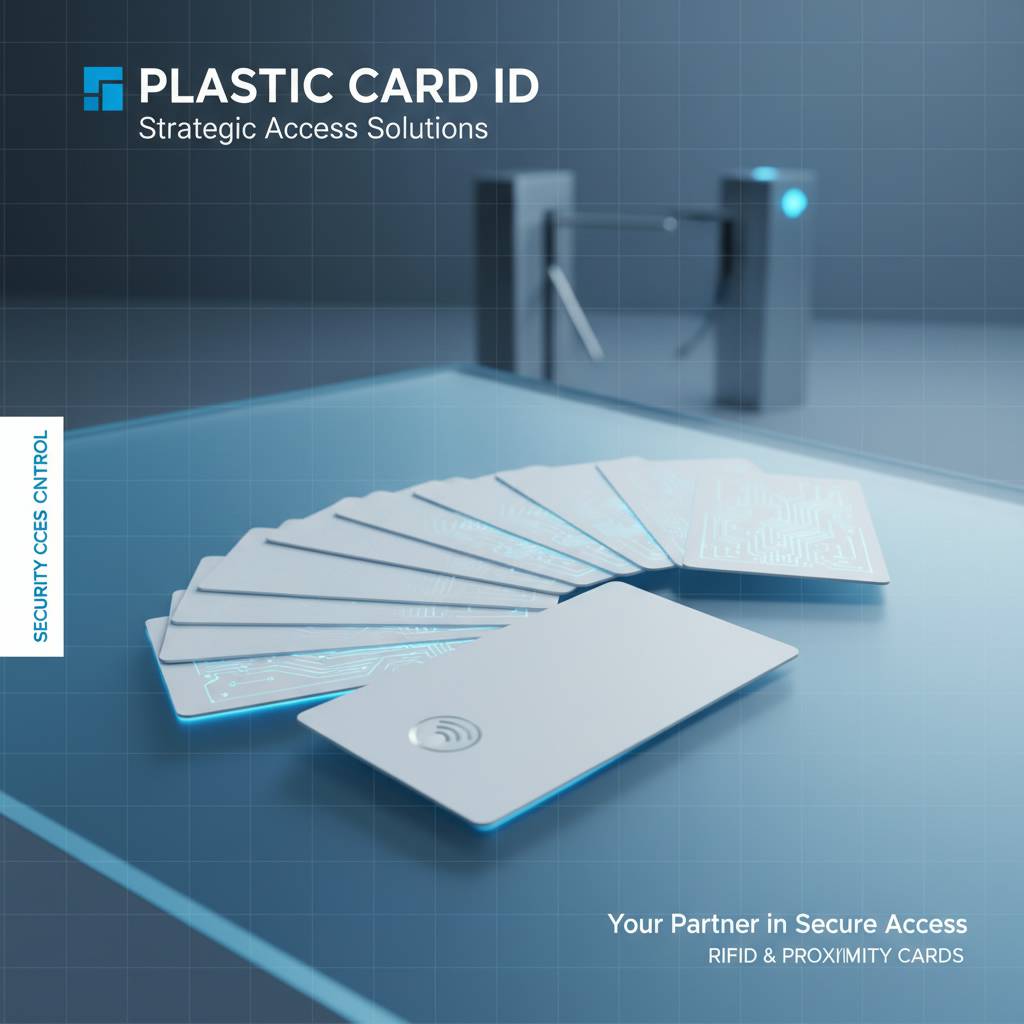 The shift toward contactless access control has been steady and significant. Where magnetic stripe cards require a physical swipe - card surface to reader head - proximity and RFID cards communicate wirelessly, enabling tap-and-go entry that is faster, more hygienic, and less wear-intensive on both the card and the reader hardware. Contactless access technology is now the standard expectation in modern facility management.
Proximity cards operating at 125kHz are the workhorse of traditional contactless access systems. RFID smart cards - including MIFARE Classic, MIFARE DESFire, and other high-frequency formats - offer greater data capacity, encryption, and the ability to support multi-application use cases. Plastic Card ID supplies both categories, giving security program managers options that match existing installed readers or inform new system deployments.
Proximity Cards: Reliable, Widely Deployed, Cost-Effective
125kHz proximity cards remain one of the most deployed access credential formats in the United States. The reader infrastructure for proximity technology is installed in countless office buildings, warehouses, university campuses, and government facilities. If your system already uses proximity readers, blank proximity cards from CPE are a direct, compatible drop-in for your issuance program.
These cards contain an embedded antenna and chip that transmit a credential number when brought near a compatible reader. No battery, no active component - just passive RF response. The simplicity of this technology is part of its enduring appeal. Cards last for years in regular use without performance degradation.
RFID Smart Cards: Advanced Security for Demanding Applications
When a security program needs more than a simple credential number - when it requires encrypted communication, multi-sector data storage, or the ability to handle multiple applications on a single card - RFID smart cards deliver capabilities that proximity cards cannot match. MIFARE DESFire in particular has become the go-to specification for high-security environments where credential cloning must be actively defeated.
Smart card technology enables use cases like combined building access and cashless vending, employee ID combined with logical network access, or campus credentials that also serve as library and transit passes. Plastic Card ID supplies RFID smart cards to organizations building these multi-function programs, providing the card stock that underlies sophisticated access ecosystems.
Specialty Applications: Casino Player Cards and Hotel Key Cards
Not all access control is about keeping unauthorized people out - some of it is about enabling personalized, trackable access for authorized guests and players. Casino player cards and hotel key cards both rely on the same blank card infrastructure as corporate access credentials, but serve environments with very specific program requirements around read speed, encode format, and card volume.
Plastic Card ID has supplied blank RFID and magnetic stripe cards for hospitality and gaming applications, understanding that these environments operate at high card volumes, demand fast issuance, and require consistent card quality to avoid guest-facing issues. A key card that fails at the room door is a service problem - card quality is not a place to economize.
| RFID Technology | Frequency | Security Level | Best For |
|---|---|---|---|
| Proximity (125kHz) | 125kHz | Standard | Legacy access systems |
| MIFARE Classic | 13.56MHz | Moderate | General smart card programs |
| MIFARE DESFire | 13.56MHz | High | High-security environments |
| Dual Frequency | 125kHz 13.56MHz | High | System migration or multi-reader |
Card Printers, Ribbons, and Supplies for Complete In-House Issuance
A blank card program without a card printer is just a stack of white plastic. The printer is what transforms raw card stock into a working credential - adding the photograph, the printed name, the barcode, the encoded stripe. Plastic Card ID supplies card printers from three of the industry's most trusted manufacturers: Evolis, Zebra, and Fargo. Each brand brings a distinct set of capabilities suited to different program scales and environments.
Selecting the right printer is not simply a matter of budget - it involves understanding throughput requirements, ribbon type, whether single-sided or dual-sided printing is needed, and whether encoding (magnetic, RFID, or smart chip) will be done in-line. CPE helps clients navigate these choices based on actual program requirements, not generic recommendations.
Evolis, Zebra, and Fargo: Finding the Right Fit
Evolis printers are known for their compact form factor, ease of use, and strong performance in small-to-medium volume programs. They are a popular choice for HR departments, membership organizations, and facilities management teams that issue cards in batches rather than continuously. Zebra printers bring enterprise-grade throughput and integration capabilities, suited for large organizations with high daily issuance volumes. Fargo printers, part of the HID family, are often specified in high-security identity programs where credential integrity and traceability are critical requirements.
Each printer line has corresponding ribbon products - YMCKO panels for full-color printing, K panels for monochrome, and specialty ribbons for overlay protective coating or encoding support. Using the correct ribbon for your printer model and card type is essential to consistent print quality and equipment longevity. Plastic Card ID stocks ribbons compatible with the printers it sells, ensuring clients can source everything from a single, reliable supplier.
Printer Maintenance and Cleaning Supplies
Card printers are precision instruments. Dust, card debris, and ribbon residue accumulate over time and degrade print quality if not addressed. Regular cleaning - using manufacturer-specified cleaning cards and swabs - is the single most effective way to extend printer life and maintain consistent output. A neglected printer is the most common cause of avoidable credential program failures.
Plastic Card ID supplies cleaning kits matched to the printer brands it carries, making it straightforward for in-house issuance programs to maintain a consistent cleaning schedule. Cleaning supplies are consumables - they belong in every reorder cycle alongside ribbons and blank card stock.
Card Carriers, Sleeves, and Mailing Services
After a card is printed and encoded, it still needs to reach the person it was issued to. Card carriers - folded paper or cardstock holders that protect the card during mailing - and card sleeves that protect issued cards during use and storage are the final step in a complete issuance program. CPE supplies both, along with card affixing and mailing services for organizations that need bulk credential distribution handled professionally.
For organizations issuing employee badges internally, sleeves extend the presentable life of a printed card and protect magnetic stripes and chip contacts from abrasion. For programs mailing member cards, hotel keys, or loyalty credentials, professional card carriers communicate program quality from the first moment of recipient contact.
Specialty Blank Cards: Clear, Frosted, Colored, and Custom Formats
Standard white PVC card stock is the foundation of most credential programs, but it is far from the only option. Security programs that want to differentiate credential classes - distinguishing visitor badges from employee badges, or executive access levels from general staff - can do so effectively through card color, finish, or format. Visual differentiation is a fast, reliable layer of physical security.

Plastic Card ID supplies blank cards in clear and frosted finishes, a range of colored PVC stock, and specialty formats including custom die-cut shapes for programs that need credentials to stand apart. These options are not merely aesthetic - they serve functional security and operational purposes in well-designed credential programs.
Clear and Frosted Plastic Cards
Clear plastic cards present a striking visual impression that standard white PVC cannot replicate. When printed upon, the transparency of the card base creates a layered, premium appearance that communicates quality and intentionality. Frosted cards offer a softer, matte alternative that photographs and solid colors print beautifully against. Both formats are available in the standard CR80 size and 30 mil thickness, fully compatible with most desktop card printers.
In security contexts, clear and frosted cards are often used for VIP access credentials, executive identification, or specialty visitor passes where visual distinction from standard employee badges is operationally useful. When a credential looks different, it reads differently to trained security staff - a simple but effective layer of access control.
Colored Card Stock for Credential Tiering
Colored blank cards - available in a range of base colors from CPE - enable credential tiering without requiring complex printed backgrounds. A red card, for example, can designate a temporary contractor credential at a glance. A blue card might indicate a different facility zone or department. This kind of color-based visual system is fast to implement and fast to interpret in real-world access scenarios.
Organizations that manage multi-zone facilities, multi-level access programs, or rotating visitor populations find colored card stock to be a practical, low-cost layer of physical security logic. Combined with printed information and optional magnetic or RFID encoding, colored cards serve both visual and data-driven access control functions simultaneously.
Luxury Metal Cards and Custom Die-Cut Options
For organizations whose brand or program demands something beyond standard PVC - executive membership programs, high-end hospitality, VIP access credentials - Plastic Card ID offers luxury metal cards in stainless steel, brass, and gold formats. These cards command attention, communicate exclusivity, and create a tactile impression that plastic simply cannot replicate.
Custom die-cut cards in non-standard shapes serve specific use cases: shaped key fobs, specialty event credentials, or branded access tokens that double as collectibles or promotional items. CPE can discuss these specialty formats for organizations with defined requirements beyond standard rectangular card programs.
Building a Secure Card Program: Buyer Tips and Frequently Asked Questions
Starting or scaling a card-based security access program involves more decisions than most organizations anticipate at the outset. Card type, technology, printer selection, ribbon and supply chain, issuance workflow, and card lifecycle management all interact. The organizations that build the most effective programs are the ones that plan the full system before ordering their first box of cards.
Plastic Card ID functions as a strategic partner throughout this process - not simply a card supplier. With 25 years of experience supporting programs ranging from 50 cards a month to mass production in the tens of thousands, CPE brings practical insight to program planning conversations that saves clients time, money, and avoidable complications.
Buyer Tips: Getting Your Card Program Right the First Time
- Audit your existing reader infrastructure before selecting a card technology. Proximity and RFID cards are not universally interchangeable - your readers determine which card formats are compatible.
- Order a sample pack before committing to large quantities. Verifying card compatibility with your specific printer and reader models prevents expensive mismatches.
- Calculate your monthly issuance volume honestly. Underestimating volume leads to running out of stock at the worst possible times; overestimating leads to unnecessary capital tied up in inventory.
- Match your ribbon type to your card stock and print requirements. Full-color programs need YMCKO ribbons; monochrome text-only programs can use K-only ribbons at lower cost per card.
- Establish a printer cleaning schedule from day one. Cleaning cards and swabs are inexpensive; printer repairs and replacements are not.
- Consider card carriers and sleeves as part of your issuance program budget - they protect card quality and communicate professionalism.
Frequently Asked Questions About Blank Security Cards
What is the difference between a blank card and a custom card? A blank card arrives as plain, unprinted PVC stock - ready to be printed and encoded in-house using a desktop card printer. A custom card arrives pre-printed with your logo, colors, or design. Blank cards offer lower per-card cost and issuance flexibility; custom cards make sense for programs issuing large batches of cards with identical printed elements.
Can I use any blank card with my existing card printer? Most desktop card printers are compatible with standard CR80, 30 mil PVC cards. However, specific finishes - like clear or frosted cards - may require printer settings adjustments, and magnetic or RFID cards need a printer equipped with an encoder. Always verify card-printer compatibility before ordering in volume. CPE can help confirm compatibility for any printer in its product lineup.
Program Scaling: From 50 Cards a Month to Enterprise Volume
Plastic Card ID supports programs at every scale - from a small business issuing a handful of employee badges each month to a hospital network or university system producing thousands of credentials on a regular cadence. The infrastructure recommendations, printer specifications, and supply chain structure differ significantly between these scales, and CPE is equipped to advise on both.
Small programs benefit from desktop card printers in the single-hopper, single-sided range, paired with modest card and ribbon inventory. Enterprise programs may require dual-sided, high-throughput printers with automated card loading, multiple encoding options, and integration with HR or access control databases. Scaling a card program effectively is a matter of matching hardware and supply chain to actual operational demands - and Plastic Card ID has the experience to help clients make those matches accurately.
Partner With Plastic Card ID for Blank Plastic Cards and Access Card Solutions
 Security access card programs are too operationally important to leave to a supplier who treats every order as a transaction. Plastic Card ID has built lasting relationships with over 100,000 customers across the United States by doing something straightforward: providing excellent products, reliable supply, and knowledgeable support for programs of every size and complexity. That track record, built across more than 25 years and 50 million cards, speaks to what a genuine strategic partnership in this space looks like.
Whether you are launching a new employee badge program, upgrading an existing access control credential to RFID smart card technology, or sourcing blank card stock to keep an established program running smoothly, CPE has the inventory, the expertise, and the service orientation to deliver. From blank CR80 PVC cards to proximity cards, HiCo magnetic stripe stock, MIFARE DESFire smart cards, clear and frosted specialty formats, metal luxury cards, and the complete printer and supply ecosystem - everything your card program needs is available from a single, trusted source.
Contact Plastic Card ID today at 800.835.7919 to discuss your blank plastic card and security access program needs. Our team is ready to help you build, supply, and sustain a credential program that performs reliably for years to come.
Previous Page