Blank Plastic Cards for Photo ID Programs: Print-Ready Cards
Table of Contents []
- Why Plastic Card ID Is the Smart Choice for Blank Plastic Cards
- Blank PVC Cards for Photo ID: The Full Spectrum of Options
- Building a Photo ID Program: Practical Guidance from the Ground Up
- Photo ID Applications Across Industries
- Frequently Asked Questions About Blank Plastic Cards for Photo ID
- Advanced Card Options for Sophisticated Photo ID Programs
- Plastic Card ID - Your Long-Term Partner in Blank Plastic Cards for Photo ID Programs
Why Plastic Card ID Is the Smart Choice for Blank Plastic Cards
Walk into almost any organization running a photo ID program and you will find the same core challenge: they need cards that perform consistently, look professional, and cost less per unit over time. Blank plastic cards solve all three problems at once. But sourcing them from the right supplier? That part matters more than most buyers realize until something goes wrong.
Plastic Card ID has supplied blank and custom plastic cards to businesses across the United States for over 25 years, serving more than 100,000 customers and delivering upwards of 50 million cards. That scale is not accidental. It reflects something deliberate: a commitment to becoming a strategic partner in your card program, not just another vendor shipping boxes.
Whether your organization issues 50 cards a month or tens of thousands, the infrastructure and expertise behind every order is the same. Schools, hospitals, corporate campuses, government agencies, event organizers, gyms, retailers - they all find what they need here, and they come back because it works.
The CR80 Standard and Why It Matters for Photo ID
Every blank card in a photo ID program lives and dies by a standard: CR80. At 3.375 x 2.125 inches and 30 mil thick, the CR80 dimension is defined by ISO 7810 and is the globally recognized size for identification cards. It is the same size as a credit card, which means it fits in every wallet slot, badge holder, and card printer tray designed for the format.
When you purchase blank CR80 cards from Plastic Card ID, you are buying into a proven physical standard with enormous downstream compatibility. Every Evolis, Zebra, and Fargo printer in the catalog is built around this format. Every lanyard clip, badge reel, and card sleeve assumes CR80 dimensions. Your photo ID system becomes seamlessly integrated, not cobbled together.
Deviating from CR80 introduces friction at every stage of ID production. A card that is slightly too thick jams the printer. A card that is dimensionally off skews print alignment. Starting with the correct blank - a true 30 mil, ISO-compliant CR80 white PVC card - eliminates an entire category of operational headaches before they start.
Blank Cards Give Organizations Total Design Control
There is a freedom in starting with blank white PVC that custom-printed cards simply cannot replicate. When your IT team changes the badge layout, you print the new design. When your HR department wants to add a department color bar, you update the template in software. When your ID card program evolves, you are not stuck waiting on a reprint order to arrive. You already have the cards.
In-house printing with blank PVC stock is the most agile approach to photo ID management available to organizations of any size. It puts the design decision-making in the hands of the people who understand the organization - and keeps per-card costs meaningfully lower over time compared to pre-printed card programs that charge a premium for each design iteration.
CPE supplies blank cards in quantities that make sense for real programs, from smaller starter quantities to bulk packs of 500, 1000, and beyond. Larger volume means lower per-card cost, and lower per-card cost means your ID program stays within budget even as headcount grows.
What Makes a Blank Card "Print-Ready"?
Not all blank cards are equal. The surface chemistry of a PVC card determines how well dye-sublimation ink bonds during printing. A card with inconsistent surface coatings produces banding, fading, and color inaccuracy - problems that become obvious and embarrassing on finished ID badges.
Print-ready blank cards are engineered with uniform receptor coatings that ensure consistent ink transfer across the entire card face. Plastic Card ID sources blank PVC stock specifically for compatibility with the leading printer brands - Evolis, Zebra, and Fargo - so the cards you buy work with the printers you already own or plan to purchase.
The practical outcome is sharp photo reproduction, accurate skin tones, crisp text at small point sizes, and durable printed surfaces that hold up to daily handling. A photo ID badge is often someone's first impression of your organization. The quality of that card communicates something - and it should communicate professionalism.
| Card Type | Key Feature | Best For | Encoding Option |
|---|---|---|---|
| Blank White PVC (CR80) | ISO standard, 30 mil | Employee ID, Student ID | None (print only) |
| HiCo Magnetic Stripe | High coercivity (2750 Oe) | Access control, time tracking | Magnetic encoding |
| LoCo Magnetic Stripe | Low coercivity (300 Oe) | Short-term credentials, events | Magnetic encoding |
| Proximity / RFID | Contactless 125kHz or 13.56MHz | Door access, smart buildings | RFID / NFC encoding |
| Smart Chip (MIFARE) | Encrypted, high security | Government, healthcare, campus | Smart card encoding |
Blank PVC Cards for Photo ID: The Full Spectrum of Options
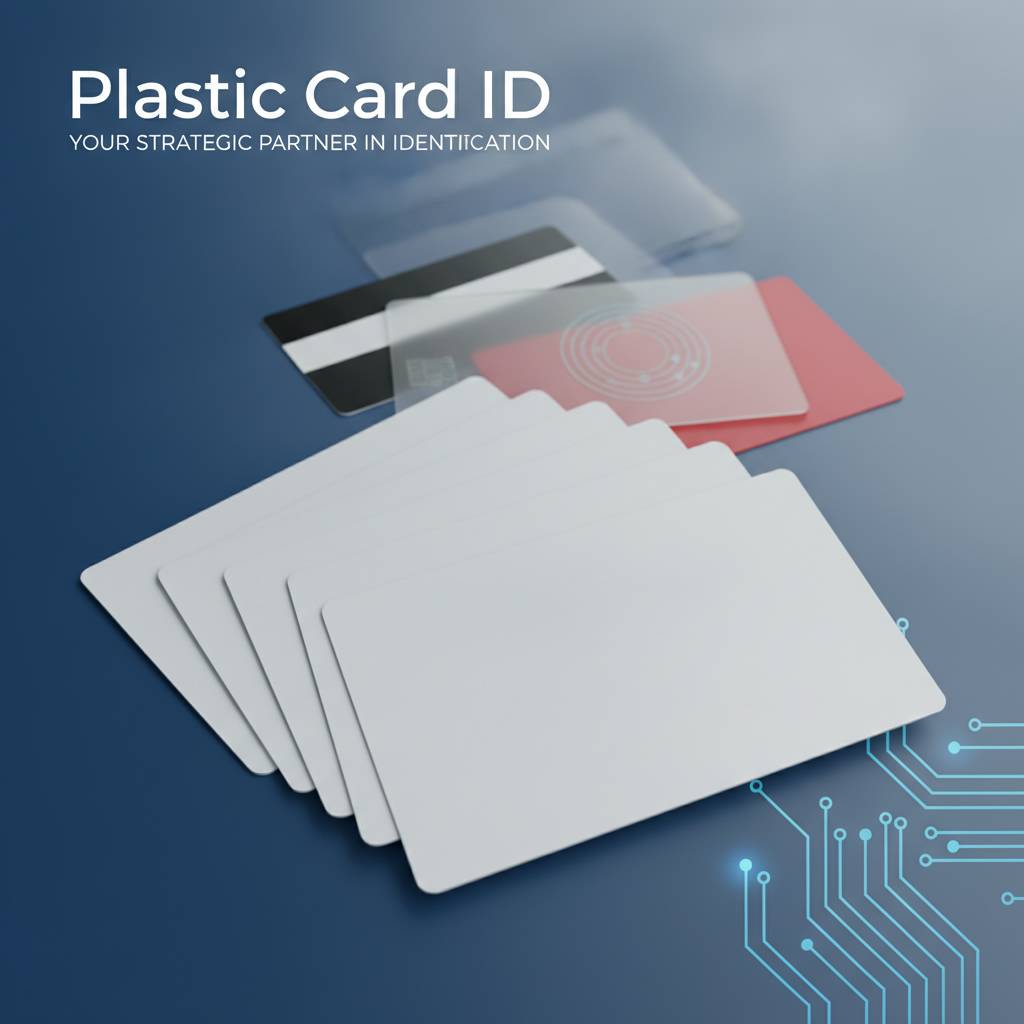 Photo ID programs are not monolithic. A university issuing student IDs has different requirements than a manufacturing plant issuing contractor badges or a hospital managing staff access across multiple buildings. The blank card catalog at Plastic Card ID reflects that diversity - not a one-size-fits-all approach, but a range of card types that map cleanly onto real-world program needs.
Choosing the right blank card for your photo ID program starts with understanding what the card needs to do beyond carrying a printed image. Will it open a door? Store time-and-attendance data? Trigger a reader at a parking gate? The encoding technology embedded in the blank card determines its functional capabilities before a single pixel of your design is printed.
Standard Blank White PVC - The Workhorse
For organizations that need clean, professional ID cards printed entirely in-house, blank white PVC remains the most cost-effective and flexible foundation. There are no encoding elements to manage, no compatibility requirements beyond printer and ribbon, and no complexity in the supply chain. You order cards, they arrive, you print.
Standard blank white PVC cards from Plastic Card ID are 30 mil thick, CR80 sized, and formulated for excellent print adhesion with dye-sublimation printers. They are manufactured to tight tolerances so they feed reliably through automated card feeders without jams or misfeeds - a small thing that becomes a very large thing when you are printing 200 employee badges before a facility opening.
For most small to mid-size photo ID programs - schools, small businesses, nonprofits, local government offices - standard blank PVC cards are the right choice. They are simple, they work, and the per-card cost is low enough to make in-house printing genuinely economical at modest volumes.
Magnetic Stripe Cards for ID Programs That Do More
When a photo ID badge needs to do more than display a name and photo, magnetic stripe technology is often the first upgrade path. A HiCo magnetic stripe card can carry employee numbers, access privileges, or time-clock credentials - turning a visual ID into a functional system component.
HiCo (high coercivity) magnetic stripe cards are resistant to demagnetization from everyday sources like magnetic clasps, refrigerator magnets, and proximity to other cards. They are the correct choice for cards that will be used repeatedly in card readers over extended periods. LoCo (low coercivity) cards work for shorter-term applications where demagnetization is less of a concern, such as event credentials or visitor badges.
Contact CPE at 800.835.7919 to discuss whether HiCo or LoCo magnetic stripe cards are the right fit for your photo ID program. The answer usually depends on card reader hardware already installed, how long each card will remain in service, and the storage conditions cardholders are likely to encounter.
RFID and Smart Chip Cards for Secure Access Programs
Some photo ID programs operate in environments where physical security is not optional - healthcare facilities, research campuses, financial institutions, data centers. In these settings, a card that carries a printed photo but also manages door access, logs entry events, and authenticates the cardholder electronically delivers compound value from a single credential.
Proximity cards operating at 125kHz are the workhorse of conventional access control. They are compatible with a wide range of installed readers and offer reliable contactless performance for high-traffic entry points. MIFARE DESFire and other 13.56MHz smart cards step up to encrypted communication, making them appropriate for environments where credential cloning is a real threat.
Plastic Card ID supplies both proximity and smart chip blank cards in formats suitable for in-house photo ID printing. The result is a single card that serves double duty: visual identification through a printed photo and electronic access control through embedded technology - no separate keyfob required.
Specialty Blanks: Clear, Frosted, and Colored Stock
Standard white PVC covers the majority of photo ID applications, but it is not the only option. Clear and frosted PVC blanks create a distinctly different visual effect when printed - design elements appear to float within the card body, giving finished IDs a premium, layered appearance that white cards cannot achieve.
Colored PVC stock offers another dimension: department coding, access tier differentiation, or visual hierarchy across a badge program. An organization might issue white cards to general staff, colored cards to department heads, and clear cards to executive-level personnel - all printed on the same in-house printer using the same process, with visual differentiation built into the blank card itself.
Building a Photo ID Program: Practical Guidance from the Ground Up
Most organizations that come to Plastic Card ID for blank plastic cards are in one of two situations: they are setting up a photo ID program for the first time and need to make smart foundational decisions, or they are inheriting an existing program that has grown messy and needs to be rationalized. Both situations benefit from the same clarity of thought about what a card program actually requires.
A functional photo ID program has four components: the blank card, the printer, the ribbon, and the software or process that manages card design and issuance. Each component influences the others. Selecting a blank card that is incompatible with your printer creates waste. Selecting a printer that is undersized for your issuance volume creates bottlenecks. Getting the components right from the start saves significant time and money downstream.
Choosing the Right Card Printer for Your Blank PVC Stock
The printer is the production engine of any in-house photo ID program. Plastic Card ID carries card printers from three of the most respected brands in the industry: Evolis, Zebra, and Fargo. Each brand has models suited to different volume levels, feature requirements, and budget ranges.
Single-sided printing is sufficient for most basic photo ID applications where the card back carries only a barcode or a magnetic stripe. Dual-sided printers make sense when the card back carries additional text, a secondary photo, or a second barcode. Retransfer printers produce the sharpest output and are preferred for programs where card quality is a visible priority, such as government-issued credentials or executive identification cards.
Printer ribbon selection ties directly to blank card type. YMCKO ribbons - yellow, magenta, cyan, black, and overlay - are the standard for full-color photo ID printing on white PVC. Monochrome ribbons produce single-color output, faster and at lower cost per card, useful for text-only badges. Plastic Card ID supplies compatible ribbons for all printer brands in the catalog, so consumables and hardware are always sourced from the same place.
Quantities, Costs, and Making the Numbers Work
One of the most common questions in photo ID program management is deceptively simple: how many blank cards should we order at once? The answer involves a few variables - current headcount or enrollment, anticipated growth, card replacement rate due to loss or damage, and available storage.
- Starter quantities (100-250 cards) make sense for new programs testing workflows before committing to larger stock.
- Mid-volume orders (500-1000 cards) deliver meaningfully lower per-card costs and provide comfortable working inventory for growing organizations.
- Bulk purchases (2500 cards) offer the best per-card pricing and are appropriate for large employers, school districts, and organizations with high issuance volumes.
- Consider replacement rate - most organizations replace 10-20% of issued cards annually due to loss, damage, or personnel changes.
- Storage is simple: blank PVC cards store well in a cool, dry location away from direct sunlight and do not require special handling.
For organizations running photo ID programs with fluctuating enrollment or seasonal issuance peaks - schools at the start of the academic year, event venues ahead of major productions, healthcare systems during hiring surges - ordering ahead of demand is a straightforward cost management strategy. The per-card savings on a 1000-unit order versus a 100-unit order are real and recur every order cycle.
Value-Added Supplies That Complete the Program
Blank cards and a printer are the core, but a fully operational photo ID program needs more. Card cleaning kits maintain printer heads and extend the life of expensive printing hardware - a maintenance step that is easy to skip until a printer produces banded output or drops cards. Cleaning kits are inexpensive insurance against a costly service call.
Card carriers, sleeves, badge reels, lanyards, and clip-on holders are the accessories that determine how a finished ID card is worn and displayed day-to-day. A well-presented badge program signals organizational seriousness. When employees and visitors see professionally housed ID badges on consistent hardware, it reinforces the credibility of the identification system itself. Plastic Card ID supplies the full range of accessories, so the entire photo ID system - from blank card to badge holder - comes from a single source.
Photo ID Applications Across Industries
 The versatility of blank PVC cards for photo ID programs spans an enormous range of industries and organizational types. What changes from one sector to the next is not the core card format - CR80, 30 mil, white PVC - but the encoding, the printed design, the accessories, and the workflow surrounding issuance. Understanding how photo ID programs function in different contexts illuminates what a well-chosen blank card can accomplish.
Education: Schools, Colleges, and University Systems
Educational institutions are among the highest-volume users of photo ID cards in the United States. A mid-size school district might issue student IDs to thousands of students each fall, plus faculty and staff credentials year-round. A university campus might run a full access-control system built on smart card IDs that double as library credentials, dining plan cards, and building access tokens.
For K-12 districts, blank white PVC cards printed in-house strike the ideal balance between professional appearance and program cost. For higher education, the calculus often includes RFID or smart chip cards that integrate with campus-wide systems - cards that still begin as blank stock and receive their printed photo ID through the same in-house workflow.
CPE works with educational institutions at every scale. The needs of a single-campus private school and those of a multi-campus public university system are genuinely different, and the card and printer recommendations differ accordingly. The common thread is the same: blank CR80 stock, printed in-house, issued efficiently, at the lowest responsible per-card cost.
Corporate and Enterprise: Employee Badges at Scale
Employee photo ID badges serve multiple functions in corporate environments simultaneously: visual identification, access control, time-and-attendance tracking, and brand representation. A badge worn by 500 employees across three shifts is a visible element of organizational culture, not just a security device. It communicates that the organization takes identity seriously.
Large corporate environments often benefit from magnetic stripe or proximity card stock because the badge must interface with door readers, time clocks, and parking systems. Starting with the right blank - one that carries the correct encoding technology - is far more efficient than trying to retrofit a printed card later. Getting blank card selection right at the start of a corporate ID program avoids expensive card replacement cycles down the road.
Healthcare and Government: When Security Is Non-Negotiable
Healthcare facilities and government agencies operate photo ID programs under a different kind of pressure. Cards must comply with access control mandates, may need to carry encrypted credentials, and often must integrate with third-party security infrastructure that was not designed with flexibility in mind. The margin for error is narrow.
For these environments, MIFARE DESFire smart cards or high-security proximity cards provide the encoded foundation, and blank card stock is selected with specific reader compatibility verified in advance. The printed photo ID on the card surface must meet organizational standards for image quality and durability - a badge that fades or peels is a security risk as well as an aesthetic one. Plastic Card ID understands these requirements and helps organizations navigate card selection with the specificity these programs demand.
Frequently Asked Questions About Blank Plastic Cards for Photo ID
Organizations new to managing photo ID programs in-house often have the same questions. Getting clear answers upfront prevents the kind of purchasing mistakes that create frustration and unnecessary expense. Below are the questions CPE hears most often, with direct answers.
Can I use any blank PVC card in my existing card printer?
Technically, most CR80 blank PVC cards will fit in most card printers - the physical format is standardized. Practically, however, card surface quality varies, and cards with inconsistent coatings produce inconsistent print quality even in excellent printers. Using cards formulated for compatibility with your specific printer brand and ribbon type is always the correct approach.
Plastic Card ID can help you identify the right blank card stock for your Evolis, Zebra, or Fargo printer model. This is not a complicated process - it is a matter of matching card surface chemistry to ribbon and printer specifications. Getting it right from the first order prevents the frustrating trial-and-error that wastes both time and card stock.
What is the difference between HiCo and LoCo magnetic stripe cards for photo ID?
HiCo (high coercivity) magnetic stripe cards encode data at 2750 Oersteds, making the stripe resistant to accidental demagnetization from common sources. They are the correct choice for cards used repeatedly over months or years in access control, time-tracking, or identification systems. LoCo (low coercivity) cards encode at 300 Oersteds and are appropriate for shorter-term credentials where longevity is not the priority.
For most permanent employee photo ID programs, HiCo is the appropriate specification. For visitor badges, event credentials, or temporary contractor IDs, LoCo cards provide adequate performance at a lower cost. Contact Plastic Card ID at 800.835.7919 if you are uncertain which specification fits your system's card reader requirements - it is a quick conversation that prevents a costly ordering mistake.
How many blank cards should a new photo ID program order initially?
For a program just launching, a starter quantity of 250-500 cards is typically appropriate. This quantity is large enough to establish the workflow, train staff on the printer and issuance process, and absorb any test prints or early reprints without running short - but small enough that you are not locking in significant inventory before you know the program's actual cadence.
Once the program is running and you have a clear picture of monthly issuance volume and replacement rate, moving to a larger standard order quantity - 1000 cards or more - delivers per-card cost savings that compound meaningfully over a full program year. The economics of blank card purchasing reward consistency and volume in roughly equal measure.
Advanced Card Options for Sophisticated Photo ID Programs
Most photo ID programs run comfortably on standard blank white PVC cards. But some programs have requirements - or ambitions - that standard stock does not fully meet. Plastic Card ID carries a range of advanced card options for organizations whose photo ID programs need to do more, look different, or perform under more demanding conditions.
Clear and Frosted PVC for Premium ID Aesthetics
Clear and frosted PVC blanks produce a strikingly different finished product compared to white stock. Printed design elements appear layered within a translucent card body, creating depth and visual complexity that white cards simply cannot achieve. For organizations where the photo ID badge is also a brand statement - executive credentials, premium membership cards, VIP access badges - clear or frosted blanks elevate the finished product dramatically.
The printing process for clear and frosted cards requires attention: certain design elements need to account for the non-opaque background. Colors print differently against a clear substrate than against white. CPE can advise on design considerations when ordering clear or frosted blanks so the finished print meets expectations on the first run.
Luxury and Specialty Card Options
At the highest end of the photo ID card spectrum sit metal cards - stainless steel, brass, and gold finish options that communicate status and permanence in a way no plastic card can replicate. These are appropriate for executive identification, premium club credentials, or VIP program cards where the physical object is itself a signal of the organization's standards.
Custom die-cut shapes, specialty finishes, and non-standard card configurations are also available for organizations with unique creative or functional requirements. Casino player cards, hotel key cards, and high-security government credentials each represent application-specific variations on the blank card foundation - and Plastic Card ID is equipped to source and supply all of them.
Card Affixing and Mailing Services
For organizations that issue photo ID cards to remote employees, distributed membership bases, or large event populations where in-person issuance is impractical, card affixing and mailing services provide a turnkey solution. Cards are produced, affixed to mailers, and shipped directly to recipients - eliminating the logistical overhead of managing in-house card distribution at scale.
This service is particularly valuable for organizations managing photo ID programs across multiple geographic locations, or membership programs where the physical card is mailed to new members as part of the welcome experience. Delivering a professional photo ID card to someone's door on their first day of membership creates an impression that a digital credential simply cannot replicate.
Plastic Card ID - Your Long-Term Partner in Blank Plastic Cards for Photo ID Programs
Twenty-five years in the plastic card industry teaches you something that is hard to learn any other way: the difference between a customer who has what they need and a customer who has what they asked for is not always obvious at the time of purchase, but it becomes obvious quickly in the field. Plastic Card ID has built its business on the former - understanding what programs actually require, not just processing orders.
The catalog is comprehensive: blank white PVC, magnetic stripe in HiCo and LoCo, proximity and RFID cards, MIFARE smart chips, clear and frosted stock, colored PVC, specialty and luxury formats, and the full range of card printers, ribbons, cleaning kits, and accessories that complete any photo ID program. More than 100,000 customers and 50 million cards represent a track record that speaks for itself.
Whatever your photo ID program needs - whether you are setting up in-house printing for the first time, scaling an established program, or upgrading to cards with access control capability - the expertise and inventory to support it are here.
Contact Plastic Card ID today at 800.835.7919 and speak with a specialist who will help you find exactly the right blank plastic cards for your photo ID program - the first time, every time.
Previous Page