UV Ink Printing on Plastic Cards Explained: What You Need to Know
Table of Contents []
- UV Ink Printing on Plastic Cards: What Plastic Card ID Wants You to Know Before You Order
- How UV Ink Gets onto a Plastic Card: The Printing Methods
- Security Applications That Make UV Ink Worth Every Penny
- Pairing UV Ink with Other Card Technologies
- Practical Buyer's Guide: Ordering UV Ink Cards Without the Guesswork
- Industries That Benefit Most from UV Ink on Plastic Cards
- Connect with Plastic Card ID to Start Your UV Card Program Today
UV Ink Printing on Plastic Cards: What Plastic Card ID Wants You to Know Before You Order
There is something quietly brilliant about a card that looks perfectly ordinary in daylight - and then, under the right light, reveals something entirely unexpected. That is the promise of UV ink printing on plastic cards, and it is more powerful, more practical, and more versatile than most buyers realize when they first encounter it. Whether you are building a security-forward ID program, adding covert branding to loyalty cards, or designing event credentials that cannot be easily duplicated, UV printing deserves a serious look.
The technology is not new, but the applications keep expanding. Casinos, hotels, universities, government agencies, membership organizations, and retail brands have all discovered that UV ink adds a layer of functionality that ordinary printing simply cannot replicate. What follows is the most thorough, plain-English explanation of UV ink printing on plastic cards you will find - covering the science, the security benefits, the printing methods, and the practical decisions you will need to make when ordering.
What UV Ink Actually Is
Ultraviolet ink is a specialized fluorescent compound that remains invisible or nearly invisible under normal white light conditions. When exposed to a UV blacklight source - the kind used in verification scanners, security wands, or even common blacklight bulbs - the ink fluoresces brightly, typically in blue, green, yellow, or red depending on the ink formulation. This is not a trick of perception. It is a photochemical reaction.
The ink contains phosphorescent or fluorescent compounds that absorb ultraviolet energy and re-emit it as visible light. On a standard white PVC card, the result is invisible patterning, text, or imagery that snaps into full visibility the moment a UV light source is applied. On colored or clear card stock, the effect can be even more dramatic - which is why specialty card programs often pair UV ink with frosted or clear PVC substrates to maximize visual contrast under verification conditions.
Why Plastic Cards Are the Ideal Substrate
Paper absorbs ink differently than PVC plastic. On paper, UV inks tend to bleed at the molecular level, reducing sharpness and causing fluorescence to scatter. On hard PVC card stock - the same CR80 30-mil format used in every standard ID and loyalty program - the card surface is smooth, non-porous, and chemically stable. UV inks bond precisely to this surface, maintaining crisp line definition and reliable fluorescence across the life of the card.
Durability matters enormously here. A card that spends two years in a wallet, endures daily swipes through a reader, or passes through hundreds of hands at events needs to retain its UV features without fading or flaking. PVC plastic delivers that longevity. The same dimensional stability that makes plastic cards the preferred format for access control, membership, and loyalty programs makes them the right platform for UV security printing.
Invisible vs. Visible UV Ink: Choosing the Right Effect
Not all UV ink applications are purely covert. Some programs use dual-mode UV ink - formulations that carry a faint tint under normal light (often a light yellow or pale blue) but fluoresce intensely under UV. Others prefer fully invisible ink that leaves zero visible trace under standard lighting, with full revelation only under blacklight. The choice depends entirely on the use case.
For security applications - verifying that a card is authentic, not a photocopy or a printed forgery - fully invisible UV ink is usually preferred. For branding applications, where the UV element is a surprise detail meant to delight cardholders or reward curious customers, a faint daylight tint can be a design choice rather than a flaw. CPE can help you work through which formulation fits your program's goals before you commit to a card order.
| UV Ink Type | Appearance Under White Light | Appearance Under UV Light | Best Use Case |
|---|---|---|---|
| Fully Invisible UV Ink | No visible trace | Bright fluorescent glow | Security, anti-counterfeiting |
| Dual-Mode UV Ink | Faint yellow or blue tint | Intense color shift | Branding, premium membership cards |
| Color-Shift UV Ink | One color visible normally | Different color under UV | Event credentials, VIP access |
| Fluorescent Overlay UV | Glossy finish only | Full pattern revealed | ID cards, casino player cards |
How UV Ink Gets onto a Plastic Card: The Printing Methods
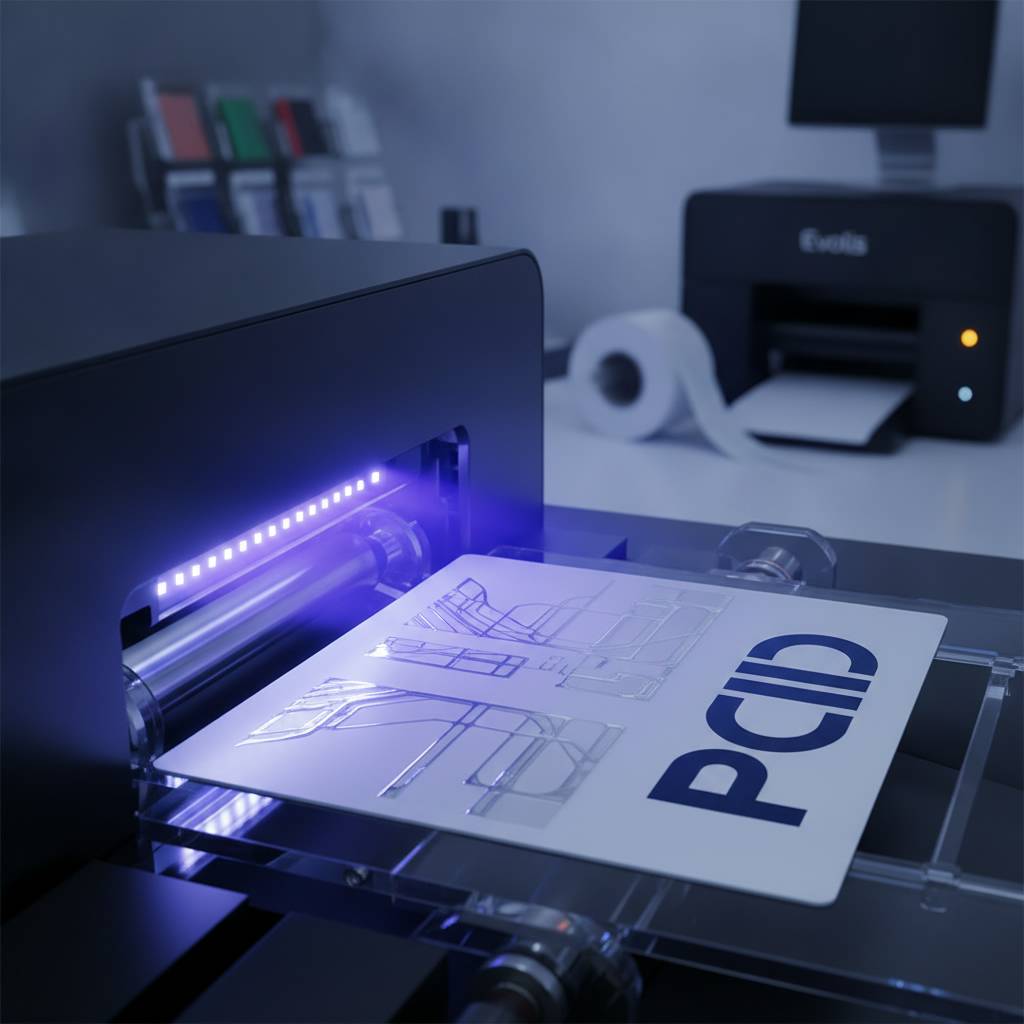 Understanding the delivery mechanism for UV ink is essential before making any purchasing decision. There are two primary printing pathways: factory-level offset or screen printing during card manufacturing, and in-house printing using card printers equipped with UV panels. Each has distinct cost profiles, volume requirements, and quality characteristics that make them appropriate for very different programs.
At CPE, programs range from small-batch runs of a few hundred cards to mass production orders in the tens of thousands. The method you use for UV printing should scale with your program, not against it. Getting this decision right at the outset can save significant cost and operational friction down the line.
Factory UV Printing: Offset and Screen Methods
When UV ink is applied during the card manufacturing process, it is typically done via offset lithography or screen printing before the card layers are laminated together. This sandwiches the UV ink between card layers, providing exceptional durability. The ink is completely protected from surface wear, scratching, and solvent contact. For high-volume programs running tens of thousands of identical cards, factory UV printing is the most cost-effective route.
The limitation is minimum order quantities. Factory UV printing generally makes economic sense starting at 500-1,000 cards per design, depending on complexity. Below that threshold, the setup costs - which include creating UV-specific printing plates or screens - are spread across too few cards to be practical. If your program is smaller, or if you need variable UV data (different patterns per cardholder), in-house printing is the better fit.
In-House UV Printing with Card Printers
Several professional card printers from brands like Evolis, Zebra, and Fargo support UV fluorescent ribbon panels that allow organizations to print UV elements directly onto pre-manufactured blank cards. The UV panel is typically designated as a separate color channel in the ribbon (often denoted as the "K" UV panel in YMCKU ribbon configurations). This means every card printed can carry a unique UV element - perfect for variable data like cardholder names, ID numbers, or unique barcodes rendered in UV ink.
In-house UV printing does require a compatible printer model and the correct ribbon type. Not every card printer supports UV printing, and using the wrong ribbon in a UV-capable printer will simply produce cards with no UV feature. CPE stocks the appropriate UV-capable ribbons for supported printer models and can guide you toward the right hardware if you are evaluating a new printer purchase. The per-card cost is slightly higher than factory printing for large volumes, but the flexibility of in-house production - print on demand, variable data, no minimums - makes it worthwhile for many programs.
Laminate Overlaminates with UV Features
A third method worth knowing: holographic or UV-feature overlaminates. These are thin protective films applied over a printed card surface that carry embedded UV patterns as part of the laminate structure itself. The card gets its UV security feature and its protective coating in a single application step. This method is popular for high-security ID programs, casino cards, and hotel key cards where surface durability and anti-tampering are equally important.
Overlaminates with UV features are typically applied using laminating card printers or dedicated laminating modules. They combine the physical tamper-evidence of a laminate (which shows visible damage if removed) with the covert authentication layer of UV printing. For organizations that need both functions - surface protection and UV verification - this is an extremely efficient solution that does not require a separate UV printing step.
Security Applications That Make UV Ink Worth Every Penny
Let us be direct: the primary reason most organizations invest in UV ink printing on plastic cards is security. Counterfeiting plastic cards is not trivially easy, but it is possible with widely available equipment. UV ink raises the bar considerably, because standard desktop inkjet or laser printers cannot reproduce UV fluorescent elements. A counterfeit card, no matter how visually convincing under white light, simply goes dark or wrong under a UV scanner.
This matters in contexts where credential verification is consequential. Casino player cards control access to player reward systems worth real money. Hotel key cards control room access. Event credentials control entry to venues, backstage areas, or restricted sections. ID cards control building access. In every one of these environments, a forged card represents a real security breach - and UV ink is one of the most cost-effective anti-counterfeiting measures available at the card level.
Casino Player Cards and UV Authentication
Casinos operate some of the most sophisticated card programs in existence. A player's card is tied to real reward balances, and a fraudulent card is a direct financial liability. UV printing is standard practice in professional casino card programs - typically combined with magnetic stripes or smart chip encoding that carries the actual account data, while UV elements serve as a first-pass visual authentication check.
When a player presents a card at a rewards desk or gaming terminal, staff trained to use a UV verification wand can confirm card authenticity in under two seconds. No database lookup is required for the UV check - it is immediate, reliable, and essentially immune to simple duplication attempts. For casino programs at any scale, UV printing is not a luxury feature. It is a foundational security measure.
Hotel Key Cards with Covert Branding and Security
Hotel key cards present a particularly interesting UV printing opportunity. On one hand, they need to function as access credentials - so the primary technology is the magnetic stripe or RFID chip that communicates with door locks. On the other hand, they are daily-use brand touchpoints that guests handle repeatedly, photograph, and sometimes keep as souvenirs. UV printing lets hotels embed covert security patterns that protect against key card cloning while also hiding branded artwork that delights guests who happen to check under a blacklight.
Some premium hotel programs use UV ink to print room-tier indicators - invisible markings that tell front desk staff which tier of room a card is authorized for, without advertising that information to the cardholder or potential fraudsters. This kind of embedded operational intelligence is difficult to replicate with any other single-step card feature.
Event Credentials and UV Verification at the Gate
Event credentialing is a high-stakes, time-sensitive environment. Thousands of attendees may be presenting cards at entry points simultaneously. UV verification provides a rapid, eyes-on check that does not require a scanner connection or network access. Staff with a simple UV wand can verify credential authenticity at a glance - especially effective for VIP access cards, backstage passes, and press credentials where the consequences of a forged card are significant.
- Invisible UV logos or event insignia only appear on authentic cards produced by the issuer
- UV serial numbers or codes can link to a check-in database for two-factor verification
- Color-shift UV ink creates a dramatic visual effect that is immediately distinguishable from a color-copied forgery
- UV features on clear or frosted card stock create striking visual contrast at verification points
- Event cards with UV elements can double as collectibles, extending brand engagement beyond the event itself
Pairing UV Ink with Other Card Technologies
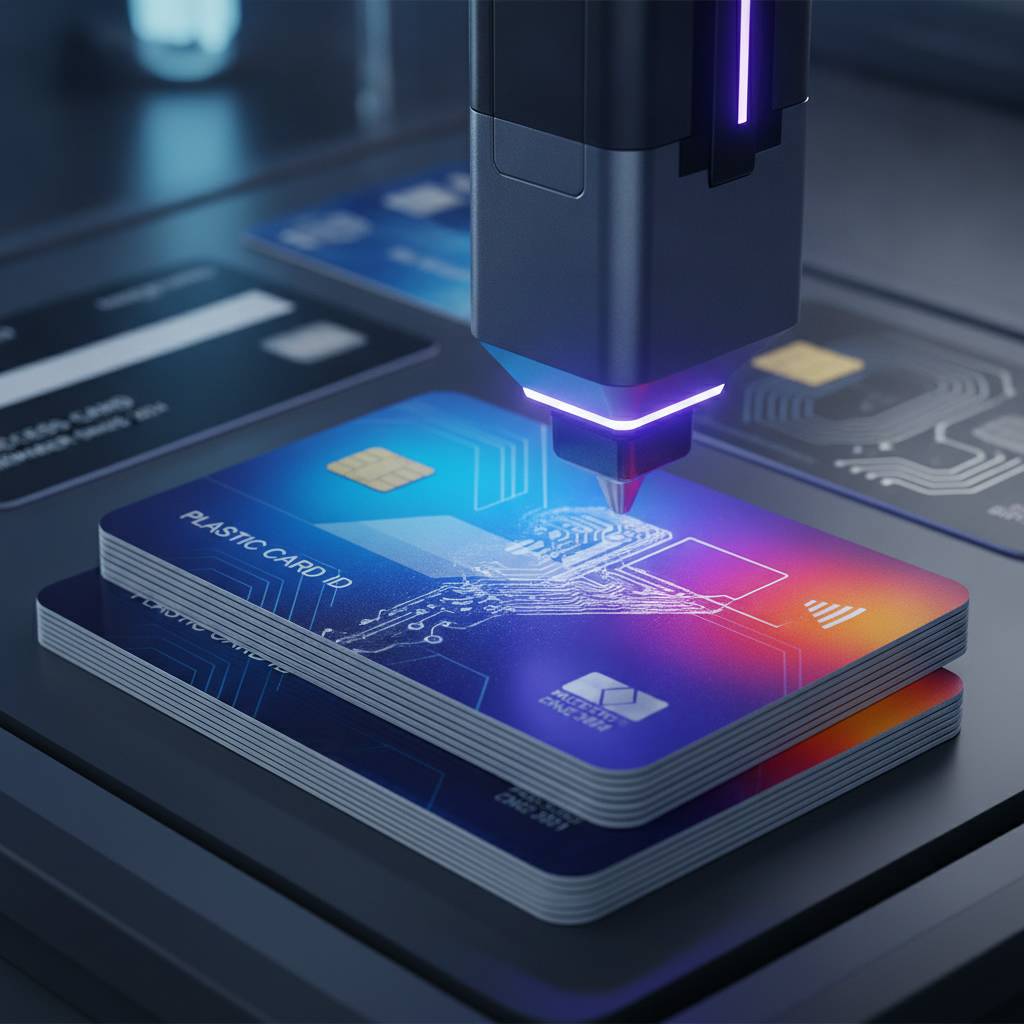 One of the most practical insights about UV printing is that it works best as part of a layered card security and functionality strategy, not as a standalone feature. A card that has UV printing, a HiCo magnetic stripe, and a laminate overlaminate is dramatically more difficult to counterfeit than a card with any single feature alone. The layers compound on each other, requiring a forger to successfully replicate multiple distinct technologies simultaneously.
When you work with CPE to design a card program, the conversation about UV ink naturally extends to questions about what other features make sense alongside it. The combination you choose should reflect your threat model, your verification workflow, and your budget - not a default checklist.
UV Ink Plus Magnetic Stripe
Magnetic stripe cards (both HiCo at 2750 Oe and LoCo at 300 Oe) carry encoded data that UV printing does not. Combining the two means your card carries both covert visual security and machine-readable identity data. Access systems, loyalty point-of-sale readers, and hotel door locks all read the magnetic stripe - while UV printing provides the human-verification layer that confirms the card itself is genuine before it ever reaches a reader.
For most loyalty, membership, and access programs, a magnetic stripe card with UV elements represents the sweet spot of cost and security. The cards are cost-effective to produce at scale, the technology is universally supported by card readers, and the UV layer adds a meaningful anti-counterfeiting barrier without requiring complex enrollment or encoding infrastructure.
UV Ink Plus RFID and Smart Chip Technology
RFID proximity cards and MIFARE DESFire smart chip cards represent the high end of plastic card technology - contactless communication, encrypted data storage, and sophisticated access control logic. Pairing UV ink with RFID or smart chip technology creates cards that are formidably difficult to replicate. An attacker would need to clone the chip's encrypted credentials, reproduce the card's visual design, and somehow apply invisible UV elements that pass under a verification wand. The combined barrier is extremely high.
Casino player cards, government-adjacent ID programs, and enterprise access control systems at secure facilities frequently combine UV printing with RFID or smart chip technology. The cost is higher than a basic magnetic stripe card, but the security elevation is substantial. If your program protects high-value access or high-value reward systems, the investment is well justified.
UV Ink on Clear and Frosted PVC Cards
Standard white PVC provides a neutral background for UV ink, but clear and frosted card stock create entirely different visual dynamics. On a clear card, UV ink appears to float in midair under blacklight - an effect that is visually striking and extremely difficult to duplicate convincingly. On frosted PVC, UV ink creates a hazy, luminous quality that reads as premium and distinctive in verification contexts.
Luxury membership programs, VIP access cards, and high-end hotel programs have all discovered that pairing UV features with specialty card substrates creates a credential experience that feels genuinely premium. The cards are more memorable, harder to counterfeit, and more likely to be retained by cardholders - which has its own loyalty and brand value beyond the security function.
Practical Buyer's Guide: Ordering UV Ink Cards Without the Guesswork
For buyers approaching UV ink printing for the first time, the number of variables can feel overwhelming. What ink? What printer? What substrate? What minimum order? The good news is that these decisions compress down to a small set of key questions - and once you have answered them, the right product path becomes clear. CPE has walked thousands of organizations through exactly this process over 25 years of card program experience.
Below is a practical framework for making confident UV printing decisions, whether you are ordering pre-printed custom cards from the factory or setting up an in-house printing operation.
Key Questions to Answer Before You Order
- What is the purpose of the UV element? Pure security, covert branding, or operational data?
- How will verification be performed? Manual wand check, automated scanner, or both?
- Does the UV data need to vary per card? If yes, in-house UV printing is required. If no, factory printing is more cost-effective at scale.
- What other card technologies does the program require? Magnetic stripe, RFID, smart chip, barcode?
- What is the expected annual card volume? Low volume favors in-house production; high volume favors factory printing.
- What card substrate is preferred? Standard white, clear, frosted, or colored PVC?
Volume and Cost Benchmarks to Set Expectations
Factory-printed UV cards with a single static UV element typically start at quantities of 500-1,000 cards per design and become increasingly cost-effective as volumes climb into the thousands and tens of thousands. Per-card costs drop meaningfully at scale, which is why high-volume programs like retail loyalty, casino player cards, and hotel key programs almost always use factory production for UV elements.
In-house UV printing via printer ribbons has no minimum order per se, but the ribbon cost per card is higher than factory printing for large volumes. The YMCKU ribbon configurations used in UV-capable printers from Evolis, Zebra, and Fargo carry a premium over standard YMCK or KO ribbons. For programs printing under 5,000 cards per year with variable UV data needs, the flexibility of in-house printing typically outweighs the higher per-card cost. Reach out to CPE at 800.835.7919 for current pricing guidance specific to your program's volume and configuration.
Common Mistakes to Avoid
Buyers new to UV printing frequently encounter a handful of avoidable mistakes. The most common is ordering a UV-capable printer but purchasing standard ribbons that do not include a UV panel - resulting in cards that have no UV feature at all despite the hardware being theoretically capable. Always confirm ribbon compatibility with your printer model before ordering, and specify UV ribbon configurations explicitly.
A second frequent mistake is designing UV elements that are too complex or fine-detailed for the UV printing resolution available. UV printing, especially via in-house card printers, has resolution limitations. Simple geometric patterns, logos, text, and linear elements reproduce reliably. Photographic UV imagery is much harder to achieve at acceptable quality. Design UV artwork specifically for UV printing constraints, not as a direct conversion of your standard card artwork.
Industries That Benefit Most from UV Ink on Plastic Cards
UV ink printing is not a universal need for every card program. But for a specific set of industries where credential integrity is financially or operationally consequential, it has become close to a standard expectation. Understanding where UV printing delivers maximum value helps you assess whether your program qualifies.
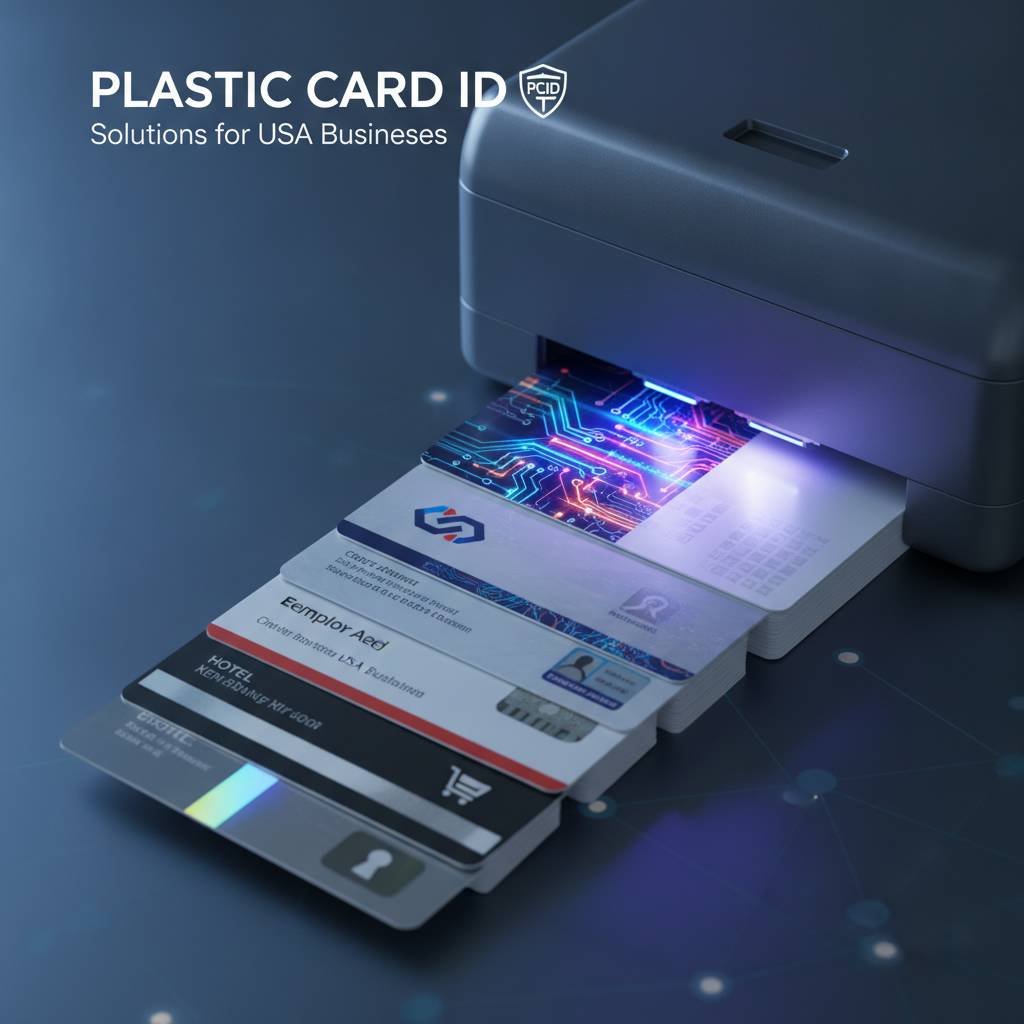
The common thread across all high-value UV printing applications is that the card represents access to something worth protecting - money, physical space, exclusive experiences, or verified identity. In each of these contexts, the cost of a forged card is meaningfully greater than the cost of UV printing, making the investment straightforwardly rational.
Hospitality, Casinos, and Entertainment Venues
Hotels, casinos, concert venues, and resort properties all operate card programs where credential fraud is a real financial exposure. Casino player cards are tied to reward balances that translate directly to cash or comps. Hotel key cards control room access. VIP credentials control admission to premium experiences. UV printing in these industries is less a luxury and more a baseline operational requirement for programs above a certain scale or value threshold.
The hospitality and entertainment industries also benefit from UV printing's branding potential. A hotel key card that reveals a spectacular hidden pattern under UV light is a conversation piece that guests share on social media. A casino loyalty card with a hidden UV logo tells players that the program is premium and professionally managed. These brand signals have genuine value beyond pure security.
Healthcare, Education, and Government-Adjacent Organizations
Hospitals, universities, government contractors, and research institutions issue ID and access cards in environments where unauthorized access carries serious consequences. UV printing adds a visible authentication layer that supports physical security protocols without requiring expensive electronic verification infrastructure at every entry point. A security officer with a UV wand at a building entrance can perform a meaningful credential check in seconds.
Educational institutions managing student ID programs, staff badges, and event credentials have found UV printing particularly useful for high-volume card programs where traditional holographic overlaminates might be cost-prohibitive at scale. A UV element printed in-house via a YMCKU ribbon configuration on a Fargo or Zebra printer adds measurable security value at a cost that fits within typical institutional ID program budgets.
Retail Loyalty and Membership Programs
Retailers and membership organizations may not face the same counterfeit threats as casinos or hotels, but UV printing still offers value in these contexts. Premium membership tiers can be distinguished with UV elements that signal exclusivity and legitimacy. Seasonal gift card programs can incorporate UV artwork that only reveals itself under blacklight, creating a memorable unboxing or gifting moment that paper gift cards cannot replicate.
Loyalty programs that have made the switch from paper punch cards to plastic UV-printed loyalty cards consistently report higher card retention rates among customers. A plastic card with a hidden UV design feels valuable enough to keep in a wallet rather than lose in a drawer. That physical retention translates directly into program engagement and repeat visits - outcomes that matter enormously to the ROI calculation for any loyalty program.
Connect with Plastic Card ID to Start Your UV Card Program Today
Twenty-five years. Over 100,000 customers. More than 50 million cards shipped. Plastic Card ID has been the behind-the-scenes infrastructure for card programs across virtually every industry in the United States - and UV ink printing on plastic cards is one of the most powerful tools in that catalog. Whether you need a small in-house UV printing setup for a boutique hotel program or a high-volume factory-printed UV card order for a national loyalty rollout, the expertise and inventory to support your program exist here.
The right card program starts with the right conversation. UV ink is a feature decision that cascades into substrate choices, printer selection, ribbon compatibility, and card design. Getting that first conversation right saves time, money, and re-orders. CPE is structured as a strategic partner, not a transactional supplier - which means you get guidance on what actually works for your specific program, not just a product listing.
Ready to explore UV ink printing for your plastic card program? Call Plastic Card ID at 800.835.7919 today and speak with a card program specialist who understands UV printing from the substrate up. Your program deserves a card that performs as impressively as it looks.
Previous Page