Blank Plastic Cards for Hotel Key Cards: Premium Quality
Table of Contents []
- Blank Plastic Cards for Hotel Key Cards - Trusted by Plastic Card ID
- Why Hotels Rely on Blank PVC Cards as Their Starting Point
- Magnetic Stripe Cards - HiCo vs. LoCo for Hotel Applications
- RFID and Smart Cards - Contactless Technology for Modern Properties
- Card Printers, Ribbons, and the Complete In-House Card Program
- Specialty Card Formats That Elevate the Guest Experience
- Getting Started with Plastic Card ID - Your Hotel Card Program Partner
Blank Plastic Cards for Hotel Key Cards - Trusted by Plastic Card ID
Walk into any hotel lobby in America and you will notice something that rarely changes: the key card. That slim, CR80-sized piece of plastic is handed over at check-in, tucked into a wallet, and carried to every floor, every amenity, every moment of a guest's stay. What most travelers never consider is where that card starts its life - as a blank plastic card, carefully selected, encoded, and branded by the property itself. That process begins with choosing the right card stock, and for over 100,000 businesses across the United States, it begins with Plastic Card ID.
Blank plastic cards for hotel key cards are not a commodity. They are an operational decision with real financial and guest-experience consequences. The wrong card thickness causes encoder jams. The wrong magnetic stripe grade leads to demagnetization. The wrong vendor means inconsistent quality batches that disrupt front desk operations and frustrate guests on their second night of a five-night stay. These are not hypothetical problems - they are daily realities for properties that source carelessly.
Plastic Card ID has spent over 25 years building card programs that eliminate exactly those problems. With more than 50 million cards sold and a catalog that spans blank PVC stock, HiCo and LoCo magnetic stripe cards, RFID options, and smart chip formats, CPE is genuinely a one-stop shop for hospitality card programs of every scale.
| Card Type | Best Use in Hospitality | Key Feature | Typical Program Scale |
|---|---|---|---|
| Blank CR80 PVC Card | In-house printed key cards, staff badges | ISO 7810 standard size, 30 mil thickness | 50 to 5,000 cards/month |
| HiCo Magnetic Stripe Card | Room access, elevator control, amenity access | High coercivity - resistant to demagnetization | 500 to 50,000 cards/month |
| LoCo Magnetic Stripe Card | Short-stay or event guest cards | Lower coercivity - economical for temporary use | 100 to 10,000 cards/month |
| RFID Proximity Card | Contactless room entry, parking, fitness centers | Contactless read range, no swipe required | 200 to 25,000 cards/month |
| MIFARE DESFire Smart Card | High-security properties, casino resorts | Encrypted contactless communication | 500 to 100,000 cards/month |
Why Hotels Rely on Blank PVC Cards as Their Starting Point
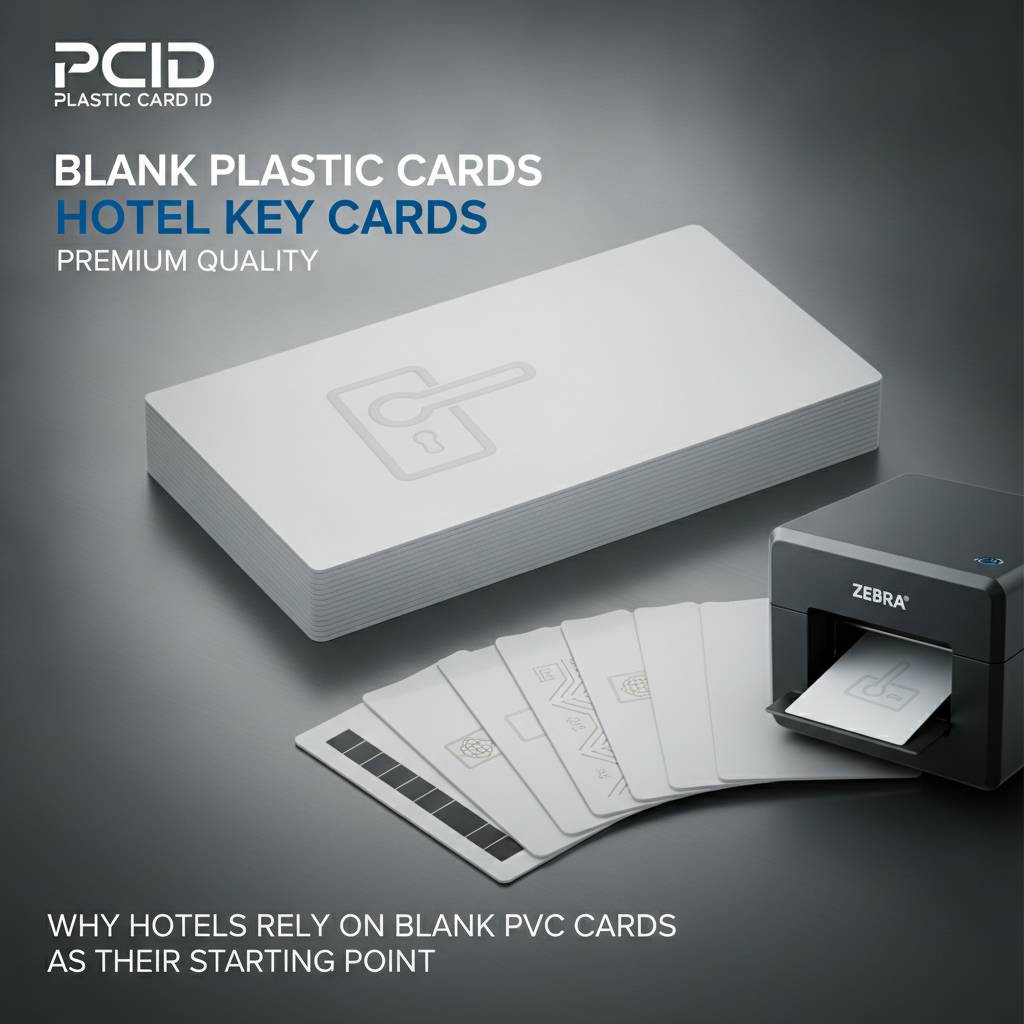 The blank CR80 card - 3.375 inches by 2.125 inches, 30 mil thick - is the hospitality industry's most versatile tool. It matches a standard credit card in size and feel, which means it works seamlessly in every lock reader, encoder, and printer already installed on a property. That standardization is not accidental. It follows ISO 7810 specifications, the global standard that ensures physical compatibility across equipment manufacturers.
For properties that print cards in-house, starting with a quality blank is essential. The surface of a PVC card must accept dye-sublimation printing evenly, hold color without fading under daily handling, and resist the micro-abrasions that occur inside a wallet or room lock reader. A cheap blank card will show wear within weeks, while a properly sourced PVC card from Plastic Card ID maintains its professional appearance throughout a guest's entire stay and beyond.
The Anatomy of a Quality Hotel Key Card Blank
Not all blank PVC cards are equal. Material purity, laminate bond strength, and surface coating all affect how a card performs over hundreds of read cycles. Full PVC construction at 30 mil thickness is the industry standard for a reason: it provides enough rigidity to feed reliably through single-card printers and enough flexibility to withstand bending without cracking or delaminating.
Composite cards, which mix PVC with PET or other materials, are sometimes marketed as upgrades, but for most hotel applications, pure PVC delivers everything a property needs at a lower per-card cost. The surface finish matters too - glossy surfaces produce the sharpest photographic prints, while matte finishes reduce glare and fingerprint visibility on staff-facing badge applications.
Blank Cards and Your Existing Printer Investment
Hotels that already own Fargo, Zebra, or Evolis card printers need blanks that are certified compatible with those systems. Using off-brand or inconsistently manufactured cards can cause card jams, ribbon waste, and encoder errors that cost far more in lost time than the savings on card stock. Plastic Card ID stocks blank cards specifically vetted for compatibility with the most widely deployed hotel card printers in the United States.
The relationship between blank card quality and printer performance is direct. Ribbon adhesion depends on surface uniformity, and a card with surface irregularities will produce streaks, color dropout, and misprints. Properties running high-volume check-in operations cannot afford rework queues at the front desk - and they do not have to, when card stock quality is locked in with a reliable supplier.
Volume Flexibility That Matches Hotel Operations
Hotel card needs are not constant. A 50-room boutique property might use 200 cards a month. A 400-room convention hotel might burn through 8,000. A resort complex with multiple towers, a casino floor, a spa, and valet parking might need 25,000 cards monthly across five different card types. Plastic Card ID serves all three scenarios - and everything in between - without requiring long-term contracts or minimum commitments that punish smaller properties.
Seasonal fluctuations are real in hospitality. The ability to scale card orders up and down without penalty is a practical advantage that properties appreciate when summer rush season ends or when an event block fills the house unexpectedly. CPE has built its fulfillment model around that operational reality, not around rigid supplier convenience.
Magnetic Stripe Cards - HiCo vs. LoCo for Hotel Applications
When hotel operators think about key cards, magnetic stripe technology is usually the first encoding format that comes to mind. It is mature, widely supported, and compatible with virtually every door lock system installed over the past three decades. But not all magnetic stripe cards are equivalent, and choosing between HiCo and LoCo encoding can have meaningful consequences for a property's operational reliability.
The coercivity rating of a magnetic stripe card describes how resistant it is to accidental erasure. Higher coercivity equals stronger magnetic signal, which equals a card that holds its encoding despite proximity to cell phones, credit cards, and other common magnetic field sources that guests carry every day. That distinction alone makes HiCo cards the default recommendation for most hotel door lock applications.
High Coercivity Cards - The Professional Standard
HiCo magnetic stripe cards, typically rated at 2750 Oe (oersteds), are the industry benchmark for hotel room key card encoding. They hold their programmed data through hundreds of swipes, resist interference from the magnetic strips in elevator buttons and card wallets, and work consistently in the wide temperature and humidity ranges found in real hotel environments.
Properties that have switched from LoCo to HiCo stock almost universally report a drop in guest complaints about key cards not working. That is not a minor quality-of-life improvement - every "my key doesn't work" call to the front desk costs staff time, delays housekeeping access, and creates a negative touchpoint in a guest experience that the property works hard to protect.
Call 800.835.7919 to discuss HiCo magnetic stripe card options that fit your property's door lock system and monthly volume. The CPE team can match you to the right specification without requiring you to decode technical jargon on your own.
Low Coercivity Cards - Where They Make Sense
LoCo cards, rated at 300 Oe, require less encoder energy and cost slightly less per unit. For short-term applications - event wristband alternatives, day-pass amenity access, conference credential cards - LoCo stock is a practical choice when the card will be used for 24 to 72 hours and then decommissioned. The encoding vulnerability that makes LoCo unsuitable for room keys is irrelevant when the card's useful life is measured in hours, not weeks.
Some properties use a hybrid approach: HiCo cards for room keys and overnight stays, LoCo cards for day-visitor spa passes or pool access tokens. Segmenting card types by use case reduces overall card cost without compromising the guest experience where it matters most - at the guest room door.
Three-Track Magnetic Stripe Options
Standard magnetic stripe hotel key cards encode data on track 2, the most common configuration for lock system programming. However, properties with more complex needs - integrated point-of-sale, loyalty tracking, parking validation, or multi-venue resort access - may require cards with two or three active tracks. Plastic Card ID carries multi-track magnetic stripe blanks compatible with the major hotel property management systems used across the United States.
Understanding your lock system's encoding protocol before ordering card stock prevents costly mismatches. The CPE team works directly with hospitality operators to confirm specification compatibility, so the cards delivered to your property work the first time, every time.
RFID and Smart Cards - Contactless Technology for Modern Properties
 Contactless key cards have moved from luxury novelty to mainstream expectation in the hotel industry. Guests tap rather than swipe, locks respond faster, and the absence of a magnetic stripe means no demagnetization complaints. For properties upgrading their access control infrastructure or specifying technology for new construction, RFID and smart card formats deserve serious consideration alongside traditional magnetic stripe stock.
The range of contactless card options available from Plastic Card ID covers the full spectrum - from basic proximity cards for straightforward room access to MIFARE DESFire encrypted smart cards for high-security casino resort environments. Each format has distinct technical characteristics that match specific lock system and security requirements.
Proximity Cards for Access Control
125 kHz proximity cards are the original contactless format and remain widely deployed in hotels, particularly in access-controlled staff areas, parking structures, and service corridors. Proximity cards offer reliable contactless performance at a cost-effective price point, making them an excellent choice for back-of-house access programs where the card is issued to employees rather than guests.
These cards work at read distances of 2 to 6 inches, require no physical contact with a reader, and carry no battery or moving parts. Their durability over years of daily use makes them a popular choice for long-term employee access credentials in hotel environments where cards see heavy daily use across multiple shifts.
MIFARE and DESFire Smart Cards for High-Security Environments
MIFARE Classic and MIFARE DESFire EV2 cards operate at 13.56 MHz and offer capabilities that far exceed simple proximity technology. DESFire cards in particular support AES-128 encryption, multiple application sectors, and cryptographic authentication - features that matter enormously in casino resort environments where a single card might control room access, gaming player tracking, food and beverage charging, and valet parking simultaneously.
Multi-application smart card programs reduce the number of cards a guest carries while giving the property a richer data touchpoint at every interaction. The operational and guest experience advantages are significant, and CPE stocks the blank smart card formats compatible with leading hospitality smart card management platforms.
Choosing the Right Contactless Format for Your Property
- 125 kHz Proximity: Best for staff access control, parking, and service areas. Cost-effective, durable, widely compatible.
- 13.56 MHz MIFARE Classic: Good for guest room access with moderate security requirements. Compatible with many mid-tier lock systems.
- 13.56 MHz MIFARE DESFire EV2: Ideal for casino resorts, luxury properties, and multi-venue complexes requiring encrypted multi-application cards.
- Dual-interface cards: Combine contact chip and RFID in a single card for applications requiring both modalities.
- HF RFID with magnetic stripe: Hybrid format supporting both contactless and stripe-based lock systems - useful during technology transition periods.
Matching your card format to your property's lock system specification is the critical first step. The Plastic Card ID team supports that process with direct technical guidance.
Card Printers, Ribbons, and the Complete In-House Card Program
Blank cards are only half of an in-house card program. To print, encode, and issue key cards at the front desk or in a back-office card room, a property needs a reliable card printer, the correct ribbon type, and a maintenance routine that keeps the printer performing at spec. Plastic Card ID supplies all three elements, which is precisely why hospitality operators describe CPE as a program partner rather than simply a card vendor.
The card printer market for hospitality applications is dominated by three manufacturers: Evolis, Zebra, and Fargo (HID Global). Each brand offers models suited to different volume levels and feature requirements, from entry-level single-sided printers for small boutique properties to dual-sided retransfer printers capable of producing over 250 cards per hour for large convention hotels.
Matching Printer Specifications to Hotel Volume
A 40-room inn that issues 80 cards on a busy weekend does not need the same printer as a 600-room urban convention hotel that processes 1,200 cards during peak check-in. Overbuying printer capacity wastes capital; underbuying creates bottlenecks at exactly the moments when front desk efficiency matters most - large group arrivals, early check-in rushes, and system rekeying after guest lockouts.
The right printer-to-volume match is one of the most impactful decisions a hospitality operator makes when building an in-house card program. The Plastic Card ID team asks the right questions - monthly card volume, card types needed, encoding requirements, budget range - before recommending a specific model. That process prevents expensive mismatches.
Reach the CPE team directly at 800.835.7919 to walk through your property's printing requirements and get a recommendation grounded in 25 years of hospitality card program experience.
Ribbons, Cleaning Kits, and Program Maintenance
A card printer is a precision instrument. The ribbon must match the printer model exactly - using an incorrect ribbon type causes print defects and can void manufacturer warranties. Cleaning kits, including cleaning cards and swabs for encoder heads and feed rollers, are not optional accessories: they are the maintenance routine that determines whether a printer delivers consistent print quality for 3 years or starts degrading in 8 months.
Plastic Card ID stocks OEM-compatible ribbons and genuine cleaning kits for every Evolis, Zebra, and Fargo model in its catalog. Keeping ribbon and cleaning supply reorders with the same supplier as card stock simplifies purchasing, reduces the risk of compatibility errors, and gives hospitality operators a single account contact for the entire card program.
Card Carriers, Sleeves, and Mailing Options
Hotels that mail pre-programmed key cards to loyalty members, VIP guests, or convention attendees need more than just the card. Professional card carriers and protective sleeves present the card in a format that communicates quality and intention - the physical equivalent of the welcome letter it accompanies. Plastic Card ID offers card carriers, sleeves, and card affixing and mailing services that complete the package literally and figuratively.
Direct mail card programs have measurable return-on-investment in loyalty and membership contexts. A key card that arrives at a guest's home before check-in creates anticipation and brand engagement that no digital confirmation email can replicate. For convention hotels running large group programs, pre-mailed cards reduce check-in queue lengths and improve arrival experience scores.
Specialty Card Formats That Elevate the Guest Experience
Standard white PVC key cards serve their function without generating any emotional response. They are invisible tools - noticed only when they fail to work. Specialty card formats change that equation. A clear plastic key card, a frosted card, a custom die-cut shape, or a luxury metal card becomes a physical brand artifact that guests notice, comment on, and sometimes keep deliberately as a souvenir of a particularly memorable stay.
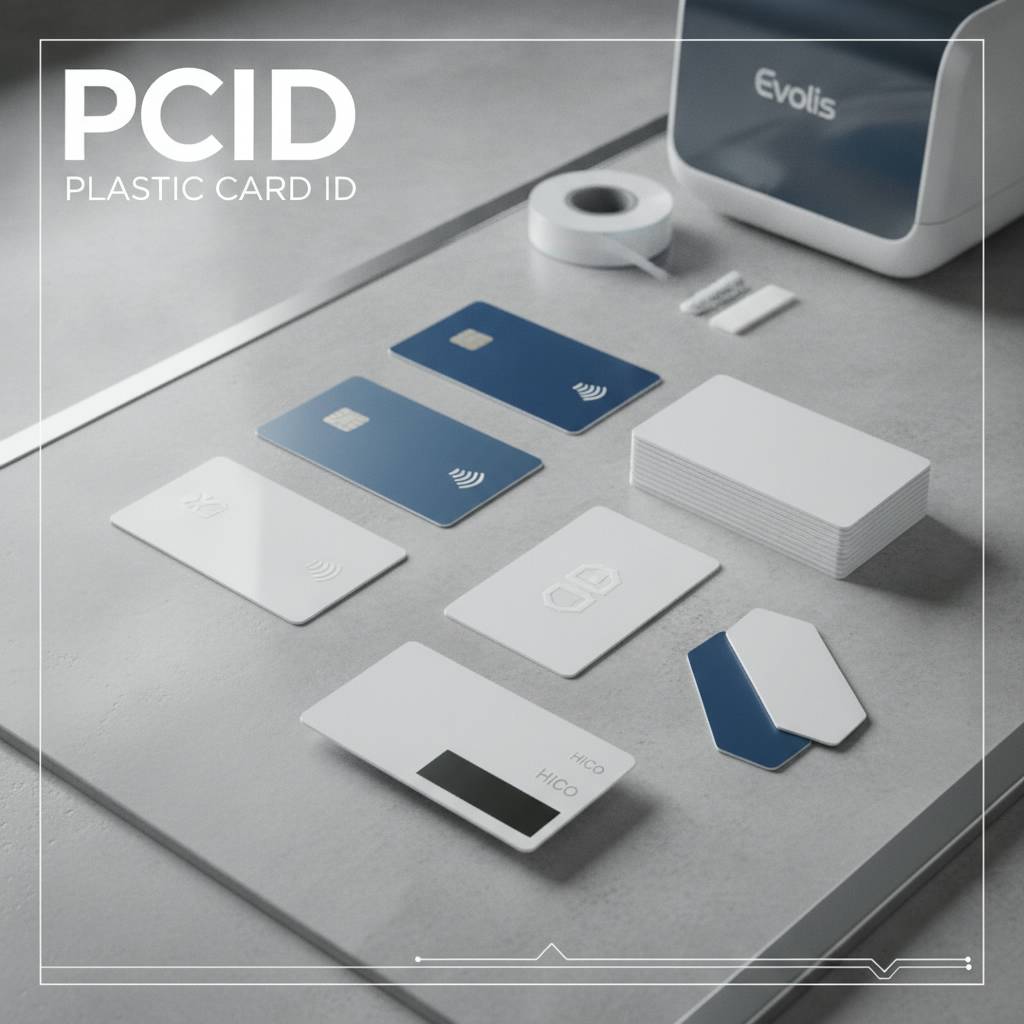
The hospitality sector has been among the earliest adopters of specialty card formats precisely because the key card is a guaranteed touchpoint - every guest handles it multiple times daily. Upgrading that touchpoint from functional to memorable costs less than most operators expect and delivers brand impression value that extends well beyond checkout.
Clear and Frosted Plastic Cards
Clear and frosted PVC cards allow printed graphics and branding to interact with transparency in ways that standard white stock cannot achieve. A property logo printed in white ink on a clear card appears to float, creating a visual effect that draws attention and communicates design sophistication. Frosted cards offer a tactile premium feel that guests associate with quality and exclusivity.
Both formats are fully compatible with standard CR80 dimensions and magnetic stripe or RFID encoding, meaning properties can adopt specialty card stock without changing any other element of their card program infrastructure. The upgrade is purely experiential - and that is often exactly the point.
Custom Die-Cut and Luxury Metal Cards
Custom die-cut cards in non-standard shapes - a property logo silhouette, a destination landmark outline, or a distinctive geometric form - create immediate shelf differentiation. Guests who would discard a standard key card at checkout will pocket a well-designed die-cut card. That retention extends brand presence beyond the stay in ways that advertising budgets cannot easily replicate.
Luxury metal cards in stainless steel, brass, or gold represent the highest tier of hospitality card experience. These cards are reserved for top loyalty tiers, VIP guest programs, and ultra-premium properties where every detail of the physical environment communicates exclusivity. Metal cards have a weight and permanence that plastic cannot simulate - and guests notice that difference immediately.
Casino Player Cards and Resort Access Programs
Casino resorts operate some of the most complex card programs in the hospitality industry. A single card may control hotel room access, track player activity on the gaming floor, authorize food and beverage charging across multiple restaurants, manage parking validation, and unlock spa and fitness facilities. That multi-function requirement demands cards built to a higher specification - and Plastic Card ID stocks the smart card formats that meet it.
Casino player card programs also involve aesthetic considerations that standard hotel programs do not. Player tier cards - from entry-level through platinum and above - must communicate status hierarchy clearly while maintaining a consistent brand family. CPE works with casino resort operators to source blank and custom card stock across multiple tier specifications within a single program order.
Getting Started with Plastic Card ID - Your Hotel Card Program Partner
Building or optimizing a hotel key card program involves more decisions than most operators anticipate when they first approach the process. Card format, encoding type, volume tier, printer selection, ribbon compatibility, and specialty options all interact in ways that reward experience and punish guesswork. What Plastic Card ID brings to every client relationship is exactly that experience - 25 years, over 100,000 customers, and more than 50 million cards sold across the United States.
The hospitality operators who get the most from their partnership with CPE are not necessarily the largest properties. They are the operators who engage early, share their operational context honestly, and treat card procurement as a program decision rather than a commodity purchase. That mindset, supported by a supplier with genuine depth in hospitality card programs, produces better outcomes at every scale - from a 30-room bed and breakfast to a 2,000-room resort complex.
How the Ordering Process Works
Starting a card program with Plastic Card ID begins with a conversation, not a catalog. Understanding your lock system specification, your monthly card volume, your printing infrastructure, and your guest experience goals takes ten minutes and prevents months of trial-and-error sourcing. The CPE team is available to guide that conversation at any stage - new program setup, printer upgrade, card format change, or volume scaling.
Orders can be placed at any scale, from 50 cards for a small property starting an in-house program to tens of thousands of units for mass-production hotel group programs. There are no minimum order penalties and no contractual lock-in that traps operators when their needs change.
Frequently Asked Questions About Hotel Blank Plastic Cards
- What is the standard size for hotel key cards? CR80, measuring 3.375 x 2.125 inches at 30 mil thickness, is the universal hotel key card standard.
- HiCo or LoCo for room keys? HiCo (2750 Oe) is strongly recommended for guest room door access due to its resistance to accidental erasure.
- Can I print on RFID cards? Yes. RFID and smart cards are available in printable PVC formats fully compatible with standard card printers.
- Do I need a special printer for magnetic stripe encoding? A printer with an integrated magnetic stripe encoder is required. Plastic Card ID stocks compatible printers from Fargo, Zebra, and Evolis.
- What is the minimum order quantity? CPE serves programs starting at 50 cards per month with no penalty for low volume.
- Are clear and metal cards compatible with standard lock readers? Yes, both formats are manufactured to CR80 dimensions and encoding specifications compatible with standard hotel lock systems.
Ready to Build a Better Hotel Card Program
The blank plastic card sitting in your card printer right now is either working perfectly or costing you money in ways that are invisible until they are not. Demagnetized cards, encoder jams, inconsistent print quality, and guest complaints about non-functioning keys all trace back to card stock quality and program specification decisions. Getting those decisions right from the start is what Plastic Card ID does best.
Contact the CPE team today to discuss your hotel's card program needs - whether you are starting fresh, scaling up, or solving a specific operational problem that has been nagging at your front desk operations longer than it should have.
Call Plastic Card ID now at 800.835.7919 and let a genuine expert in hotel plastic key card programs help you source smarter, print better, and deliver a guest experience that starts the moment a key card lands in someone's hand.
Previous Page