How Holographic Overlaminates Protect Plastic Cards from Fraud
Table of Contents []
- How Holographic Overlaminates Protect Plastic Cards - Plastic Card ID
- Physical Protection: The Underrated Side of Holographic Overlaminates
- Card Programs That Benefit Most From Holographic Overlaminates
- Choosing the Right Holographic Overlaminate for Your Program
- Integrating Holographic Overlaminates Into Your In-House Card Production
- Advanced Holographic and Security Card Options at Plastic Card ID
- Frequently Asked Questions About Holographic Overlaminates
- Partner With Plastic Card ID for Your Complete Card Program Solution
How Holographic Overlaminates Protect Plastic Cards - Plastic Card ID
Walk into any serious card program and you will find a quiet hero doing its job without fanfare - a thin, crystalline layer bonded to the card surface, bending light, defeating counterfeiters, and extending the working life of every card it touches. Holographic overlaminates are not decorative afterthoughts. They are engineered protection systems, and understanding how they work can fundamentally change how you design, source, and manage your plastic card program.
At Plastic Card ID, we have spent over 25 years watching card programs succeed or stumble based on decisions that seemed minor at the time. Choosing whether to overlaminate - and which overlaminate to use - is one of those decisions. The businesses that get it right print cards that look sharp after two years of daily wallet wear. The ones that skip it reprint cards every few months and lose ground on brand credibility. Let's talk about why that difference exists.
What Holographic Overlaminates Actually Are
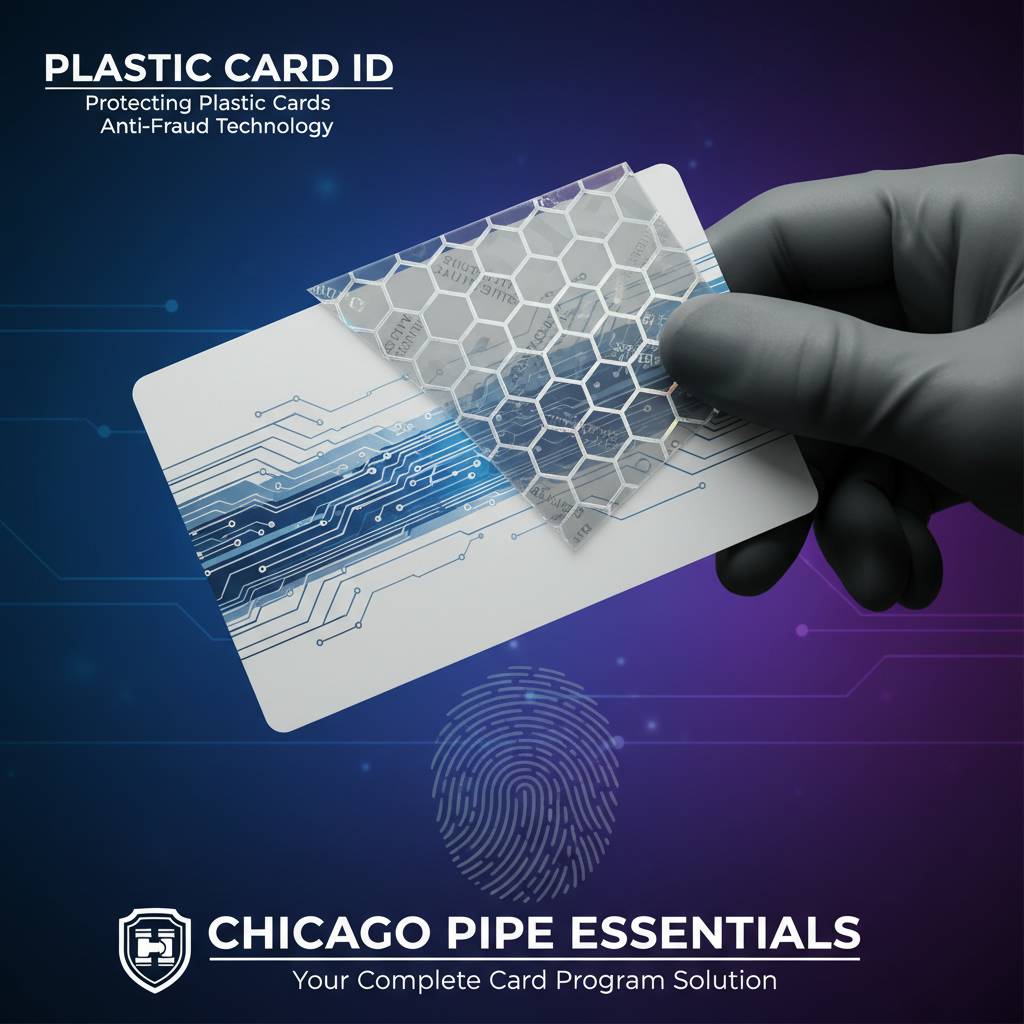
A holographic overlaminate is a thin polyester or polycarbonate film - typically between 0.5 and 1.5 mil thick - applied to the surface of a printed plastic card using heat and pressure. The film contains a diffraction grating: a microscopic pattern of ridges that splits white light into its component wavelengths, producing the signature rainbow shimmer that most people immediately associate with security credentials and high-value cards.
The holographic effect is not a printed image. It is a physical structure embedded into the film itself. That distinction is critical. You cannot photocopy a holographic overlaminate. You cannot scan it and reproduce it. The visual effect requires the specific microstructure of the film, which makes it extraordinarily difficult to replicate without industrial equipment and significant capital investment - exactly the deterrent that card programs need.
Beyond the visual security layer, the film itself serves as a physical barrier between the printed surface and the outside world. Sweat, friction, UV light, cleaning solvents - all of these degrade printed card surfaces over time. A properly bonded overlaminate intercepts all of that abuse before it reaches the ink or toner beneath.
The Science Behind the Shimmer
Diffraction gratings work by exploiting the wave nature of light. When light strikes the microscopic ridges in a holographic film, it bends at angles that depend on wavelength. Red bends differently than blue, which bends differently than green. The result is spectral separation - colors appear to shift as the viewing angle changes, and the pattern seems almost three-dimensional even though the film is nearly flat.
Modern holographic overlaminates go several layers deeper than simple rainbow shimmer. Manufacturers embed custom holographic images, repeating logo patterns, covert features visible only under UV light, and even laser-readable security codes within the film stack. Each of these layers adds another barrier between a legitimate card and a counterfeit attempt. The more layers of embedded security, the higher the cost to fake it.
Why Standard Laminate Falls Short for High-Security Programs
Standard clear overlaminates provide excellent physical protection - they extend card life significantly and are a worthwhile upgrade for almost any card program. But they do not provide the visual security authentication that holographic films deliver. A counterfeiter with a decent printer and a clear laminate film can produce a card that passes a casual visual inspection. A holographic overlaminate changes that equation entirely.
For employee ID cards, membership credentials, event badges, and access control cards, the ability to authenticate a card at a glance - without scanning equipment - is operationally valuable. A door guard who can spot a card without a holographic layer knows immediately that something is wrong. That instant visual check is a security layer that costs almost nothing to implement once the right overlaminate is built into your card production workflow.
| Feature | Standard Clear Overlaminate | Holographic Overlaminate |
|---|---|---|
| Physical Card Protection | Yes | Yes - Enhanced |
| Visual Authentication | No | Yes |
| Counterfeit Deterrence | Minimal | Strong |
| UV / Covert Features | No | Available |
| Typical Thickness | 0.5-1.0 mil | 0.6-1.5 mil |
| Cost Premium Over No Laminate | Low | Moderate |
Physical Protection: The Underrated Side of Holographic Overlaminates
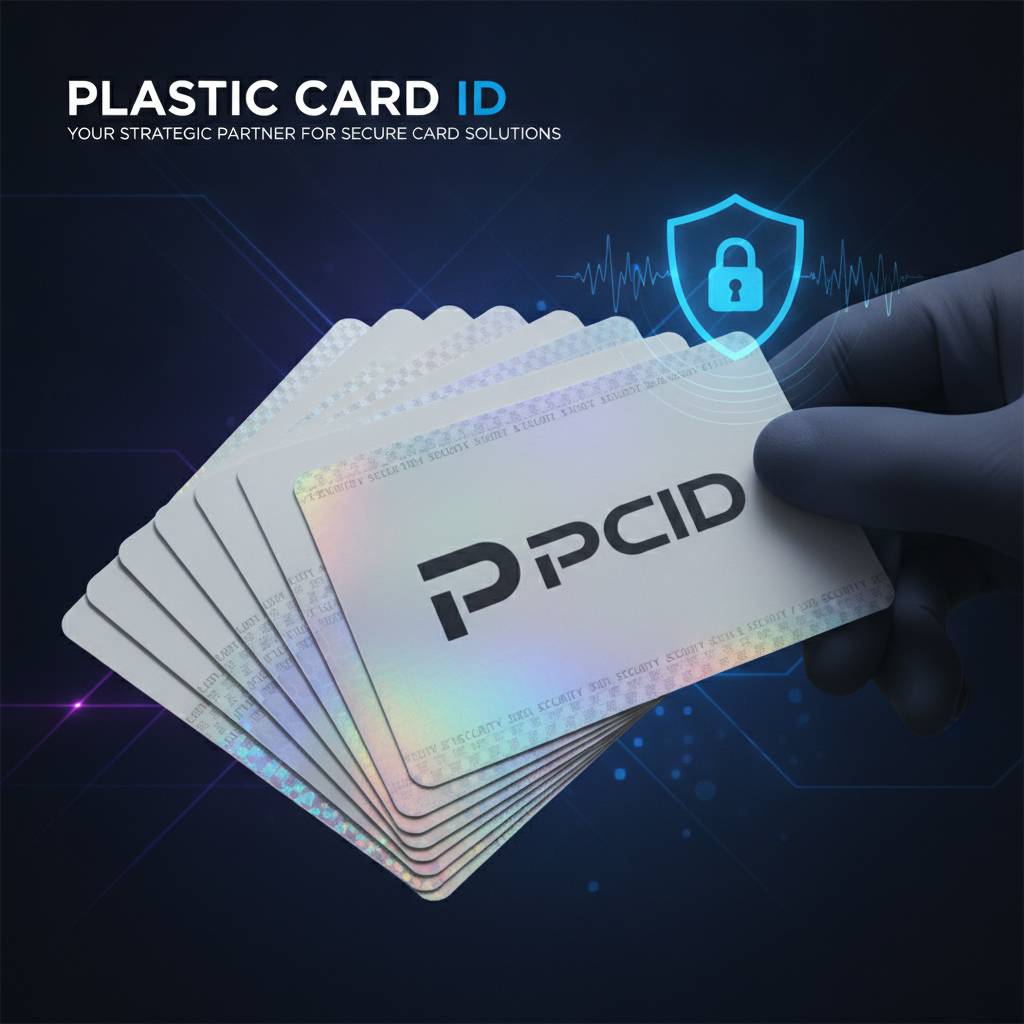 Security features generate most of the conversation around holographic overlaminates, but the physical protection story deserves equal attention. PVC cards are durable by nature - that is one of the reasons plastic consistently outperforms paper in real-world card programs. But even PVC surfaces are vulnerable to the specific stresses of daily card life: constant friction inside a wallet, exposure to body heat and moisture, the occasional drop onto a hard floor, cleaning wipes in hospitality and healthcare environments.
An overlaminate adds a sacrificial layer. Instead of the printed surface taking that abuse, the laminate film absorbs it. The ink, toner, and any encoded data underneath stay pristine even as the surface of the film takes the daily beating. That extended surface life translates directly to lower reprinting costs and longer intervals between card replacement cycles - a meaningful operational saving when you are managing thousands of cards.
Scratch and Abrasion Resistance in Daily Use
The most common cause of card degradation in high-use programs is not water or UV light - it is simple mechanical abrasion. Cards tap against keys, rub against coins, slide in and out of badge holders dozens of times per day. Over weeks and months, this friction visibly degrades unprotected printed surfaces, making cards look worn and occasionally rendering barcodes or text illegible.
Holographic overlaminates are engineered with surface hardness specifically to resist this type of wear. The polyester or polycarbonate top coat is significantly harder than the PVC card surface beneath it. A well-laminated card can maintain visual clarity and scan readability for two to five times longer than an unprotected card in equivalent conditions. For card programs measured on cost-per-card over the program lifetime, this multiplier matters enormously.
Moisture, Chemical, and UV Resistance
Hospitality cards face cleaning chemicals. Healthcare ID badges encounter hand sanitizer. Outdoor event credentials see direct sunlight for hours. Each of these exposures attacks printed card surfaces through different mechanisms - solvents dissolve ink, moisture causes delamination of poorly bonded layers, UV light fades colors and causes PVC to yellow over time. Holographic overlaminates address all three vectors simultaneously.
The film creates a chemically resistant barrier that prevents most common solvents from reaching the printed layer. The laminate bond, when applied correctly by a quality card printer, seals the card edge and surface against moisture intrusion. UV-stabilized overlaminate formulations specifically filter the wavelengths that degrade printed inks, preserving color accuracy across the card's working life. Investing in the right overlaminate is, in most cases, cheaper than the cost of reprinting cards prematurely.
Protecting Magnetic Stripes and Encoded Data
Magnetic stripe cards face a specific vulnerability that holographic overlaminates directly address. The magnetic oxide layer on a HiCo or LoCo stripe can be physically damaged by abrasion or chemically affected by certain environments. Once the stripe is damaged, the card fails to read - and in an active access control or loyalty program, a non-reading card creates friction for both staff and cardholders.
Overlaminates applied over or adjacent to the magnetic stripe area extend stripe readability by protecting the oxide surface from direct physical contact. Combine that with the inherent data retention advantages of HiCo high-coercivity stripes - which CPE stocks extensively - and you have a card that holds its data reliably and reads cleanly throughout its intended lifespan. That reliability is the foundation of any card program that cardholders learn to trust.
Card Programs That Benefit Most From Holographic Overlaminates
Not every card program has identical security or durability requirements. A stack of blank PVC cards used for internal print-on-demand event badges at a single-location business has different needs than a multi-site healthcare network issuing employee ID and access cards to thousands of staff. Understanding where holographic overlaminates add the most value helps organizations make smart, proportionate investments.
The programs that see the clearest return on holographic overlaminate investment tend to share a few characteristics: high card volume, long intended card lifespan, meaningful consequences for counterfeiting or unauthorized duplication, and cardholders who carry their cards in high-wear environments. If your program checks two or more of those boxes, holographic overlaminates should be part of your specification.
Employee ID and Access Control Cards
Employee ID cards are arguably the highest-stakes card category for security authentication. An employee badge grants physical access to facilities, identifies individuals to colleagues and visitors, and often integrates with digital access control systems through proximity or RFID technology. A convincing fake employee badge is a physical security vulnerability, full stop. Holographic overlaminates are a standard security layer in professional employee ID programs precisely because they make convincing duplication so difficult.
The wear profile of an employee ID card also makes physical protection critical. A badge worn on a lanyard gets grabbed, twisted, bumped, and occasionally dropped every single day. Hospitality and healthcare badges face chemical exposure on top of mechanical wear. Holographic overlaminates keep these cards looking professional and reading reliably across the full employee tenure - often one to five years without replacement.
Membership and Loyalty Cards
Membership and loyalty cards live in wallets - which is exactly where you want them, and exactly the environment that degrades unprotected cards fastest. Wallet friction, body heat, proximity to credit cards and coins - all of it accumulates over the months or years that a valued customer carries your card. A loyalty card that looks worn and faded after six months sends a subtle but real signal about brand quality. A card that still looks crisp after two years reinforces the value of the relationship.
The security aspect of holographic overlaminates matters for high-value loyalty programs where card fraud is a real concern - programs where accumulated points have meaningful redemption value. A holographic feature makes cloned or duplicated loyalty cards immediately identifiable to trained staff, protecting program integrity without adding friction for legitimate cardholders. For retailers who have already seen the 35-50% sales lift that comes with switching from paper to plastic gift and loyalty cards, protecting the card's integrity and longevity is the logical next step.
Event Credentials and VIP Passes
Event credentials present a unique challenge: they need to be verifiable on the spot, often by staff who are not trained security professionals, in crowded and fast-moving environments. A holographic overlaminate provides exactly the kind of instant visual authentication that works in that context. Staff checking credentials at a VIP entrance do not need a scanner or a reference database - they need to see the characteristic shimmer of a legitimate credential at a glance.
- Visual authentication without scanning equipment - holographic shimmer is visible immediately under normal lighting
- Durable enough to survive a full event day in a wallet or badge holder
- Deters casual counterfeiting attempts, especially for high-value VIP or backstage access tiers
- Compatible with barcodes, QR codes, and magnetic stripes for multi-layer verification
- Available in custom holographic patterns that incorporate event or organization branding
Choosing the Right Holographic Overlaminate for Your Program
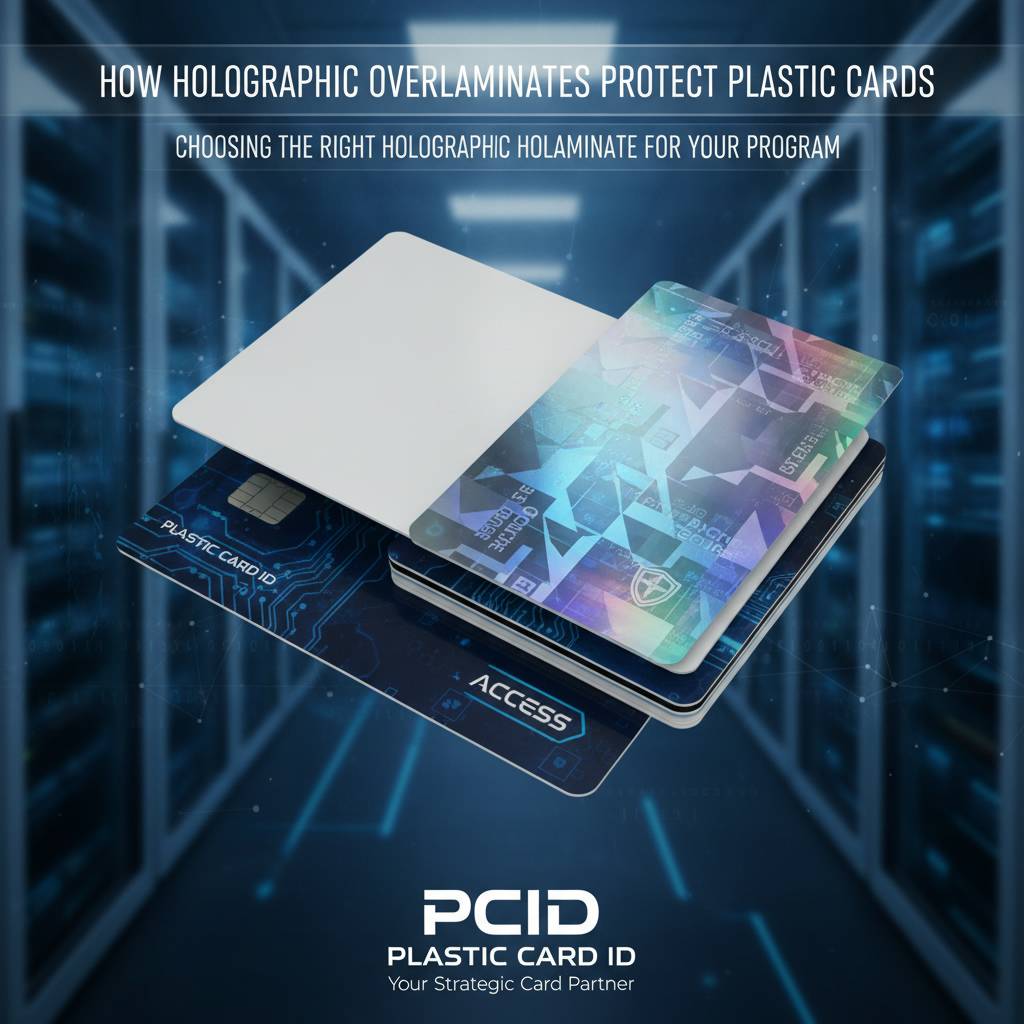 Holographic overlaminates are not a single product - they are a category with meaningful variation in film composition, thickness, security feature depth, and compatibility with different card printer platforms. Choosing the wrong overlaminate for your printer model wastes money and produces cards with poor laminate adhesion that peel at the edges. Choosing the right one produces a card that feels and looks genuinely premium from the first day to the last.
The selection process starts with your card printer. Evolis, Zebra, and Fargo printers - the three primary platforms CPE supplies and supports - each have specific overlaminate ribbon and film specifications. Running an incompatible film through a laminator module can damage both the cards and the printer. Always confirm overlaminate compatibility with your printer model before purchasing in quantity.
Film Thickness and Security Level
Thicker overlaminate films generally offer more physical protection and more room for embedded security features. A 1.0 mil or 1.5 mil film can carry more complex holographic structures, additional UV-reactive layers, and custom logo patterns than a 0.5 mil economy film. The tradeoff is that thicker films add marginally to the overall card thickness and cost slightly more per card laminated.
For programs where security is the primary driver - employee ID, access control, casino player cards, hotel key cards - investing in a thicker, feature-rich holographic film is straightforward. For programs where physical protection is the primary goal and counterfeiting is a lower concern - internal loyalty programs, library cards, gym membership cards - a lighter film may offer the right balance of protection and cost efficiency.
Custom Holographic Patterns vs. Stock Patterns
Stock holographic patterns - generic rainbow, snowflake, or grid designs that are widely available - offer security value against casual counterfeiters who lack industrial film production capabilities. Custom holographic patterns, which embed a specific logo, text, or design into the diffraction structure of the film, raise the counterfeiting barrier significantly higher because the custom design is not commercially available to anyone outside the authorized production chain.
Custom holographic overlaminates typically require minimum order quantities that make them most practical for larger card programs - organizations issuing thousands of cards per year. For smaller programs, stock holographic patterns still provide meaningful deterrence at accessible price points. Contact Plastic Card ID at 800.835.7919 to discuss which security tier makes sense for your specific program volume and risk profile.
Compatibility With Magnetic Stripes, RFID, and Smart Chips
A common concern for card programs that combine holographic overlaminates with functional card technologies - magnetic stripes, proximity chips, RFID antennas, contact smart chips - is whether the overlaminate interferes with card performance. In general, properly specified holographic films do not impair magnetic stripe readability or RF performance. The film is thin enough that it does not attenuate the RF signal from proximity or RFID cards in any operationally meaningful way.
Smart chip cards require careful attention to overlaminate application around the chip module contact area. Most chip card overlaminate specifications include a pre-cut or punched window that leaves the contact pads exposed for reader engagement. Confirm this specification with your supplier before finalizing your card production workflow. Getting the chip window right the first time avoids the frustration of a beautifully laminated card that fails to authenticate at the chip reader.
Integrating Holographic Overlaminates Into Your In-House Card Production
One of the most empowering shifts in card production over the past decade has been the availability of desktop and mid-volume card printers with integrated laminator modules. Organizations that previously outsourced their entire card production - and paid accordingly - can now produce laminated, holographically secured cards in-house, on demand, in quantities from a single card to several hundred per day.
Evolis Primacy 2, Zebra ZC300 and ZC500 series, and Fargo HDP6600 are among the printer platforms CPE supplies that offer laminator module options. Each platform handles overlaminate ribbons or films specifically engineered for that printer's heat and pressure profiles. The result is consistent, bubble-free lamination that meets the same quality standard as outsourced production - with the added advantages of on-demand issuance and complete design control.
Printer Ribbons and Overlaminate Consumables
Holographic overlaminate is applied through a dedicated laminate panel in a combination ribbon - typically a YMCKO or YMCKOL ribbon where the L panel carries the overlaminate film - or through a separate laminate ribbon used in a second pass or a dual-sided laminator module. Understanding which ribbon format your printer uses is the first step to integrating holographic overlaminates without guesswork or waste.
Plastic Card ID stocks printer ribbons, cleaning kits, and overlaminate consumables for all major card printer platforms. Keeping an adequate supply of the right consumables on hand is as important as the printer itself - running out of overlaminate ribbon mid-production creates inconsistent card batches and potential security gaps if some issued cards lack the expected holographic layer.
Cleaning and Maintenance for Consistent Laminate Quality
The single most common cause of poor overlaminate adhesion in in-house card production is a dirty printer laminator module. Dust, card debris, and adhesive residue accumulate on the laminator rollers over time and create bubbles, wrinkles, and edge-lifting in laminated cards. A regular cleaning regimen using the manufacturer-specified cleaning cards and kits prevents these defects and extends the laminator's service life significantly.
Most printer manufacturers recommend running a cleaning cycle every 1,000 cards or at the beginning of each new ribbon. CPE supplies complete cleaning kits for all major card printer platforms - the same brands and specifications as the printer OEMs recommend, ensuring your cleaning routine actually protects your investment rather than just going through the motions.
Volume Planning and Cost Per Card Calculations
When evaluating the economics of holographic overlaminates, the right metric is not the cost of the overlaminate ribbon alone - it is the cost per card over the card's functional lifetime compared to the cost of cards without overlaminate protection. A card that lasts three years instead of one year, amortized across its lifespan, frequently costs less per active day than an unprotected card even after accounting for the overlaminate premium.
- Calculate your current average card lifespan in your specific use environment
- Estimate reprinting and reissuance costs including staff time and cardholder friction
- Add the overlaminate cost per card to the base card and printing cost
- Compare total cost per card per year with and without overlaminate protection
- Factor in security incident costs if your program has meaningful counterfeiting or fraud exposure
Advanced Holographic and Security Card Options at Plastic Card ID
Holographic overlaminates are one layer in a broader security and durability toolkit that CPE makes accessible to organizations of every size. For programs that need to go beyond standard overlaminate security, the catalog extends into territory that was once accessible only to large-scale institutional card programs: MIFARE DESFire RFID smart cards, casino player cards with multi-layer authentication, hotel key cards, custom die-cut card shapes, and even luxury metal cards in stainless steel, brass, and gold finishes.
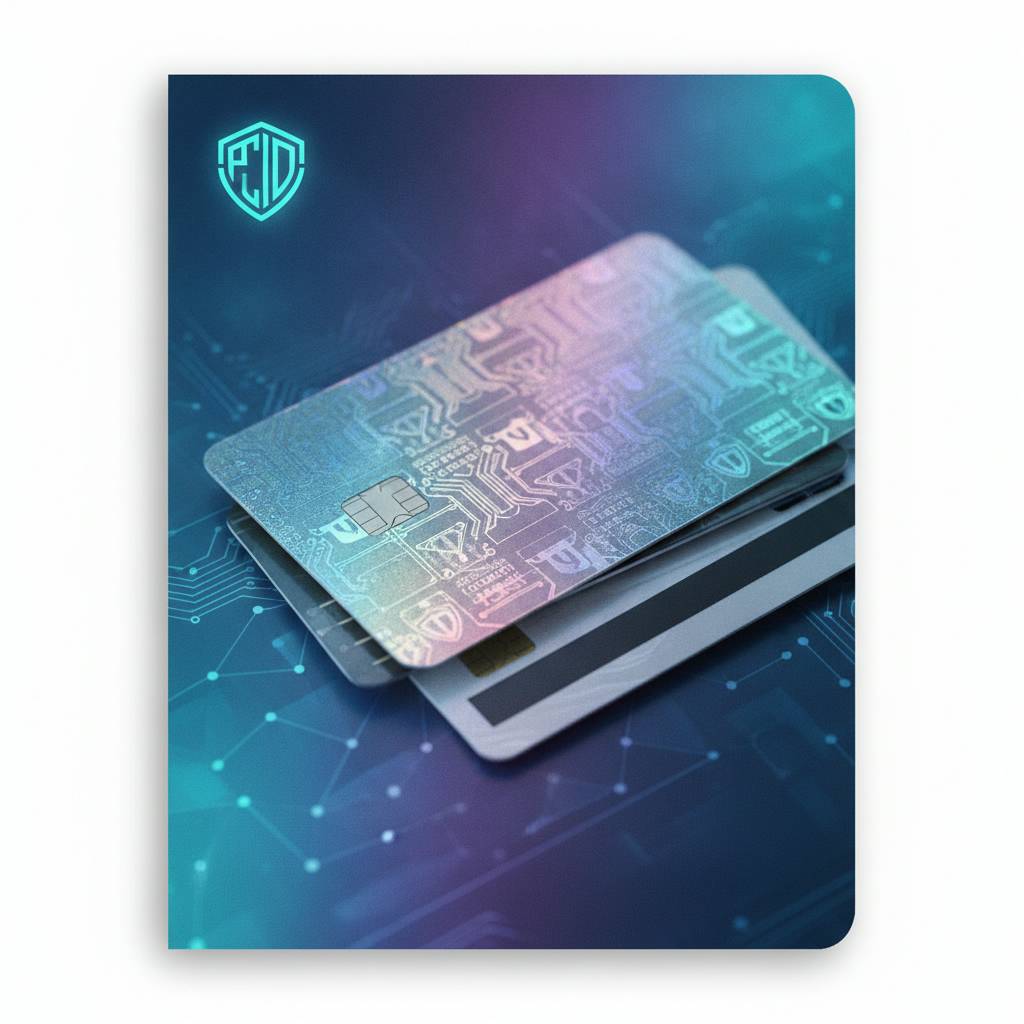
Every advanced option in this catalog can be paired with appropriate overlaminate or surface protection specifications. Metal cards use different protection approaches than PVC - surface coatings rather than applied films - but the underlying principle is the same: the card's surface should be engineered to withstand the wear profile of its specific use case while maintaining both visual appeal and functional reliability across its intended lifespan.
Casino Player Cards and High-Security Membership Programs
Casino player cards operate in one of the most demanding card environments imaginable: handled repeatedly every day, exposed to cigarette smoke residue and cleaning chemicals, carried by a cardholder population that has strong financial incentive to understand how the cards work and what they look like. Holographic overlaminates are effectively standard specification in casino player card programs, not an optional upgrade.
Multi-site casino operations and high-value membership programs often specify custom holographic patterns that incorporate the property logo or a unique visual identifier - raising the bar for duplication high enough that casual fraud attempts are defeated at minimal cost relative to the program's value. Plastic Card ID has the sourcing relationships and program experience to help organizations at this level design card specifications that match their security architecture.
Hotel Key Cards and Hospitality Applications
Hotel key cards face a specific operational challenge that makes overlaminate protection particularly valuable: they are issued to guests who may not treat them with care, they are exposed to the inside of pockets alongside keys and coins, and they need to reliably activate door locks throughout a guest's stay regardless of how they have been handled. A card that fails to read reliably creates operational burden and guest dissatisfaction - two things no hospitality operation needs more of.
Holographic overlaminates on hotel key cards serve both the durability and brand presentation goals simultaneously. A card that looks polished and distinctive when the guest receives it at check-in reinforces the property's brand investment. A card that still reads cleanly on the last morning of a week-long stay prevents frustrating lockout calls to the front desk. Both outcomes matter, and both are achievable with the right card specification from a supplier who understands hospitality card programs.
RFID Smart Cards and Contactless Technology
RFID and proximity access cards represent the leading edge of physical access control technology, and they are increasingly common in corporate, government, healthcare, and educational facilities. Cards incorporating MIFARE DESFire chips, 125kHz proximity antennas, or multi-technology combinations benefit from holographic overlaminates for the same reasons as any other credential - physical protection and visual authentication - with the added consideration that these cards often represent a higher per-unit cost that makes protection even more worthwhile.
The RF performance of proximity and RFID cards is not meaningfully affected by standard holographic overlaminate films, which are thin enough that they do not attenuate the card's electromagnetic field. Confirm film specifications with Plastic Card ID when ordering overlaminates for RFID card programs to ensure the film stack is optimized for both security and reliable contactless performance.
Ready to protect your card program with holographic overlaminates? Call us today and let's build the right specification for your application.
Frequently Asked Questions About Holographic Overlaminates
Organizations evaluating holographic overlaminates for the first time often arrive with similar questions - about compatibility, cost, minimum orders, and what the implementation process actually looks like. The answers to these questions tend to clarify the decision quickly, because the practical barriers to getting started are smaller than most people expect.
Do All Card Printers Support Holographic Overlaminate?
No - holographic overlaminate application requires a printer with a laminator module, either built-in or as an attachable accessory. Not all desktop card printers include this capability. Printers from Evolis, Zebra, and Fargo in the mid-range and professional tiers typically offer laminator options. Entry-level single-pass printers generally do not. If overlaminate capability is a requirement for your program, specify it when selecting your printer platform - retrofitting a printer without laminator capability after purchase is not typically feasible.
CPE can help you identify the right printer for your volume and security requirements before you buy. Getting the printer selection right the first time saves the significant frustration and cost of discovering a capability gap after your card program is already in production. Printer selection and overlaminate compatibility are decisions that belong together, not in separate conversations.
What Is the Typical Cost Premium for Holographic Overlaminate Ribbons?
Holographic overlaminate ribbons typically cost more per card laminated than standard clear overlaminates, which in turn cost more than printing without any overlaminate. The cost premium varies by printer platform, film type, and purchase volume. In general, adding a standard holographic overlaminate panel to a YMCKO ribbon adds a moderate per-card cost that, when amortized across an extended card lifespan, frequently represents a net savings compared to earlier card replacement cycles.
Custom holographic patterns require custom film production with associated tooling costs and minimum order quantities - making them most economical for high-volume programs. For most organizations, stock holographic patterns available through standard ribbon products provide excellent value and meaningful security enhancement at manageable cost. Volume pricing on consumables is available through Plastic Card ID - call 800.835.7919 to discuss your program's specific volume requirements.
Can Holographic Overlaminates Be Applied to Both Sides of a Card?
Yes - dual-sided lamination is available on printers with dual laminator modules and through two-pass lamination workflows on single-module printers. Applying holographic overlaminate to both sides of a card maximizes physical protection and provides security authentication on both faces, which matters for cards that are regularly viewed or handled from either side - employee badges worn face-forward on lanyards, for example, versus loyalty cards that cardholders hand to cashiers face-up.
Dual-sided holographic lamination does add to per-card cost and slightly increases overall card thickness. For most programs, front-side holographic lamination with a standard clear overlaminate on the back strikes a practical balance between security, protection, cost, and card thickness compliance with standard CR80 specifications. Plastic Card ID can help you map out the right specification for your program's specific handling and verification workflow.
Protecting your cards is protecting your program. Every card you issue represents your organization's credibility - make sure it holds up.
Partner With Plastic Card ID for Your Complete Card Program Solution
 A card program is only as strong as the components it is built on - the cards, the printers, the ribbons, the overlaminates, and the supplier relationship that keeps all of those components available, compatible, and properly specified. CPE has spent over 25 years developing exactly the kind of deep product knowledge and supplier relationships that make card programs work reliably at every scale, from 50 cards a month to tens of thousands.
Whether you are launching a new card program and building your specification from scratch, upgrading an existing program with holographic overlaminate protection, or troubleshooting a card quality issue that has been costing you reprinting expense and cardholder confidence, the conversation starts in the same place: with a clear picture of what your cards need to do, in what environment, for how long, and at what volume. That is exactly the kind of conversation CPE is built to have.
One-Stop Card Program Supply
Beyond holographic overlaminates, Plastic Card ID supplies everything a card program needs under one roof: blank PVC cards in CR80 and custom sizes, magnetic stripe cards in HiCo and LoCo configurations, RFID and proximity access cards, smart chip cards, clear and frosted specialty cards, colored card stock, card printers from Evolis, Zebra, and Fargo, printer ribbons and cleaning kits, card carriers, protective sleeves, and card affixing and mailing services. There is no gap in the supply chain that requires you to manage a second vendor relationship.
Having a single trusted supplier for your card program supplies simplifies procurement, reduces the risk of compatibility mismatches between components, and gives you a single point of contact who understands your entire program - not just the slice of it that one component supplier happens to sell. That relationship value compounds over time as your program evolves and your needs change.
Serving USA Businesses of Every Scale
Over 100,000 customers and more than 50 million cards represent a remarkably broad cross-section of American organizations - from solo-location small businesses issuing loyalty cards to regional healthcare networks managing thousands of employee credentials, from boutique hotels personalizing guest key cards to multi-site retail chains running national gift card programs. The common thread is not size; it is the understanding that a well-executed card program delivers measurable returns that justify the investment many times over.
CPE serves organizations across all of these categories with the same commitment: products that perform, specifications that match the application, and the knowledge to guide decisions that might seem technical but have real operational consequences. Holographic overlaminates are a perfect example - a relatively small decision in the context of a total card program budget that has outsized impact on card longevity, security integrity, and cardholder perception.
Get Started With the Right Specification Today
The best time to incorporate holographic overlaminate protection into your card program is before you place your next card order - not after you have already printed a batch of cards that will need to be reprinted in six months because the unprotected surface degraded faster than expected. Getting the specification right at the start of a card program cycle saves money, saves time, and produces cards that make the right impression from day one through day one thousand.
With over a quarter century of experience helping USA businesses build and manage successful card programs, Plastic Card ID has the product knowledge, the inventory depth, and the customer service commitment to make your card program work exactly the way you need it to. Call Plastic Card ID today at 800.835.7919 and let's build a card program that performs as hard as your business does.
Previous Page