Difference Between PVC and ABS Plastic Cards Explained
Table of Contents []
- What Actually Separates PVC from ABS Plastic Cards - And Why It Matters for Your Program
- How Material Choice Affects Real-World Card Performance
- Blank PVC Cards as the Foundation of In-House Card Programs
- Industry-Specific Card Applications and Why Material Matters in Each
- Frequently Asked Questions About PVC and ABS Card Differences
- Value-Added Services That Make Card Programs Work End to End
- Why Plastic Card ID Remains the Partner of Choice for USA Card Programs
What Actually Separates PVC from ABS Plastic Cards - And Why It Matters for Your Program
Walk into any card program conversation and someone, inevitably, will ask: "Are these PVC or ABS?" It sounds like a simple question. It is not. The material choice sitting beneath every swipe, tap, or badge scan shapes how long a card lasts, how cleanly it prints, whether your encoder loves or fights it, and ultimately what message it sends to the person holding it. Two materials. Very different outcomes.
Most businesses - retailers launching gift card programs, HR departments printing employee badges, gyms issuing membership cards - have no idea they are even making a material choice. They order cards, the cards arrive, and nobody thinks twice. Until something goes wrong: warping in a hot car, poor magnetic stripe reads, ink that flakes under heavy handling. That is when the question suddenly becomes urgent. Plastic Card ID has fielded that conversation tens of thousands of times, and the answer always starts in the same place: understanding what each material actually is.
PVC: The Industry Standard for a Reason
Polyvinyl chloride - PVC - is not just popular in plastic cards. It is the defining material of the CR80 card standard. ISO 7810 compliance, the specification that governs credit card-sized cards at 3.375 x 2.125 inches and 30 mil thickness, was essentially written around PVC's properties. That is not coincidence. PVC delivers a specific combination of rigidity, smoothness, dimensional stability, and surface receptivity that makes it ideal for card printing, encoding, and laminating.
When a direct-to-card printer lays dye sublimation panels across a PVC surface, the color transfer is sharp, consistent, and durable. The card does not flex unpredictably during printing, which matters enormously for edge-to-edge image quality. Magnetic stripes adhere reliably. Chip modules embed cleanly. RFID antenna layers laminate without delamination. PVC is, in nearly every measurable way, the professional-grade choice for high-volume, long-life card programs.
ABS: Where It Fits and Where It Struggles
Acrylonitrile butadiene styrene - ABS - is a thermoplastic used widely in consumer products, automotive interiors, and industrial components. It is genuinely tough, and in certain applications it outperforms PVC. The problem arises when ABS migrates into card applications where PVC's specific characteristics are assumed. ABS has different thermal behavior, a different surface texture, and different chemical compatibility with the adhesives and inks used in card printing workflows.
Print shops and card issuers who have accidentally run ABS stock through equipment calibrated for PVC know what happens: color shifts, ribbon contamination, inconsistent lamination adhesion, and encoder errors. ABS also tends to flex slightly differently under thermal stress, which can affect how magnetic stripes are read by POS terminals over time. ABS is not a bad material - it is simply misapplied when substituted for PVC in professional card programs without adjusting the entire workflow around it.
The Feel Test Most Buyers Never Think to Run
Here is something practical. Rub a fingernail lightly across the surface of a card. PVC has a characteristically smooth, almost slick finish - even unprinted blank stock has a consistent surface sheen. ABS tends to feel slightly more matte or waxy depending on its compound formulation. Neither texture is inherently superior in isolation, but when you are purchasing blank stock for an in-house card printing operation, that surface consistency determines ink laydown quality every single print cycle.
Card printers from Evolis, Zebra, and Fargo are all calibrated with PVC in mind. Feeding ABS-based cards through these machines without manufacturer guidance can affect print head life, ribbon consumption rates, and output quality. CPE consistently recommends sticking with certified PVC stock - not as a brand preference, but as a performance and equipment longevity decision. Your printer warranty may depend on it.
| Property | PVC Cards | ABS Cards |
|---|---|---|
| ISO 7810 Compliance | Standard-native material | Can be manufactured to spec but not native |
| Dye Sublimation Print Quality | Excellent, consistent | Variable; depends on compound |
| Magnetic Stripe Adhesion | Highly reliable | Less consistent |
| Thermal Stability | Stable up to standard temps | Can warp at lower temps |
| Chip/RFID Integration | Industry standard method | Possible but less common |
| Cost at Scale | Competitive, widely sourced | Often higher for card-grade ABS |
| Typical Use Case | Gift, loyalty, ID, access, hotel, casino | Specialty industrial, niche card applications |
How Material Choice Affects Real-World Card Performance
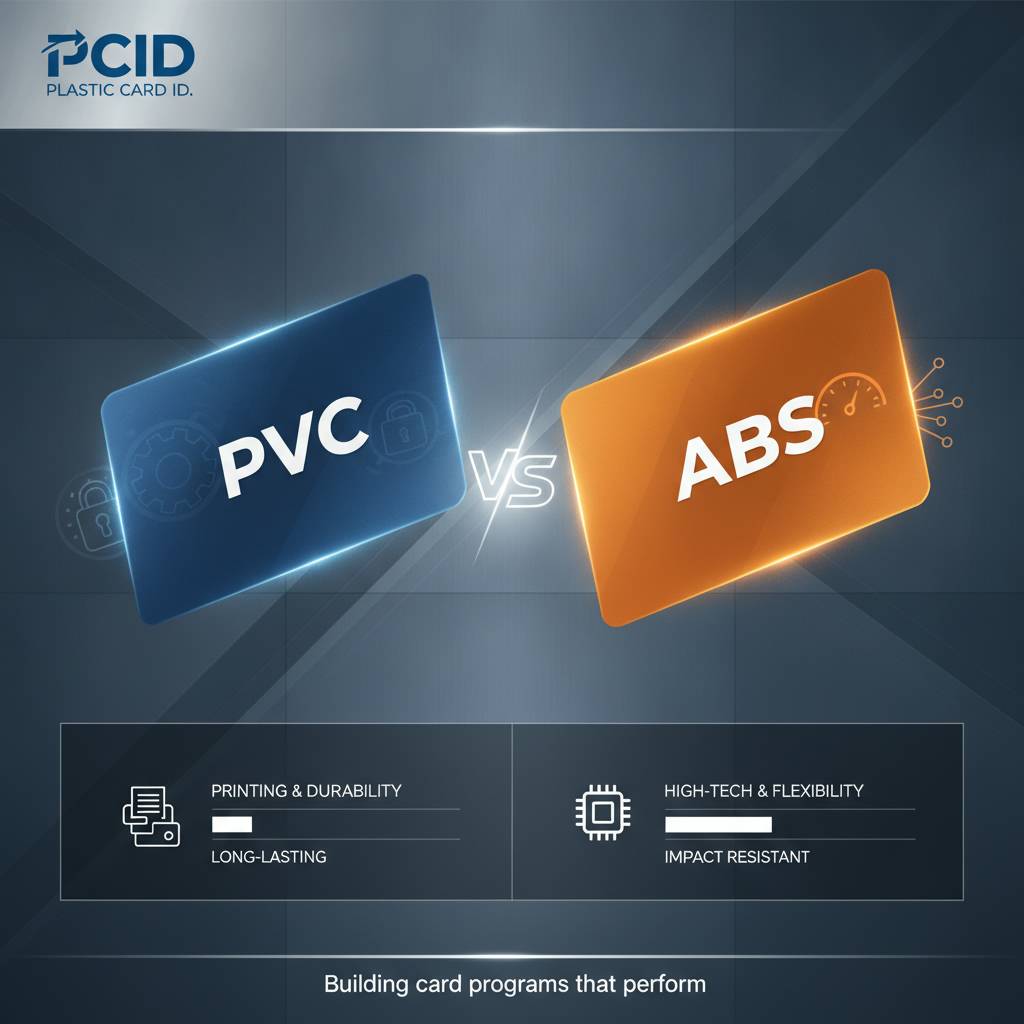 The gap between PVC and ABS is not just academic. It shows up in daily operations - at the checkout counter when a loyalty card fails to scan, at the security gate when an access card reads inconsistently, at the membership desk when a printed card starts flaking at the edges after three months. Material decisions have real operational consequences, and organizations that treat card stock as an afterthought often pay for it in replacement costs and staff frustration.
Consider a retail chain running a gift card program across 40 locations. If the cards warp slightly in point-of-sale display racks exposed to afternoon sunlight, they become difficult to slide through card readers. If the magnetic stripes degrade faster than expected, cashier intervention increases and customer experience suffers. None of this is dramatic until it accumulates - and with PVC stock, most of these scenarios simply do not arise. The material's stability is a quiet, continuous advantage that gets noticed mostly when it is absent.
Magnetic Stripe Cards and Material Sensitivity
Magnetic stripe technology - still running on billions of cards worldwide - is deceptively sensitive to the substrate beneath it. HiCo (high coercivity) and LoCo (low coercivity) stripes both rely on the magnetic oxide layer maintaining consistent contact and alignment with the card surface. When the substrate flexes excessively, expands unevenly with temperature, or has a surface that does not bond cleanly during manufacturing, stripe read rates drop. PVC's dimensional stability is a core reason why virtually every bank, retailer, and loyalty program worldwide prints magnetic stripe cards on PVC.
ABS-based cards used in magnetic stripe applications often require tighter reader calibration and produce higher swipe failure rates in environments with temperature fluctuation - think outdoor festival wristbands converted to card format, or vehicle-mounted card readers. For indoor, controlled environments, the difference may be negligible. But when you are issuing cards at scale and cannot control end-user environments, PVC's consistency is not a luxury - it is risk management.
RFID, Proximity, and Smart Chip Integration
Modern access control and contactless payment systems depend on precision. An RFID antenna embedded in a card must maintain exact placement and consistent electrical characteristics across thousands of read cycles. Smart chip modules embedded in ISO 7810-compliant cards must seat cleanly and resist delamination through wallet flexing, temperature cycling, and daily handling. PVC laminates used in multi-layer card construction - antenna layer, chip cavity layer, overlay layers - adhere to each other predictably and with established industry chemistry.
ABS laminates behave differently. The adhesive systems developed for card-grade PVC lamination are not always compatible with ABS substrates, and delamination risk increases when materials are mixed without explicit validation testing. MIFARE DESFire cards, proximity access credentials, and smart chip hotel keys are almost universally manufactured on PVC for exactly this reason. The technology stack was built around the substrate. Changing the substrate without rethinking the stack introduces unnecessary risk.
Specialty Card Formats: Clear, Frosted, and Beyond
Clear plastic cards and frosted translucent cards are increasingly popular for premium membership programs, VIP credentials, and high-end retail loyalty programs. These specialty formats use PVC with modified additives that create the visual effect while preserving the printing and encoding properties that make PVC the preferred base material. The result is a card that photographs beautifully, accepts dye sublimation printing cleanly, and encodes without incident.
ABS can be manufactured in clear or translucent variants, but the surface chemistry for printing is substantially different. Specialty inks and printing processes designed for clear PVC do not automatically transfer to clear ABS stock. Organizations that have tried to substitute clear ABS in a PVC-calibrated print workflow have reported color fringing, adhesion failures, and inconsistent UV coating behavior. When the goal is a premium visual outcome, the material choice is inseparable from the result.
Blank PVC Cards as the Foundation of In-House Card Programs
There is a reason blank CR80 PVC cards - unprinted, unengraved, ready to become whatever an organization needs them to be - represent such a significant portion of Plastic Card ID's catalog and customer base. The blank card is the most flexible starting point in any card program. It is a canvas that becomes an employee badge, a loyalty card, an event credential, or an access token depending on what is printed or encoded onto it. Buying blank stock and printing in-house puts the organization in complete control of design, timing, and volume.
For organizations issuing 50 cards a month, an in-house card printer loaded with certified PVC blank stock is almost always more economical than ordering pre-printed custom cards in small batches. The per-card cost drops, the turnaround from design-to-card shrinks from days to minutes, and design changes happen without minimum order constraints. Blank PVC CR80 cards represent one of the best cost-leverage decisions a card program manager can make.
Why Card Thickness Matters More Than Most Buyers Expect
The CR80 standard specifies 30 mil thickness - 0.030 inches. This is not arbitrary. That thickness is what card readers, ID badge holders, wallet slots, and laminating pouches are all designed around. Cards that deviate from 30 mil - whether thinner at 20 mil or thicker at 40 mil - create friction in the system. Thinner cards bend too easily in wallets and fail card readers that depend on physical stiffness to guide the card through the read head. Thicker cards jam in dispensers and badge printers.
PVC card manufacturers producing to ISO 7810 hold tight tolerances on that 30 mil specification. ABS card manufacturers producing for non-card applications often do not, because in most non-card applications, a few thousandths of an inch in thickness is irrelevant. When you purchase blank PVC stock from a specialized card supplier, you are buying dimensional consistency that keeps your entire card infrastructure operating correctly. That is a genuine, measurable benefit - not marketing language.
The Printer Compatibility Question
Evolis, Zebra, and Fargo card printers are precision instruments. They are designed with specific feed tolerances, thermal transfer temperatures, and ribbon formulations calibrated for PVC card stock. When CPE recommends running certified PVC blank cards through these machines, the recommendation comes from understanding how the entire system works together. Ribbon waste, print head degradation, and jam rates all increase when off-specification or non-PVC card stock is used.
This is not a minor concern for high-volume card programs. A print head replacement on a professional card printer can cost $150-$400. Ribbon waste from poor card-to-ribbon adhesion adds up per ribbon panel. Over a year of operation, using manufacturer-certified PVC stock versus bargain-sourced card material of uncertain specification can represent a meaningful cost difference - not in the card price, but in the total operational cost of the program. Call 800.835.7919 to get matched with the right blank card stock for your printer model.
Volume Tiers and What They Mean for Purchasing
- Small programs (50-500 cards/month): Blank PVC stock purchased in boxes of 500 provides flexibility without overstock. In-house printing makes per-card cost predictable.
- Mid-size programs (500-2,500 cards/month): Case quantity purchasing reduces per-card cost significantly. Standardizing on a single card specification simplifies reordering and inventory management.
- Large programs (2,500-10,000 cards/month): Pallet-quantity pricing becomes available. Consistent PVC specification ensures that print quality and encoding reliability hold across the full production run.
- Mass production programs (tens of thousands/month): Custom-manufactured PVC stock with specific surface treatments, laminate grades, or pre-applied magnetic stripe or RFID layers becomes economical at this scale.
Every tier benefits from the same underlying material consistency. The difference is how that consistency compounds. At 50 cards a month, one bad batch is an annoyance. At 50,000 cards a month, one bad specification batch is a crisis. PVC stock from a reputable, specialized supplier eliminates that variable.
| Card Format | Key Features | Typical Applications |
|---|---|---|
| Blank White PVC CR80 | 30 mil, ISO compliant, print-ready surface | ID badges, loyalty cards, membership cards |
| HiCo Magnetic Stripe | 2750 Oe stripe, high durability | Gift cards, access control, hotel keys |
| LoCo Magnetic Stripe | 300 Oe stripe, standard data encoding | Loyalty, membership, event credentials |
| Clear/Frosted PVC | Translucent or fully clear finish | VIP cards, premium memberships, branded cards |
| Colored PVC Stock | Pre-colored core, print-ready surface | Department differentiation, event tiers, branding |
Industry-Specific Card Applications and Why Material Matters in Each
 The question of PVC versus ABS is not purely theoretical - it plays out differently depending on the industry. A casino player card lives in a very different environment than a gym membership card. A hotel key card has specific encoding requirements that a school ID badge does not. Understanding how material properties intersect with industry-specific demands helps organizations make purchasing decisions that hold up in real operations, not just on paper.
Plastic Card ID serves organizations across retail, hospitality, healthcare, education, corporate enterprise, events, and access control. The common thread across every sector is that PVC consistently outperforms alternative materials when cards are subjected to the encoding, printing, reading, and physical handling demands of professional card programs. The following breakdowns explain why sector by sector.
Retail Gift and Loyalty Card Programs
Retailers who upgrade from paper punch cards or paper gift certificates to plastic PVC gift and loyalty cards see results that are difficult to argue with. Research consistently shows sales lifts of 35-50% when retailers transition to plastic gift cards - the card's physical permanence encourages higher-denomination purchases and return visits. A PVC loyalty card sitting in a customer's wallet is a daily brand impression. A paper card sitting at the bottom of a purse is a liability waiting to get lost.
The magnetic stripe or barcode on a retail card needs to read reliably across dozens of POS terminal types, in varying environmental conditions, over a card lifespan that may extend 2-3 years. PVC's stripe adhesion, surface durability, and dimensional stability make that multi-year, multi-system reliability possible in a way that lesser materials simply cannot guarantee. The card is a marketing investment - the material is what protects that investment.
Access Control and Security Credential Programs
Proximity cards, RFID access credentials, and smart chip security cards represent the most technically demanding card applications in common use. The card must not only carry the cardholder's identity visually but must communicate reliably with readers that may be mounted outdoors, in high-traffic stairwells, in parking structures, or in server rooms with electromagnetic interference. Proximity cards using 125kHz technology and contactless smart cards using MIFARE DESFire are precision instruments embedded in a PVC shell.
ABS-based access cards are occasionally encountered in legacy or industrial installations, but new installations virtually universally specify PVC. The lamination chemistry, the antenna placement precision, and the chip module seating are all optimized for PVC construction. Organizations standardizing access control infrastructure should verify that their card stock specification matches the system manufacturer's requirements - and in most cases, that means PVC.
Hospitality and Hotel Key Card Programs
Hotel key cards carry a brand promise. They are the first physical object a guest receives at check-in, and they travel with the guest through every interaction with the property. A flimsy, warped, or poorly printing key card communicates something about the brand before the guest has even reached the room. PVC hotel key cards maintain their dimensional integrity through wallet storage, repeated reader insertions, and the temperature swings of traveling in luggage in ways that alternative materials do not match.
The encoding requirements for hotel key cards - typically using proprietary RFID or magnetic stripe protocols specific to lock manufacturers - demand a substrate that holds encoding reliably from check-in to check-out. A card that fails mid-stay creates a guest service event that costs staff time, erodes satisfaction scores, and occasionally results in compensation offers. The card material is not a luxury consideration; it is a hospitality operational cost management decision.
Frequently Asked Questions About PVC and ABS Card Differences
Customers exploring the difference between PVC and ABS plastic cards for the first time often have overlapping questions. The following answers address the most common points of confusion that CPE's team encounters when helping organizations specify card stock for new or expanding card programs.
Can I mix PVC and ABS cards in the same card program?
Technically, nothing prevents an organization from issuing some cards on PVC stock and others on ABS. In practice, the inconsistency creates problems. Printer settings calibrated for PVC will produce inconsistent results on ABS, and vice versa. Encoding parameters for magnetic stripe or RFID may need adjustment. And from the user perspective, cards that feel or behave differently undermine the brand consistency that a unified card program is supposed to deliver.
The short answer: standardize on PVC. It is the specification that the card printer, card reader, and card infrastructure ecosystem was built around. Introducing a second material specification without a clear reason creates maintenance complexity without corresponding benefit. Consistency in card stock is a form of operational discipline that pays dividends across the program's lifetime.
Is ABS ever the right choice?
ABS has legitimate applications in specialized industrial card environments where PVC's chemical composition creates issues - certain laboratory or chemical exposure environments where PVC may be specified out. ABS is also used in some gaming and token applications where specific weight, feel, or chemical resistance is required. In these niche cases, ABS is appropriate. For the overwhelming majority of business card programs - gift, loyalty, membership, ID, access, hotel - PVC is the correct choice.
The key question is always: what is the card being asked to do, and in what environment? For standard business card applications across the United States, that question consistently points to PVC. ABS is a solution to a problem that most card programs do not have.
What about composite or hybrid PVC cards?
Some card manufacturers produce composite cards that blend PVC with other materials to achieve specific properties - increased flexibility for wristband applications, enhanced chemical resistance for industrial badge programs, or modified surface properties for specialty printing techniques. These composite formulations are distinct from ABS and are specifically engineered to maintain PVC's printer and encoder compatibility while adding targeted performance properties.
When purchasing composite or hybrid PVC stock, the key specification to verify is surface chemistry and dye sublimation compatibility. A card that is described as "PVC composite" should be tested with your specific printer model before ordering in volume. 800.835.7919 connects you with specialists who can help verify compatibility before you commit to a large order. That verification step saves significant expense and frustration. Call Plastic Card ID today for guidance on selecting the right card specification for your printer and program.
Value-Added Services That Make Card Programs Work End to End
A great card stock decision is necessary but not sufficient. The cards need to get from blank stock to issued credential in the hands of cardholders, and that chain involves printers, ribbons, cleaning kits, carriers, sleeves, and sometimes mailing and fulfillment. Plastic Card ID functions as a genuine one-stop shop precisely because card programs do not succeed on card stock alone - they succeed when every element of the chain works correctly together.
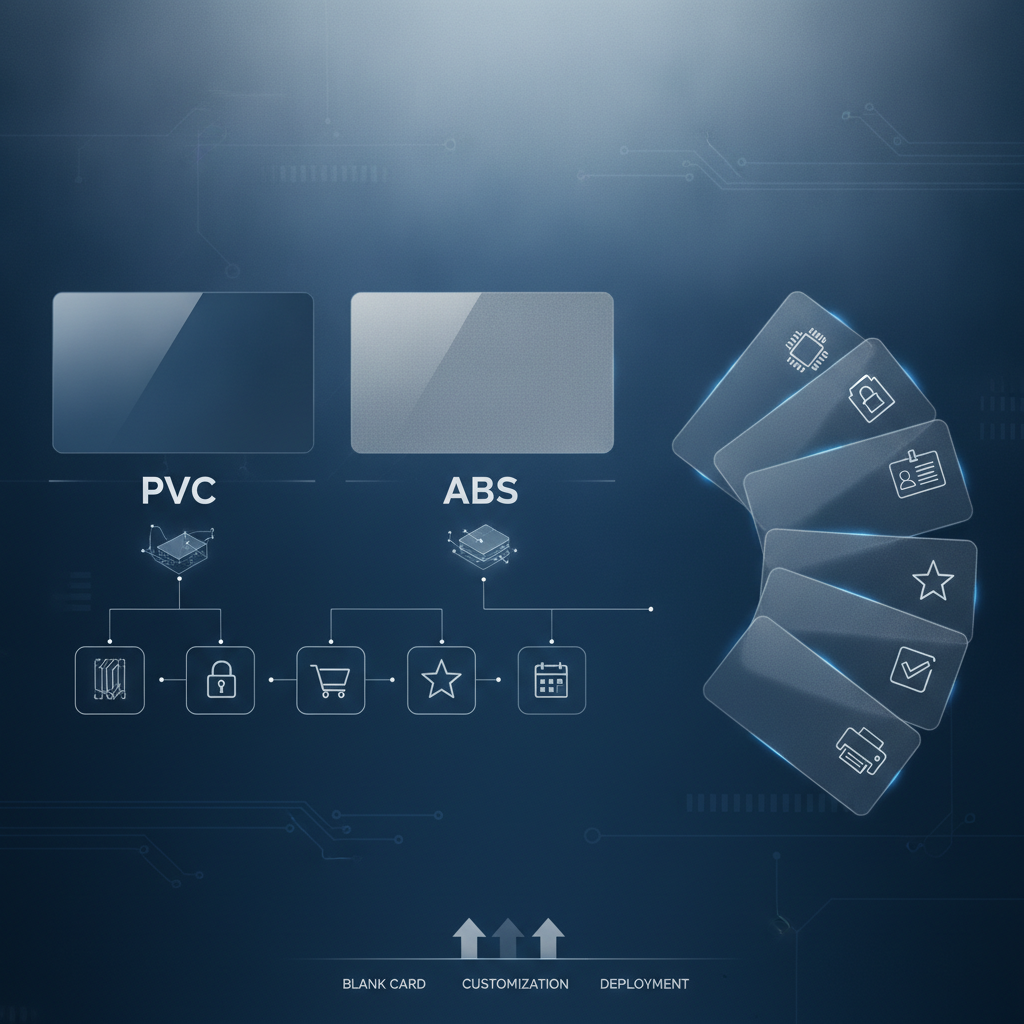
Printer ribbons matter enormously. Using a generic or off-brand ribbon on a calibrated Evolis, Zebra, or Fargo printer introduces variability into a process that depends on tight tolerances. Manufacturer-certified ribbons are formulated to transfer at specific temperatures to specific PVC surface chemistries. The print quality difference is visible. The print head longevity difference is measurable. Buying certified ribbons alongside certified card stock is not an upsell - it is system integrity.
Card Carriers, Sleeves, and Mailing Services
Many card programs involve mailing cards to new members, cardholders, or employees. That delivery experience is the first physical brand touchpoint. A PVC card arriving bent, scratched, or loose in an envelope communicates carelessness. Cards shipped in purpose-designed card carriers or protective sleeves arrive as they were designed to: flat, pristine, and professional. The carrier also provides the mailing panel for personalized names, addresses, and program messaging.
For organizations that need cards produced and mailed at scale - new member onboarding programs, annual membership renewals, event pre-registration credentials - card affixing and mailing services eliminate the internal labor of managing that fulfillment in-house. Outsourcing card mailing to a specialist with the right equipment and card-handling experience preserves your team's time for work that requires their specific expertise.
Cleaning Kits and Printer Maintenance Supplies
Card printer maintenance is the most neglected aspect of in-house card programs. Dust, card debris, and ribbon residue accumulate inside the printer's card path and around the print head. A dirty card path produces banding artifacts, inconsistent color density, and card jams. Regular cleaning with manufacturer-specified cleaning cards and swabs is the single most cost-effective maintenance action available for any card printer.
Cleaning kit intervals vary by printer model and volume - some manufacturers recommend cleaning every 500 cards, others every 1,000. Running cleaning cycles on schedule extends print head life, maintains color accuracy, and reduces the frequency of card jams that waste ribbon panels and require staff intervention. A $20 cleaning kit used regularly can prevent a $300 print head replacement. The math is straightforward. Plastic Card ID supplies the right cleaning kits for every major card printer model in the field.
Why Plastic Card ID Remains the Partner of Choice for USA Card Programs
Twenty-five years. Over 100,000 customers. More than 50 million cards shipped. These numbers describe a supplier that has earned sustained trust from organizations ranging from single-location small businesses to national enterprises managing complex, multi-site card programs. But the numbers do not fully capture what distinguishes Plastic Card ID from a catalog commodity supplier: the expertise embedded in every customer interaction.
Knowing the difference between PVC and ABS matters. Knowing which magnetic stripe specification your POS system requires matters. Knowing whether your access control system needs MIFARE DESFire or standard 125kHz proximity technology matters. Organizations that try to navigate those decisions without expert guidance often discover the wrong answer only after ordering thousands of cards that do not work as expected. That is an expensive and avoidable outcome. CPE eliminates that risk by matching customers to the right specification before the order is placed.
A Catalog Built Around Real Business Needs
The product range at Plastic Card ID was not assembled by purchasing managers optimizing for margin. It was assembled by people who understand card programs from the inside out. Blank white PVC CR80 cards for in-house badge and loyalty programs. HiCo and LoCo magnetic stripe cards for retail and access applications. RFID proximity cards for building access. MIFARE DESFire smart cards for high-security installations. Clear and frosted PVC for premium programs. Colored PVC stock for department or tier differentiation. Metal cards in stainless steel, brass, and gold for ultra-premium VIP credentials.
Each product exists in the catalog because customers needed it and because it performs correctly in professional card program environments. That is a different kind of catalog than one assembled from whatever happens to be cheapest to source. The depth and specificity of the range reflects 25 years of listening to what card program managers actually need and building a supply chain that delivers it reliably.
Scale Without Sacrifice
One of the more common concerns among organizations approaching a supplier for the first time is whether their volume is large enough to receive genuine attention. A business ordering 200 blank PVC cards per month wonders if they matter to a supplier that ships millions of cards annually. At Plastic Card ID, the answer is straightforward: programs from 50 cards a month to mass production in the tens of thousands receive the same expertise and the same material quality. The per-card price scales with volume, as expected. The service quality does not scale down.
This matters because small card programs can grow into large ones, and the supplier relationship that serves a 200-card-per-month program well is the same relationship that will serve a 20,000-card-per-month program well. Building the supplier relationship early, with a partner that knows your card specifications and your program's requirements, is one of the more underrated strategic decisions a growing organization can make.
Ready to choose the right card material and start a card program that performs? Contact Plastic Card ID today at 800.835.7919. Whether you are comparing PVC and ABS options, selecting blank stock for in-house printing, or scaling an existing program to new volumes, the team at Plastic Card ID has the expertise to help you get it right the first time.
Previous Page