Blank PVC Cards Explained: Everything You Need to Know
Table of Contents []
- Blank PVC Cards Explained: Everything You Need to Know From Plastic Card ID
- What Is a Blank PVC Card and Why Does the Material Matter?
- The Surprising Range of Uses for Blank PVC Cards
- Magnetic Stripe, RFID, and Smart Chip Options Within Blank PVC Cards
- Specialty Blank Cards: Clear, Frosted, Colored, and Beyond
- Building an In-House Card Program: Printers, Ribbons, and Supplies
- Frequently Asked Questions: Blank PVC Cards for US Businesses
- Partner With Plastic Card ID for Your Blank PVC Card Programs
Blank PVC Cards Explained: Everything You Need to Know From Plastic Card ID
Walk into almost any business today and you will encounter them - tucked in wallets, clipped to lanyards, tapped against readers, scanned at registers. Plastic cards are everywhere. But what exactly is a blank PVC card, and why do so many organizations across the United States choose to start their card programs with them? The answer is more nuanced - and frankly more interesting - than most people expect.
Blank PVC cards are the raw material of modern identity, access, loyalty, and membership programs. They arrive unprinted, ready for your artwork, your encoding, your branding. They hand you control. Understanding what they are, how they are made, and what they can do for your organization is exactly what this page is designed to accomplish.
| Specification | Standard Value | Notes |
|---|---|---|
| Card Size (CR80) | 3.375" x 2.125" | Same as standard credit card |
| Thickness | 30 mil | ISO 7810 standard |
| Material | PVC (Polyvinyl Chloride) | Durable, print-ready surface |
| Common Colors | White, Clear, Frosted, Colored Stock | Multiple options available |
| Compatible Printers | Evolis, Zebra, Fargo | Direct-to-card and retransfer |
What Is a Blank PVC Card and Why Does the Material Matter?
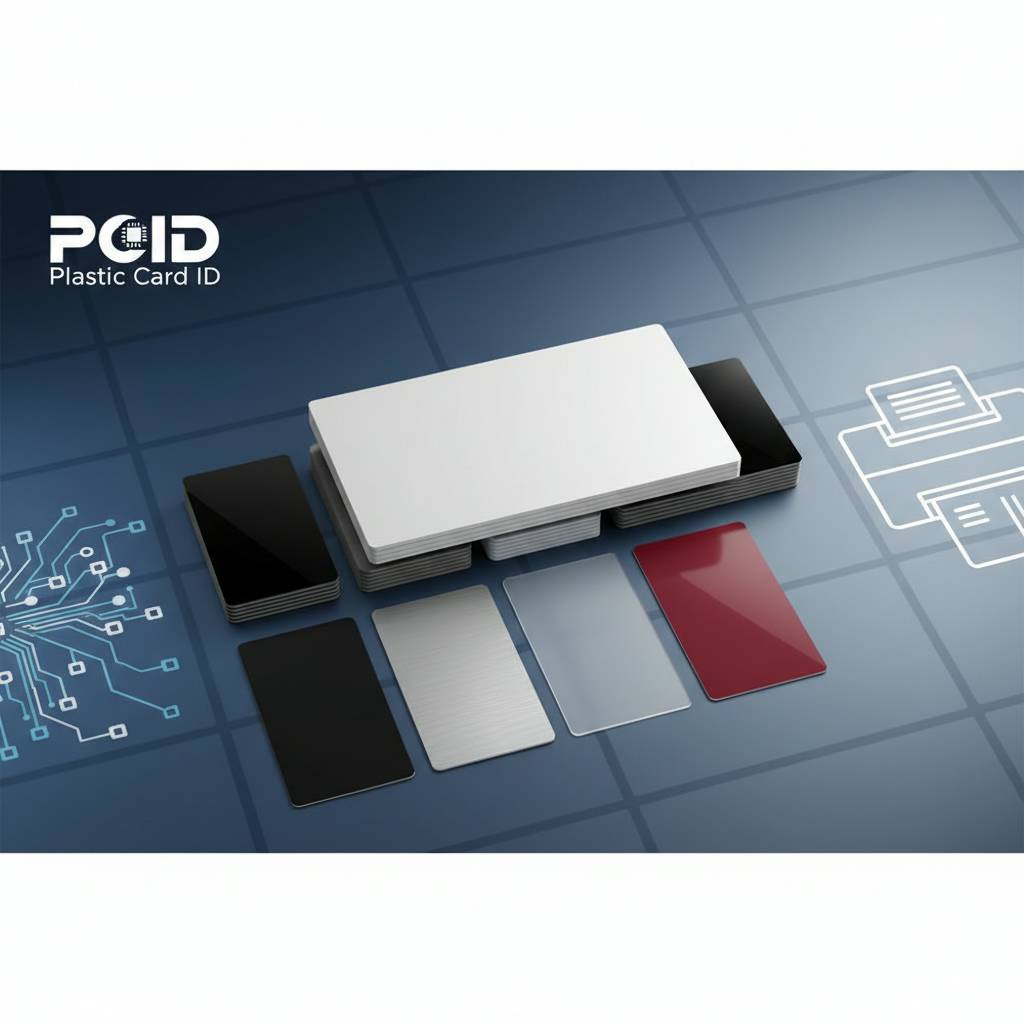 PVC stands for polyvinyl chloride, a thermoplastic polymer that has been the industry standard for card manufacturing for decades. When people talk about blank PVC cards, they are referring to cards made from this material, cut to CR80 size (3.375 inches by 2.125 inches), and finished to a thickness of 30 mil. That is precisely the same footprint as the cards already in your wallet right now.
The material choice is not arbitrary. PVC produces a surface that card printers - particularly dye-sublimation and direct-to-card models - bond with exceptionally well. Colors come out vivid. Text stays sharp. Laminate overlaminates adhere cleanly. The cards flex slightly without snapping, survive daily handling, and hold their appearance through years of use. That durability is not a side benefit - it is the entire point.
The CR80 Standard: Why Size Uniformity Matters
The CR80 designation comes from ISO 7810, the international standard that governs identification card dimensions. By conforming to this standard, a blank PVC card fits every standard card printer, every badge holder, every wallet slot, and every card reader designed for the format. Consistency of size means your entire infrastructure - printers, sleeves, holders, mailers - works together without friction.
Organizations that try to use non-standard sizes quickly discover the hidden costs: custom badge holders, reprinted templates, confused staff. Sticking to CR80 saves time, money, and operational headaches at every stage of a card program's life.
30 Mil Thickness: The Goldilocks Dimension
Thirty mil (0.030 inches) is the sweet spot for plastic cards. Thinner cards, sometimes used in budget applications, feel flimsy and wear out at contact points faster. Thicker cards may not feed correctly through standard card printers. At 30 mil, a blank PVC card feels substantial and professional in the hand - exactly the tactile impression you want your cardholders to receive.
This thickness also provides just enough structural integrity for magnetic stripes, smart chips, and RFID inlays to be embedded or affixed without compromising card function. The card becomes a platform, not just a piece of plastic.
PVC vs. Other Card Materials
The market does offer alternatives - composite PVC/PET cards, polycarbonate cards for high-security applications, and specialty substrates. But for the vast majority of business card programs - loyalty, membership, access, ID, gift, and event - straight PVC delivers an unbeatable combination of cost efficiency, print quality, and durability. It is the default choice for very good reasons.
When a specific application demands more, options exist. But if you are launching a card program, growing an existing one, or simply keeping your supply stocked, blank white PVC cards are almost always the right starting point.
The Surprising Range of Uses for Blank PVC Cards
Here is something that genuinely surprises first-time buyers: the exact same blank card can become a dozen different things depending solely on what you print or encode onto it. A single pallet of blank PVC cards might leave a warehouse and end up as employee ID badges at a hospital, gift cards at a boutique retail chain, membership cards at a gym, and access credentials at a corporate office. The card itself is neutral. The value is layered on.
This flexibility is what makes blank cards such a compelling purchase for organizations that manage ongoing card programs. Instead of ordering pre-printed cards every time something changes - a logo update, a new employee, an event rebrand - you maintain a stock of blanks and print on demand. Control shifts back to you, where it belongs.
Employee ID and Access Badges
Employee ID cards are among the most common uses for blank PVC cards. Organizations print employee photos, names, titles, and department information directly onto the card using a desktop card printer. For added function, a magnetic stripe or proximity chip can be embedded in the card to grant building access, time and attendance tracking, or cashless cafeteria transactions.
The ability to print a new badge in under two minutes - right at the front desk or HR office - is transformative for organizations that onboard staff regularly. No more waiting for a card batch from an outside vendor every time someone joins the team.
Gift Cards and Loyalty Programs
Retailers who make the switch from paper punch cards to plastic loyalty cards see measurable results. Plastic cards that live in a wallet get used. Paper cards get lost, damaged, or left at home. The physical permanence of a PVC loyalty card keeps your brand in front of customers every day, not just when they happen to find a crumpled paper card at the bottom of a bag.
Gift cards are similarly powerful. Retailers switching from paper to plastic gift cards have seen sales increases of 35-50% - a figure that pays for a card program many times over. The card itself signals value, and customers treat it accordingly.
Membership and Event Credentials
Clubs, associations, trade organizations, gyms, and venues use blank PVC cards to issue membership credentials that signal permanence and legitimacy. A plastic card says "you belong here" in a way that a printout simply cannot. Members keep them, show them, and feel the weight of belonging every time they pull one out.
Event credentials - printed on blank cards and encoded with relevant data - give event managers control over access, session tracking, and attendee identification. They are reusable formats for annual events, meaning your investment in blank card stock compounds over time.
| Card Program Type | Typical Features | Common Industries |
|---|---|---|
| Employee ID / Access | Photo, name, mag stripe or RFID | Corporate, Healthcare, Education |
| Loyalty / Gift | Barcode, mag stripe, logo | Retail, Restaurant, Hospitality |
| Membership | Member number, photo optional | Clubs, Gyms, Associations |
| Hotel Key | RFID or mag stripe encoding | Hospitality |
| Event Credential | Barcode, photo, session access | Events, Trade Shows, Conferences |
Magnetic Stripe, RFID, and Smart Chip Options Within Blank PVC Cards
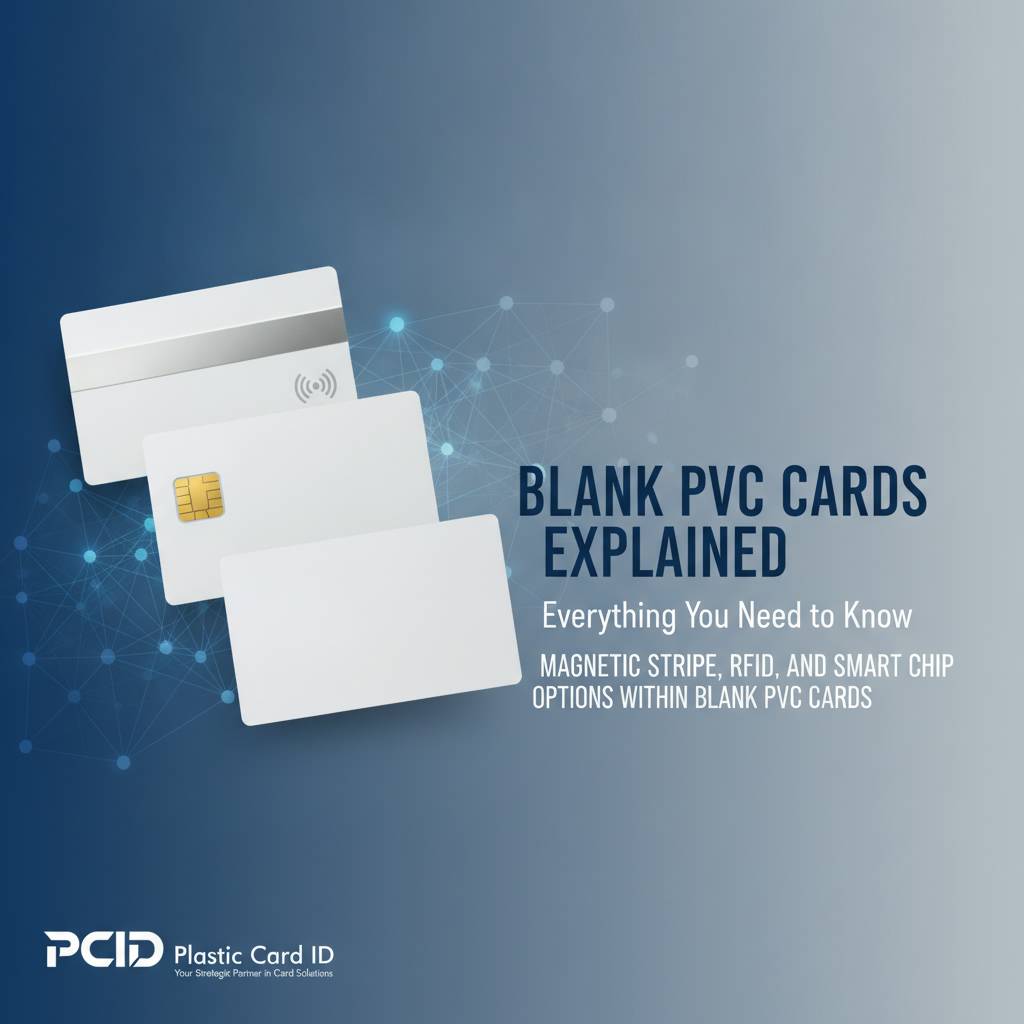 Not all blank PVC cards are the same under the surface. The white exterior might look identical from card to card, but the internal or surface-mounted technology varies enormously. Understanding these variations helps you order exactly what your system requires - and avoid the frustration of receiving cards that are incompatible with your readers, printers, or software.
Choosing the right card technology upfront is one of the most important decisions in building a card program. CPE carries the full spectrum of options, which means buyers get knowledgeable guidance rather than a one-size-fits-all pitch.
HiCo vs. LoCo Magnetic Stripe Cards
Magnetic stripe cards come in two primary coercivity ratings: HiCo (high coercivity, typically 2750 Oe) and LoCo (low coercivity, typically 300 Oe). HiCo stripes are more resistant to accidental erasure from everyday magnets, making them the right choice for long-lived programs like employee access cards or loyalty cards that cardholders carry for months or years.
LoCo stripes are less expensive and sufficient for short-term applications - hotel key cards, for example, where the card is used for a few days and then discarded. Matching coercivity to use case protects your data integrity and keeps your program running smoothly.
Proximity and RFID Cards
Proximity cards communicate wirelessly with readers at short range, typically a few inches. They are the standard credential for building access control systems throughout corporate America. Blank proximity cards look exactly like any other PVC card on the outside; the antenna and chip are embedded in the core during manufacturing.
RFID smart cards extend this concept to include read-write capability, higher data capacity, and in some cases advanced encryption. MIFARE DESFire cards, for example, are widely used in applications that require both security and interoperability - transit systems, campus card programs, casino player cards, and enterprise access control. The technology inside the card determines what your system can do, so working with a knowledgeable supplier matters.
Smart Chip Cards
Smart chip (ICC or integrated circuit card) technology embeds a microprocessor directly into the card body, enabling two-way communication between the card and a reader. These cards can store and process data onboard - a capability that magnetic stripes simply cannot match. Applications include secure ID programs, healthcare credential management, and multi-application campus cards.
For organizations building sophisticated card programs that need to handle multiple functions - access, purchases, identity verification - smart chip cards offer the processing power to do it all on a single card. They represent the high end of the blank card spectrum and deliver corresponding capabilities.
Specialty Blank Cards: Clear, Frosted, Colored, and Beyond
White CR80 PVC is the workhorse, but the catalog extends well beyond it. Clear plastic cards, frosted translucent cards, pre-colored stock in dozens of shades, custom die-cut shapes, and even luxury metal cards in stainless steel, brass, and gold - these specialty options exist because some card programs demand visual distinction. Standing out in a wallet full of white plastic is a legitimate marketing goal.
Clear and frosted cards are particularly effective for programs where visual design is part of the brand statement. A clear loyalty card with a minimalist printed design looks premium and modern. Frosted cards catch light differently than standard white, creating an impression of exclusivity that resonates with upscale retail and hospitality brands.
Clear and Frosted Card Applications
Clear PVC cards are printed on a fully transparent substrate, which means negative space in your design becomes see-through. Layered design effects, window elements, and creative use of the cardholder's skin as a design element are all possible. These cards are conversation pieces - they get noticed, passed around, and remembered in ways that standard cards are not.
Frosted cards offer a softer translucency, ideal for designs that want the premium feel without full transparency. Both formats accept dye-sublimation printing and can incorporate magnetic stripes or RFID technology just like standard white cards.
Colored Stock and Custom Die-Cut Cards
Pre-colored card stock - available in a wide range of solid colors - eliminates the need to print a background color on every card, which both reduces ink consumption and produces a cleaner, more consistent result. Color-coded card programs, where different departments or access levels receive different card colors, benefit particularly from pre-colored stock.
Die-cut cards break the rectangle entirely. Keychain-sized cards, rounded shapes, or custom outlines that match your logo or product silhouette - these specialty formats create memorability that standard cards cannot. They cost more per unit but deliver outsized brand impact in the right contexts.
Luxury Metal Cards
Metal cards - available in stainless steel, brass, and gold - occupy a category of their own. These are not for every program, but for VIP membership, executive credential, or prestige loyalty applications, a metal card sends an unmistakable message. The weight alone communicates value before the cardholder reads a single word on the surface.
CPE offers metal card options as part of a full specialty card catalog, ensuring that organizations with premium programs have access to premium products without having to source from multiple suppliers. One relationship, full catalog access - that is the Plastic Card ID difference.
Building an In-House Card Program: Printers, Ribbons, and Supplies
Blank PVC cards are only one part of an in-house card program. To print those cards yourself, you need a compatible card printer, the right ribbon for your application, and a regular supply of cleaning kits to keep your printer performing reliably. CPE stocks the full ecosystem, which means you are not hunting across multiple vendors to keep your program running.
Card printers from Evolis, Zebra, and Fargo represent the industry's most trusted brands. Each brand offers models suited to different output volumes, encoding requirements, and budget levels. Whether you are printing 50 cards a month or running a high-volume production operation, there is a printer matched to your needs.
Choosing the Right Card Printer
Entry-level desktop card printers handle single-sided printing at modest volumes - ideal for small businesses, clinics, or community organizations issuing ID cards or membership credentials. Mid-range models add dual-sided printing, encoding modules for magnetic stripe or RFID, and faster throughput. High-volume models support batch processing and are designed for card programs measured in the thousands of cards per month.
Matching printer capability to program volume prevents both underspending and overspending. A small gym does not need an enterprise batch printer; a university card office does not want to run single cards through a desktop unit. Getting this match right from the start saves money and frustration over the life of the program. Contact 800.835.7919 to get matched with the right printer for your specific output needs.
Ribbons, Overlaminates, and Cleaning Kits
Printer ribbons are consumables - they run out and need regular replacement. The ribbon type must match your printer model and your card printing requirements. YMCKO ribbons (yellow, magenta, cyan, black, and overlaminate) are the standard for full-color photo-quality ID card printing. Monochrome ribbons handle single-color printing at higher yield and lower cost per card.
Overlaminates add a protective layer to printed cards, extending card life significantly in high-handling applications. Cleaning kits - often underestimated - keep print heads clean, prevent streaking, and extend printer hardware lifespan. Neglecting cleaning is one of the most common reasons card printers fail prematurely.
Card Carriers, Sleeves, and Mailing Services
Once cards are printed, they need to reach cardholders. Card carriers - folded paper holders that display and protect the card - give a professional presentation for gift card and loyalty programs. Sleeves protect individual cards during mailing. And for programs that need to send cards to large cardholder bases, CPE offers card affixing and mailing services that handle the fulfillment side of the operation.
This complete suite of fulfillment services is what transforms Plastic Card ID from a card supplier into a genuine program partner. Organizations can design, print, fulfill, and mail their card programs entirely through a single relationship - no patchwork of vendors, no coordination headaches.
Frequently Asked Questions: Blank PVC Cards for US Businesses
After serving over 100,000 customers across the United States, certain questions come up consistently. The answers below reflect real-world program needs and the experience accumulated across more than 50 million cards shipped.
Understanding these fundamentals before you order saves time, ensures compatibility, and sets your card program up for long-term success. If your question is not covered here, the team at CPE is a call away.
How Many Cards Should I Order?
Blank PVC cards are sold in quantities ranging from small starter packs to cases of 500 or 1,000. The per-card cost drops at higher quantities, which makes bulk purchasing attractive for programs with predictable ongoing demand. As a starting point, consider ordering a three-to-six month supply based on your historical or projected issuance volume.
Programs that issue cards continuously - employee badges, gym memberships, retail loyalty - benefit from maintaining a standing inventory. Programs with irregular bursts of demand, like event credential programs, may prefer to order closer to issuance dates. Either approach works; the key is avoiding the emergency of running out mid-program.
Are All Blank PVC Cards Compatible With All Printers?
- Standard CR80 white PVC cards work with virtually all direct-to-card and retransfer printers from major brands including Evolis, Zebra, and Fargo.
- Clear and frosted cards require specific printer settings and may not be compatible with all entry-level models - confirm compatibility before ordering specialty substrates.
- Cards with embedded magnetic stripes, RFID inlays, or smart chips require printers equipped with the corresponding encoding modules.
- Always use cards sourced from a reputable supplier to ensure consistent thickness and surface quality - off-spec cards can jam feeders and damage print heads.
- Cleaning your printer regularly with manufacturer-approved cleaning kits prevents print defects and extends hardware life regardless of card type.
Compatibility is not assumed - it is confirmed. When in doubt, reach out before ordering to verify that your card stock, printer, and ribbon combination will work together as expected.
What Is the Difference Between Blank Cards and Custom Printed Cards?
Blank cards arrive with no printing - a clean white (or clear, or colored) surface ready for in-house printing. Custom printed cards arrive with your design already applied, either through in-house production or through a commercial card printing process. Blank cards offer flexibility and lower minimum order quantities; custom cards offer consistency at high volumes when the design does not change.
Many organizations use both: a stock of blank cards for on-demand ID and credential printing, alongside a separate supply of custom-printed loyalty or gift cards produced in larger runs. The right mix depends on your program's flexibility requirements and volume economics.
Partner With Plastic Card ID for Your Blank PVC Card Programs
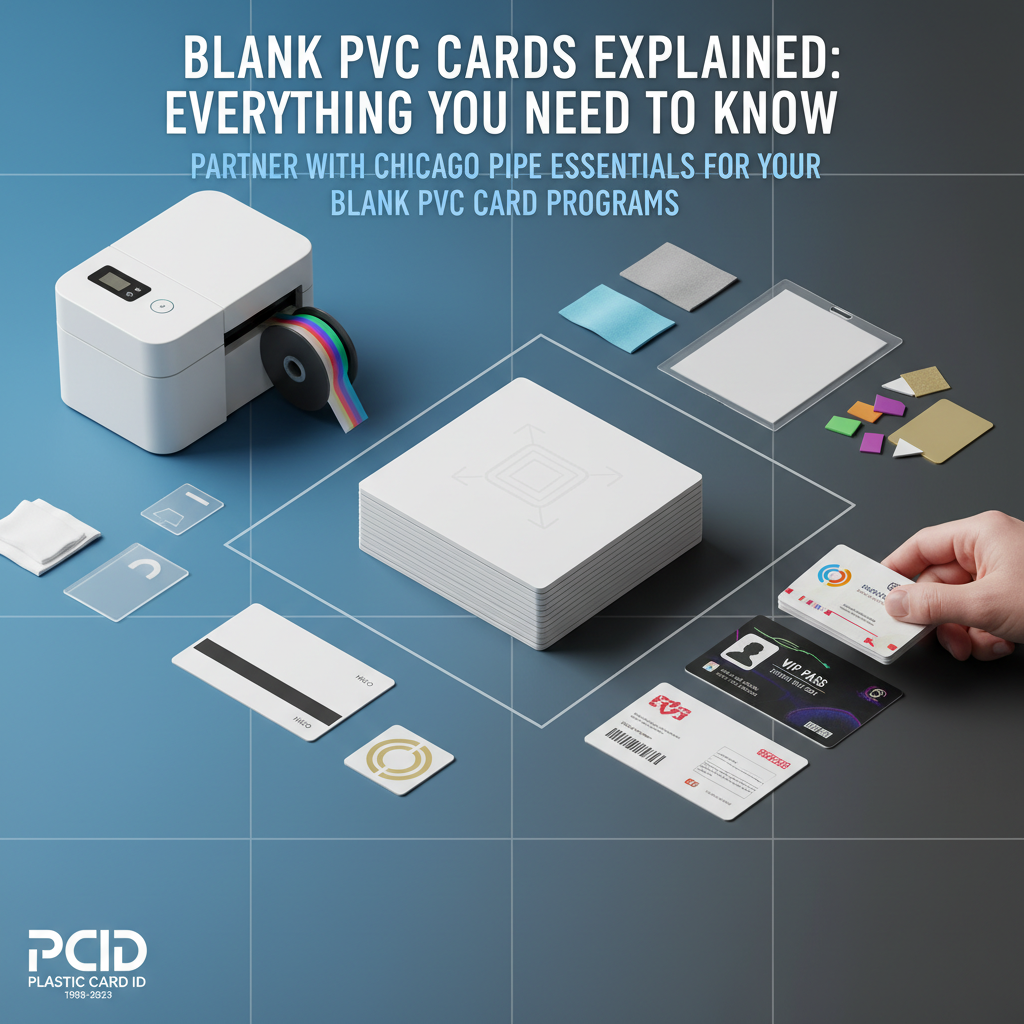 Blank PVC cards are deceptively simple objects. A flat rectangle of white plastic, 3.375 by 2.125 inches, thirty thousandths of an inch thick. But that rectangle becomes an employee's identity, a customer's loyalty, a member's belonging, or a guest's access - depending entirely on what your organization does with it. The potential inside each card is only as large as the program you build around it.
With over 25 years of experience, more than 100,000 customers served, and over 50 million cards shipped across the United States, Plastic Card ID brings depth of knowledge that purely transactional suppliers simply cannot match. Whether you are running a small monthly card program or scaling up to mass production, whether you need standard white PVC or specialty metal cards, CPE has the inventory, the expertise, and the commitment to help your program succeed.
Call Plastic Card ID today at 800.835.7919 and let us help you build a card program that works as hard as your business does.
Previous Page