Where to Buy Blank Plastic Cards in Bulk USA
Table of Contents []
- Why Plastic Card ID Is the Smart Answer to Where to Buy Blank Plastic Cards in Bulk USA
- Understanding the Blank Card: More Versatile Than Most Buyers Realize
- Magnetic Stripe Cards: The Working Engine of Access and Loyalty Programs
- RFID, Proximity, and Smart Chip Cards for Advanced Access Programs
- Card Printers, Ribbons, and the Complete In-House Printing Ecosystem
- Bulk Buying Strategy: Getting the Most Value From Your Card Order
- The Measurable Business Case for Physical Plastic Cards
- Partner With Plastic Card ID - Your Bulk Plastic Card Supplier for the USA
Why Plastic Card ID Is the Smart Answer to Where to Buy Blank Plastic Cards in Bulk USA
Blank plastic cards are deceptively simple objects. A white rectangle of PVC, 30 mil thick, CR80 size - and yet what you do with that card can transform a customer loyalty program, professionalize an employee badge system, or power a campus access control network. The question isn't just where to buy blank plastic cards in bulk USA - it's who you buy them from and whether that supplier actually understands your program goals.
Plastic Card ID has spent over 25 years answering that question for businesses across every state. With more than 100,000 customers served and 50 million cards shipped, the depth of experience here isn't a marketing claim - it's a track record. Whether your organization prints 50 cards a month or tens of thousands, the infrastructure, inventory, and expertise are already in place to support you.
This page is for the decision-makers, purchasing managers, and program coordinators who want more than a commodity transaction. It's for buyers who want a strategic partner with real stock, real support, and real solutions built for the American business landscape.
| Card Type | Best Use Case | Encoding Option |
|---|---|---|
| Blank PVC CR80 | Employee ID, loyalty, event badges | Print-ready, no encoding |
| Magnetic Stripe HiCo | Access control, timekeeping, membership | High-coercivity mag stripe |
| Magnetic Stripe LoCo | Hotel keys, short-term credentials | Low-coercivity mag stripe |
| RFID / Proximity | Contactless access, smart systems | 125kHz or 13.56MHz chip |
| Clear / Frosted | Premium branding, VIP programs | Print-ready specialty stock |
| Smart Chip (MIFARE DESFire) | Secure campus, transit, casino | Contactless chip embedded |
Understanding the Blank Card: More Versatile Than Most Buyers Realize
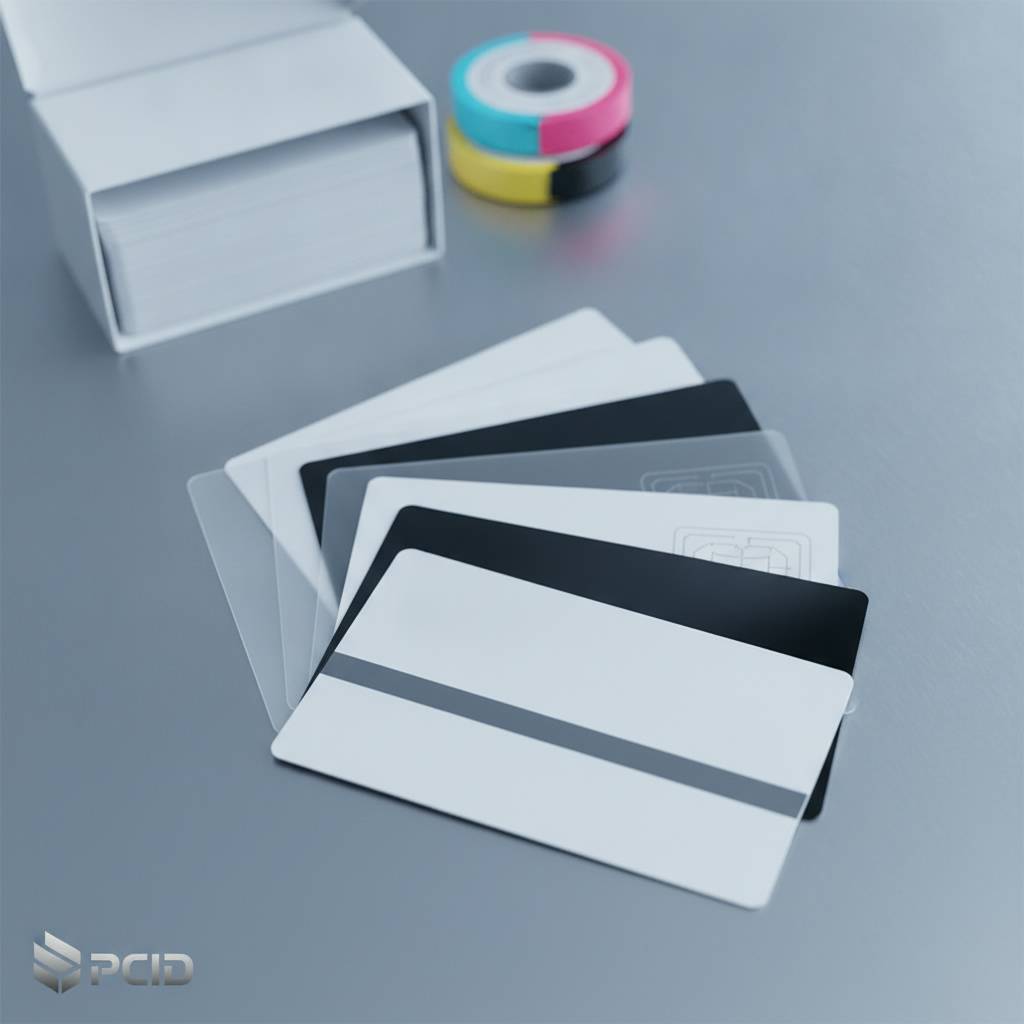 A blank CR80 card sitting in its box looks like nothing. It weighs almost nothing. But that card - once printed with your logo, encoded with a mag stripe, or loaded onto a proximity reader - becomes the physical face of your brand and the mechanical backbone of your access or loyalty system. The versatility of a blank PVC card is genuinely remarkable when you understand all the directions it can go.
ISO 7810 standardization means CR80 cards fit every card printer on the market, every wallet slot, every card holder and lanyard clip. That interoperability is not an accident - it's why the format became the global standard. For businesses buying in bulk, this is critically important: consistency of fit means consistency of function, whether you're printing employee badges or event credentials.
What Makes CR80 the Industry Standard
The CR80 format measures 3.375 by 2.125 inches at 30 mil thickness - the same dimensions as a standard credit card. This isn't arbitrary. The standard exists so that organizations can build card programs around predictable, compatible infrastructure. Printers, laminators, card holders, and wallets are all built around this size.
For bulk buyers, CR80 standardization translates to cost efficiency. You're not paying for custom tooling, non-standard dimensions, or incompatible printing supplies. Standardization is the foundation of a scalable card program, and blank CR80 PVC cards are where most programs begin.
The Economics of Buying Blank vs. Pre-Printed
Organizations that print cards in-house using blank stock consistently achieve lower per-card costs over time compared to outsourcing every print run. Yes, there is an upfront investment in a card printer - but that investment pays dividends across years of operation. A box of blank cards costs a fraction of what a pre-printed order costs per unit.
Beyond cost, there's the control factor. In-house card printing gives organizations agility - the ability to update designs, add employee photos, change access levels, or issue replacement cards the same day they're needed. No waiting on a print vendor. No minimum order for a reprint. Just immediate, professional output.
Colored Stock and Specialty Finishes for Program Differentiation
Not every program needs a plain white card. Plastic Card ID stocks colored PVC card blanks, clear cards, and frosted cards that give programs an immediate visual identity before a single thing is printed on them. A colored blank card used as a department-specific badge or tier-level loyalty card communicates information through color alone.
Clear and frosted cards occupy a premium visual category. They feel different, look different, and convey a sense of quality that white cards simply cannot match in certain contexts. For VIP programs, high-end membership clubs, or marketing applications where first impressions matter, specialty card stock is worth serious consideration.
Magnetic Stripe Cards: The Working Engine of Access and Loyalty Programs
Magnetic stripe technology has been around for decades - and it remains in wide deployment across the United States for excellent reasons. It's reliable, cost-effective, and supported by an enormous installed base of readers. For most access control, timekeeping, loyalty, and membership applications, a magnetic stripe card is exactly the right tool for the job.
The choice between HiCo and LoCo matters more than many buyers initially realize. Getting this wrong can mean cards that demagnetize too easily or readers that can't encode the stripe properly. CPE has the expertise to walk you through which format fits your system before you place a bulk order.
HiCo vs. LoCo: Choosing the Right Magnetic Stripe
High-coercivity (HiCo) magnetic stripe cards require a stronger magnetic field to write - and are consequently more resistant to accidental erasure from everyday magnetic sources like phone cases or bag clasps. HiCo cards are the better choice for long-term programs where cards are carried and used frequently over months or years.
Low-coercivity (LoCo) cards are easier to encode and re-encode, making them ideal for applications like hotel room keys where cards are frequently reassigned and only need to hold data for a short period. Understanding the lifespan and use pattern of your card program is the deciding factor between the two formats.
Applications That Magnetic Stripe Cards Power Every Day
Across the United States, magnetic stripe cards are the active infrastructure behind time-and-attendance tracking, employee access systems, customer loyalty reward programs, library card systems, gym membership check-ins, and countless other daily operational touchpoints. The format's ubiquity means your readers, your kiosks, and your POS terminals are almost certainly already compatible.
For retailers specifically, the loyalty card application is compelling. Loyalty cards that live permanently in a customer's wallet outperform paper punch cards in every measurable category - redemption rate, program awareness, repeat visit frequency, and average transaction value. A magnetic stripe loyalty card is both a tracking tool and a brand ambassador simultaneously.
Bulk Ordering Magnetic Stripe Cards: What to Know
When ordering mag stripe cards in bulk, buyers should confirm the coercivity rating of their encoding hardware before selecting card stock. Mismatches between encoder and card coercivity are a common source of avoidable frustration. This is exactly where CPE's advisory role adds real value - helping you get specifications right the first time.
Bulk pricing on magnetic stripe cards scales meaningfully with volume. Programs ordering in the hundreds see good per-unit pricing; programs ordering in thousands see pricing that makes the economics of in-house card management very compelling. The per-card cost advantage of bulk purchasing compounds over time across every card replacement, reissue, and program expansion event.
| Feature | HiCo (High-Coercivity) | LoCo (Low-Coercivity) |
|---|---|---|
| Magnetic Resistance | High - resists everyday demagnetization | Moderate - easier to overwrite |
| Typical Lifespan | Long-term (years) | Short-to-medium term |
| Common Use | Employee badges, loyalty, membership | Hotel keys, short-term access |
RFID, Proximity, and Smart Chip Cards for Advanced Access Programs
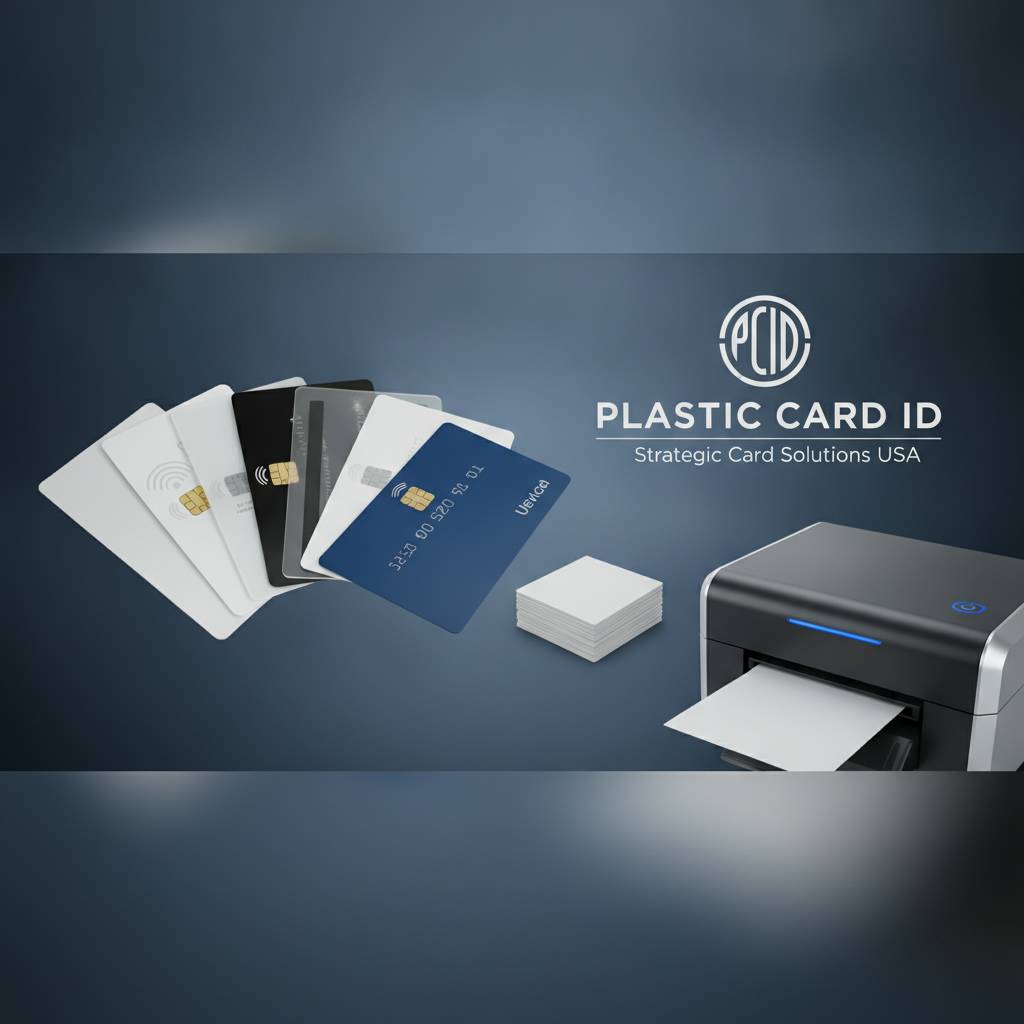 When a card needs to do more than carry a printed image or a magnetic stripe, the world of RFID and smart chip cards opens up. Contactless technology has moved well beyond novelty - it is now the standard for secure facility access, campus credentialing, transit systems, and casino player tracking. These cards communicate without physical contact, using radio frequency to exchange data with compatible readers.
The range of RFID card options is broader than most buyers initially expect. Frequency, memory capacity, encryption standard, and read range all vary across product categories. Matching the right RFID card to the right reader infrastructure is not optional - it is the technical foundation of a functioning contactless system.
125kHz Proximity Cards for Standard Access Control
Proximity cards operating at 125kHz are the workhorses of commercial access control in the United States. They are compatible with a wide array of readers from major manufacturers and offer reliable, consistent performance for door access, parking gate control, and facility management applications. Most commercial office buildings running card access today use 125kHz proximity technology.
For organizations upgrading from key-based or older card systems, 125kHz proximity cards offer an accessible entry point into contactless access. The infrastructure investment is modest, the card cost is reasonable at bulk volumes, and the operational benefit - faster, more trackable access - is immediate and measurable.
13.56MHz Smart Cards and MIFARE DESFire Technology
At 13.56MHz, smart cards like those using the MIFARE DESFire standard offer significantly more capability. These cards carry onboard memory, support encrypted data transactions, and can handle multiple applications on a single card - meaning one card can manage building access, cafeteria payments, printing credits, and event check-in simultaneously.
MIFARE DESFire cards represent the current leading edge of contactless card security for commercial and institutional deployments. Casinos, universities, corporate campuses, and healthcare facilities increasingly rely on this technology because of its combination of security, flexibility, and read speed. CPE stocks these cards and supports buyers navigating the transition to smart card infrastructure.
Casino, Hotel, and Specialty Contactless Applications
Casino player cards and hotel key cards represent two of the highest-volume specialized contactless card applications in the United States. Both require specific encoding compatibility with property management and gaming systems. Getting the card specifications wrong in these contexts isn't just inconvenient - it can mean a complete system failure at the operational level.
Plastic Card ID has direct experience supplying both casino and hospitality clients with the right card stock at scale. The combination of deep product knowledge and high-volume fulfillment capability makes a genuine difference in these demanding environments where card performance is not negotiable and downtime is not acceptable.
Card Printers, Ribbons, and the Complete In-House Printing Ecosystem
A bulk supply of blank cards is only half of an in-house card program. The other half is the printer and supplies ecosystem that turns those blank cards into professional credentials. Plastic Card ID carries card printers from Evolis, Zebra, and Fargo - three of the most trusted names in the ID card printing industry - along with the full range of compatible ribbons, cleaning kits, and accessories.
Matching the right printer to your program's volume and output requirements is a decision with long-term consequences. A printer sized for 500 cards a month placed in an environment producing 5,000 cards will wear out prematurely. Right-sizing your card printing hardware from the start protects your investment and ensures consistent card quality across the life of the program.
Evolis, Zebra, and Fargo: Understanding Your Printer Options
Evolis printers are well-regarded for compact design, ease of use, and excellent output quality in low-to-mid volume environments. They are a popular choice for HR departments, small businesses, and organizations that need professional badge output without a heavy infrastructure commitment. Models range from entry-level single-sided units to dual-sided printers with lamination modules.
Zebra card printers are built for higher-volume, industrial-strength applications. Zebra hardware is a common choice for large enterprises, government contractors, and organizations running high-throughput issuance operations where reliability under continuous use is the primary requirement. Fargo printers occupy a similar high-performance category with strong representation in the security and government ID sectors.
Ribbons, Cleaning Kits, and Supply Chain Consistency
A card printer without the right ribbon is a very expensive paperweight. Ribbon compatibility matters - using off-brand or mismatched ribbons can produce poor print quality, damage the printhead, and void manufacturer warranties. Sourcing ribbons from the same supplier as your card stock simplifies the supply chain and ensures compatibility is never a variable you have to manage separately.
Plastic Card ID stocks compatible ribbons for Evolis, Zebra, and Fargo printers alongside cleaning kits designed to maintain printhead health and card transport performance. Regular cleaning is not optional maintenance - it is the single most impactful practice for extending printer lifespan and maintaining output quality over time.
Card Carriers, Sleeves, and Mailing Services
Once cards are printed, they often need to be delivered - either physically distributed on-site or mailed to recipients. Plastic Card ID offers card carriers, protective sleeves, and a card affixing and mailing service that completes the fulfillment loop. True one-stop card program management means not having to coordinate with three separate vendors to get a card from blank stock to recipient's hands.
For programs mailing cards to customers, members, or employees across the country, the mailing service option is particularly valuable. Card carriers protect cards in transit and provide a professional unboxing experience that reinforces brand quality. These details compound into meaningful impressions at scale.
Bulk Buying Strategy: Getting the Most Value From Your Card Order
Buying blank plastic cards in bulk is not complicated - but doing it strategically requires a few deliberate decisions upfront. Volume thresholds, card specifications, encoding requirements, and timing all affect the value you extract from a bulk purchase. Understanding these levers before you place an order makes a measurable difference in program economics.
The buyers who get the most from their relationship with CPE are typically those who approach the conversation as a planning exercise rather than a simple transaction. What is the card program trying to accomplish? What encoding does the existing infrastructure require? What volume fluctuations should the supply plan accommodate? These questions frame a much better order than "how many cards can I get for $X."
Volume Thresholds and Per-Card Pricing Logic
Blank PVC cards are priced on a volume curve - the more you buy, the lower your per-unit cost. The inflection points in that pricing curve are worth knowing. Moving from 500 cards to 1,000 cards in a single order may drop the per-card cost enough to justify holding slightly more inventory than you need immediately. The math typically favors larger orders for programs with predictable ongoing demand.
Understanding your monthly consumption rate and planning orders around it is the most straightforward way to optimize card program economics. Programs using 200 cards per month are well-served by quarterly orders of 500-600 cards. Programs using 2,000 cards per month benefit from larger stock purchases that reduce per-unit cost and eliminate frequent reordering friction.
Frequently Asked Questions About Bulk Blank Card Purchasing
- What is the minimum order quantity for blank PVC cards? Minimum orders are accessible even for small programs - you don't need to buy a pallet to get started.
- Can I mix card types in a bulk order? Yes, different card types can typically be ordered together - blank PVC, HiCo magnetic stripe, and proximity cards can all be sourced from a single order.
- Do blank cards come pre-encoded? Blank PVC cards are print-ready with no encoding. Magnetic stripe and RFID cards come with the technology embedded but require encoding through compatible hardware.
- What thickness is standard for CR80 cards? Standard CR80 cards are 30 mil (0.030 inches) thick - the same as a standard credit card and compatible with all standard card printers.
- How should I store bulk card inventory? Cards should be stored flat, away from direct heat, humidity, and strong magnetic sources. Original packaging is designed to protect cards during storage.
Contact 800.835.7919 to speak directly with a card program specialist who can answer questions specific to your application and volume requirements.
Planning for Program Growth and Card Reorder Cycles
One of the quiet advantages of working with a supplier that has 25-plus years of program experience is access to institutional knowledge about how card programs scale. Membership programs grow. Employee rosters change. Loyalty programs that start modestly can expand into significant ongoing card consumption operations. Building your supply relationship with scalability in mind from the start prevents the disruptive vendor switching that comes from outgrowing a supplier.
Plastic Card ID is equipped to support programs at every scale - from the organization printing 50 cards a month to the enterprise managing tens of thousands. The infrastructure, inventory depth, and account support are built for exactly this kind of long-term, growing relationship.
The Measurable Business Case for Physical Plastic Cards
There is a tendency among budget-conscious organizations to underestimate what a physical card does that digital alternatives cannot. The tactile permanence of a plastic card - something that lives in a wallet, that gets pulled out at the register or the door, that carries a brand logo through months or years of daily use - creates a kind of persistent brand presence that has genuine economic value.
Retailers who have made the switch from paper gift certificates to plastic gift cards document sales increases in the range of 35 to 50 percent. That is not a marginal improvement - it is a structural shift in gift card program performance driven almost entirely by the medium of delivery. The physical card changes the psychology of the transaction in ways that produce measurable revenue outcomes.
Loyalty Programs: Plastic Cards vs. Paper Punch Cards
Paper loyalty punch cards have a fundamental limitation: they are disposable. Customers lose them, forget them at home, and discard them without much thought. A plastic loyalty card that lives in the same wallet slot as a credit card occupies an entirely different psychological position in the customer relationship. It is permanent. It is professional. It communicates that the program it represents is serious and durable.
Programs that transition from paper to plastic loyalty cards consistently see improvements in redemption rates and repeat visit frequency. The card itself does ongoing marketing work every time a wallet is opened. A plastic loyalty card is a miniature billboard that travels everywhere your customer goes - and that kind of persistent brand exposure has no equivalent in paper-based alternatives.
Membership and ID Cards: The Legitimacy Signal
Professional associations, gyms, clubs, libraries, universities, and trade organizations all use membership cards to communicate belonging and status. A plastic card signals permanence and investment in a way that paper simply cannot replicate. When a new member receives a plastic card rather than a printed certificate, the implicit message is that this organization is professional, stable, and worth being part of.
For employee ID badges, the legitimacy signal is even more operationally important. A well-designed plastic ID badge with a photo, department indicator, and access encoding communicates security awareness and organizational structure. The professional quality of a card program reflects directly on the organization that issues it - a detail that matters in client-facing and security-sensitive environments alike.
Specialty Cards: Metal, Clear, and Custom Die-Cut Options
For programs where premium positioning is central to the value proposition, specialty card formats deliver impact that standard PVC cannot achieve. Metal cards in stainless steel, brass, and gold occupy the top tier of physical card luxury - they are heavy, distinctive, and immediately communicate exclusive status. For high-value membership programs, VIP tiers, and executive credentialing, metal cards are not an extravagance; they are a deliberate positioning tool that pays for itself in perceived value.
Custom die-cut shapes and clear plastic cards expand the design vocabulary of any card program. A card that is shaped differently, or that uses transparency as a design element, creates a memorable physical object that stands out in any wallet, badge holder, or credential portfolio. These specialty options are available through Plastic Card ID for programs ready to move beyond the standard white rectangle.
Partner With Plastic Card ID - Your Bulk Plastic Card Supplier for the USA
 The question of where to buy blank plastic cards in bulk USA has a clear answer for organizations that want more than a commodity supplier: it starts with a supplier that has spent 25 years building the expertise, inventory depth, and customer relationships to serve programs of every size and type across every state in the country.
Plastic Card ID is not a marketplace or a drop-shipper. It is a dedicated card program partner with real stock, real advisors, and a real track record across more than 100,000 customers and 50 million cards delivered. From the simplest blank PVC stock to complex RFID smart cards, casino credentials, and luxury metal cards, the catalog and the expertise are here to support your program at every stage of its growth.
Ready to find the right blank cards for your program? Call 800.835.7919 today and speak with a specialist who understands card programs from the ground up - from spec selection to bulk pricing to long-term supply planning.
Plastic Card ID is your trusted source for blank plastic cards in bulk across the USA. Call 800.835.7919 now and let's build your card program the right way - together.
Previous Page