Things to Know Before Buying Blank Plastic Cards
Table of Contents []
- What Every Smart Buyer Needs to Know Before Purchasing Blank Plastic Cards - From Plastic Card ID
- Understanding Card Specifications - The Details That Actually Matter
- Magnetic Stripe Cards - HiCo vs. LoCo and When Each Makes Sense
- RFID, Proximity, and Smart Chip Cards - Contactless Technology Explained
- Buying in Volume - Order Quantities, Pricing Strategy, and Program Planning
- Specialty Cards That Serve Specific Program Needs
- Common Mistakes to Avoid When Buying Blank Plastic Cards - and How Plastic Card ID Helps You Get It Right
What Every Smart Buyer Needs to Know Before Purchasing Blank Plastic Cards - From Plastic Card ID
Buying blank plastic cards sounds straightforward - until it isn't. Thickness, encoding, card grade, compatibility with your printer, minimum order quantities - these variables multiply fast, and a single wrong assumption can mean shelves of cards your equipment refuses to read or your printer jams on every third pass. That's the reality nobody tells you upfront.
Plastic Card ID has spent more than 25 years helping businesses across the United States navigate exactly these decisions, supplying over 50 million cards to more than 100,000 customers. The expertise accumulated through that volume is real, and this guide distills it into the most important things you should understand before placing your first - or next - order.
| Card Type | Common Use Cases | Key Feature |
|---|---|---|
| Blank CR80 PVC | ID badges, loyalty cards, event credentials | ISO 7810 standard size, 30 mil thickness |
| Magnetic Stripe (HiCo) | Access control, gift cards, membership | High coercivity, durable encoding |
| Magnetic Stripe (LoCo) | Hotel key cards, short-term passes | Low coercivity, standard read equipment |
| RFID / Proximity | Building access, contactless check-in | Contactless, tap-and-go convenience |
| Smart Chip (MIFARE) | Casino cards, secure facility access | Encrypted, high-security data storage |
| Clear / Frosted PVC | Premium membership, VIP passes | Distinctive visual appeal |
Understanding Card Specifications - The Details That Actually Matter
 Walk into any conversation about blank plastic cards without knowing your specs, and you'll waste time, money, and patience. The CR80 format - measuring 3.375 inches by 2.125 inches at 30 mil thickness - is the ISO 7810 standard. It fits every standard card wallet, badge holder, and printer designed for credit-card-sized media. That's your baseline.
Thickness is one variable buyers routinely overlook. Standard cards run 30 mil. Thinner cards (10 or 20 mil) exist for specific applications like key tags or folding credentials, while composite cards serve high-volume printing environments where durability under repeated bending matters. Knowing your intended use before ordering isn't optional - it's the difference between a program that runs smoothly and one that generates constant headaches.
CR80 vs. Other Card Sizes - Choosing Your Format
Most organizations defaulting to blank cards need CR80. It's the universal format. However, CR79 cards - slightly smaller at 30 mil - are designed specifically for HID-compatible proximity card printers that require an edge-to-edge print without laminate damage. If your access control printer is in that family, CR79 is worth knowing about.
Specialty shapes matter too. Casino operations, hospitality venues, and high-end membership clubs sometimes use custom die-cut cards that deviate from the standard rectangle entirely. These specialty configurations require planning your card program around a different production workflow, and CPE can walk you through what that means for your timeline and cost.
Material Composition - PVC, Composite, and Beyond
Standard blank PVC cards are exactly what most buyers need. They print cleanly, encode reliably, and hold up well under normal daily use. PVC is durable, dimensionally stable, and compatible with every major desktop card printer on the market - Evolis, Zebra, Fargo. You're not sacrificing anything by going standard PVC for most applications.
Composite cards - typically a PVC-polyester blend - are engineered for retransfer printers that apply heat during the printing process. Using standard PVC in a retransfer printer causes warping. Matching your card material to your printer technology is non-negotiable, and it's a mistake buyers make more often than they should. Check your printer specifications before ordering cards, always.
Card Thickness and Its Practical Impact
Thirty mil is the workhorse thickness and the one you should default to unless a specific requirement says otherwise. Cards at this thickness slide through badge holders without resistance, stack properly in printer hoppers, and feel substantial when handed to a customer or employee. Thin cards telegraph cheapness even when the print quality is excellent.
Thicker card configurations do exist for specialty applications, particularly metal cards in stainless steel, brass, or gold. These luxury cards communicate a level of permanence and prestige that standard PVC simply cannot match. For high-value loyalty programs, VIP memberships, or executive credential programs, metal cards create an immediate, tangible impression that recipients notice and remember.
Magnetic Stripe Cards - HiCo vs. LoCo and When Each Makes Sense
This is one of those spec decisions that genuinely matters and often gets decided by accident rather than intention. High-coercivity (HiCo) magnetic stripes require more energy to encode but resist accidental erasure from everyday magnetic interference - keys, phones, magnetic clasps on bags. LoCo stripes encode at lower energy levels and are more susceptible to being wiped by ordinary magnetic fields.
HiCo is the right choice for most serious card programs. Gift cards, loyalty cards, membership programs, access control systems - anything expected to stay in a wallet and perform reliably over weeks or months belongs on HiCo. LoCo made sense for hotel key cards that expire after a short stay, but even that application increasingly migrates to HiCo given how common magnetic interference has become in everyday carry items.
Encoding Tracks - Understanding Track 1, 2, and 3
Magnetic stripe cards carry data on up to three encoding tracks. Track 1 holds alphanumeric data at 210 bits per inch - names, account numbers, additional identification fields. Track 2 is numeric only at 75 bpi and is the track most widely read by point-of-sale and access control equipment. Track 3 is used in specific financial and transit applications but rarely by the general business market.
For most loyalty, gift, membership, and access card programs, Tracks 1 and 2 provide everything needed. Understanding which tracks your existing infrastructure reads ensures you order the right magnetic stripe configuration. Your system administrator or POS software vendor should be able to confirm this in minutes - it's worth asking before you order 500 cards.
Printer Compatibility with Magnetic Stripe Cards
Not every card printer encodes magnetic stripes. A basic single-sided printer from any manufacturer prints graphics only. Encoding requires a printer equipped with a magnetic stripe encoding module - this is a hardware addition that must be specified when the printer is purchased. Zebra, Evolis, and Fargo all offer encoding-capable printers, but the module must be present in your specific unit.
If you already own a printer and are unsure whether it encodes, check the model number against the manufacturer's specification sheet, or call CPE directly. Ordering magnetic stripe cards to run through a printer without an encoding module is a frustratingly common scenario that costs buyers time and money. Verify your equipment configuration first. Call 800.835.7919 for direct, knowledgeable guidance before placing your order.
HiCo vs. LoCo Quick Comparison
- HiCo (High Coercivity): 2750 Oersteds; resistant to accidental erasure; recommended for loyalty, gift, membership, and access cards with longer active lifespans.
- LoCo (Low Coercivity): 300 Oersteds; easier to encode with less equipment wear; suited for short-term credentials where magnetic durability is less critical.
- Track availability: Both HiCo and LoCo stripes can support Tracks 1, 2, and 3 - the coercivity level is separate from which tracks are present on the card.
- Visual identification: HiCo stripes typically appear brown or dark; LoCo stripes typically appear black - a quick visual reference when sorting existing inventory.
- Cost difference: HiCo cards carry a slight price premium but the performance advantage justifies it for any serious, ongoing card program.
RFID, Proximity, and Smart Chip Cards - Contactless Technology Explained
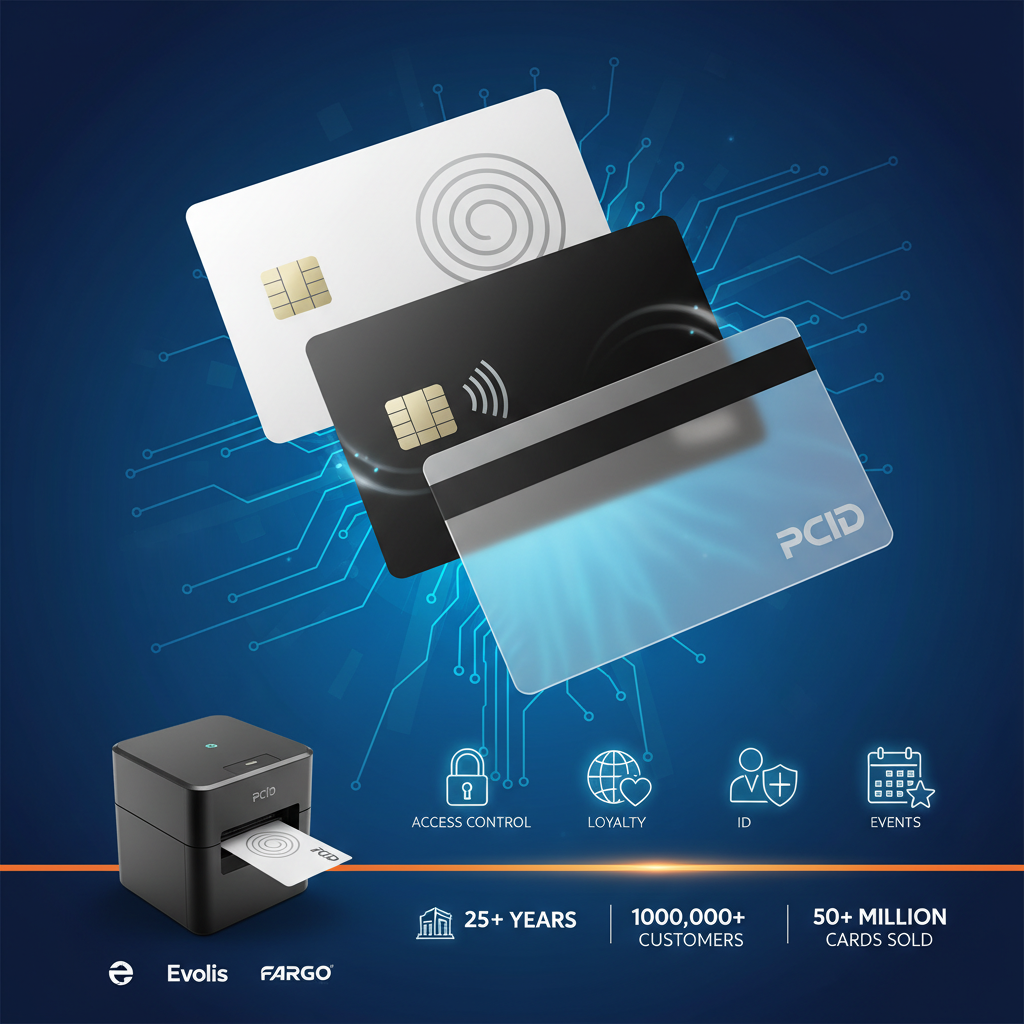 Contactless card technology has moved from specialized to mainstream with remarkable speed. RFID and proximity cards tap into readers without physical contact - the card simply passes near the reader and access is granted, a check-in is logged, or data is exchanged. For high-traffic environments where speed matters, this is a genuine operational advantage.
Proximity cards operate at 125 kHz and are the most widely deployed contactless format in building access control systems. They're durable, reliable, and compatible with the vast installed base of HID-compatible readers across corporate facilities, government buildings, and educational campuses. If your facility already has proximity readers in place, your blank cards need to match that frequency.
MIFARE DESFire and High-Security Applications
MIFARE DESFire represents a significant step up in contactless card security. Operating at 13.56 MHz with advanced encryption, DESFire cards protect stored data against cloning and unauthorized access in ways that older proximity technology cannot. Casino player cards, high-security facility access, and applications where data integrity is paramount are natural fits for DESFire.
The encryption architecture in MIFARE DESFire cards enables secure multi-application use - a single card can function as a building access credential, a point-of-sale loyalty token, and a cashless payment medium within a closed-loop environment. For organizations managing complex card programs, this flexibility is genuinely powerful. Discuss your system requirements with CPE before specifying your card technology to ensure compatibility with your infrastructure.
Hotel Key Cards and Hospitality Applications
Hotel key cards serve a specialized function - they need to encode quickly at check-in, function reliably for the duration of a stay, and be disposable without significant cost concern. Traditional magnetic stripe hotel keys are giving way to RFID-based systems in new property builds, though the installed base of mag stripe hotel locks remains enormous across legacy properties.
Bulk ordering blank hotel key cards with LoCo magnetic stripes or RFID chips is exactly the kind of volume program CPE supports efficiently. With quantities ranging from modest hotel properties to large resort operations, per-card costs drop meaningfully at volume while maintaining the consistent quality that reduces front-desk friction during check-in.
Frequency Compatibility - Why It Matters More Than Buyers Expect
Ordering RFID cards without confirming your reader frequency is a common and expensive mistake. A 125 kHz card will not communicate with a 13.56 MHz reader and vice versa. These two frequency families are entirely incompatible, and there is no workaround short of replacing either the cards or the readers.
Before ordering any contactless card, document the frequency your readers operate at. This information is typically printed on the reader itself or available in its installation documentation. When in doubt, a photograph of the reader's model number submitted to CPE will allow the team to confirm compatibility before your order ships.
Buying in Volume - Order Quantities, Pricing Strategy, and Program Planning
Blank plastic cards follow straightforward volume pricing logic - larger quantities mean lower per-card cost. But the real question isn't just price per card; it's how your order quantity aligns with your actual consumption rate, storage capacity, and program flexibility needs. Ordering 5,000 cards when your monthly usage is 200 saves money on paper but locks capital into inventory that may sit for two years.
Programs running 50 to 500 cards per month are well-served by moderate volume orders that refresh quarterly or semi-annually. High-volume operations printing in the thousands per month should be negotiating annual supply agreements that guarantee pricing and ensure consistent card stock availability. Plastic Card ID supports programs at both ends of this spectrum and everywhere between.
Calculating Your True Per-Card Program Cost
Sticker price per card is only part of the story. A complete card program cost calculation includes the card itself, the printer ribbon consumption per card (which varies by print coverage and ribbon type), any encoding or lamination, card carriers or sleeves if applicable, and labor time for card production. Running these numbers honestly often reveals that the per-card cost of an in-house program is remarkably competitive with outsourced alternatives.
In-house card programs give organizations total design control, speed, and flexibility that outsourced programs simply cannot match. Need to update a loyalty card design? Reprint a lost ID badge? Add a new employee credential at 3pm on a Friday? An in-house setup handles all of this without minimum order delays or vendor turnaround timelines.
Seasonal Demand and Gift Card Programs
Retailers building gift card programs should plan inventory around seasonal demand peaks - particularly holiday shopping seasons where gift card purchase volume can multiply several times over baseline. Blank gift card stock ordered in advance of peak season is far cheaper than expedited orders placed when demand materializes unexpectedly and requires rush fulfillment.
The data on plastic gift cards versus paper alternatives is compelling. Retailers making the switch from paper gift certificates to plastic cards consistently see sales increases in the 35-50% range. The card that lives in a wallet is the card that gets used - and the card that prompts a repeat visit. Plastic gift cards are not a cosmetic upgrade; they are a revenue decision.
Starter Kits and Equipment Bundles
- Purchasing a card printer bundled with compatible blank card stock eliminates compatibility guesswork from the start.
- Ribbon and cleaning kit bundles ensure you have all consumables needed for reliable, clean print output from day one.
- Card affixing and mailing services available through CPE allow organizations to outsource fulfillment for mailed card campaigns without managing logistics in-house.
- Card carriers and sleeves protect finished cards during mailing and add a professional presentation layer that reinforces brand quality.
- Starting with a complete, compatible system reduces setup friction and gets card programs operational faster than piecemeal purchasing approaches.
Specialty Cards That Serve Specific Program Needs
Standard white PVC cards serve the majority of card programs perfectly. But there is a meaningful tier of applications where the card itself needs to communicate something beyond information - it needs to communicate value, exclusivity, or technical sophistication. That's where specialty card options earn their place in a program strategy.
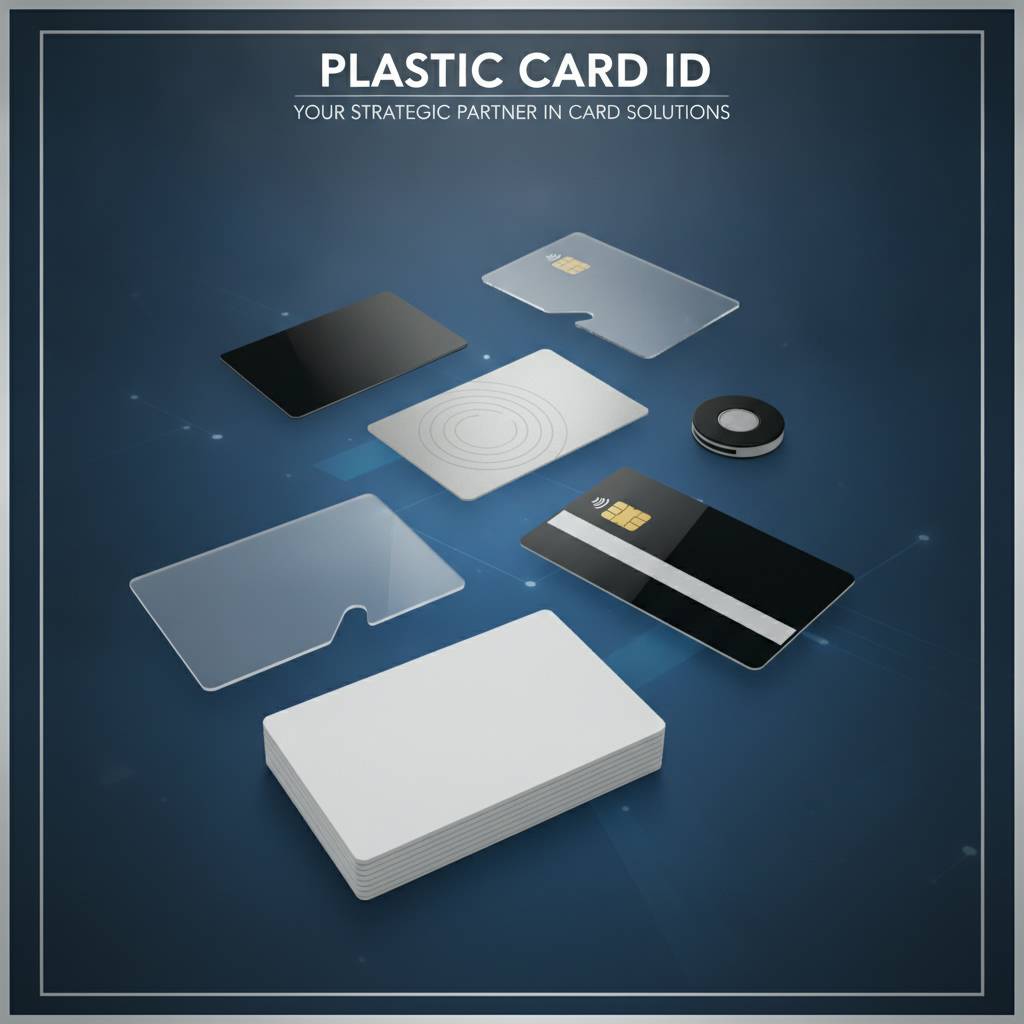
Clear and frosted PVC cards are among the most visually impactful options in the blank card catalog. A frosted card with selectively printed color elements creates a premium aesthetic that customers notice and respond to. These cards work exceptionally well for VIP membership programs, upscale retail loyalty cards, and nightclub or hospitality credentials where first impressions carry genuine commercial weight.
Luxury Metal Cards - When Plastic Simply Isn't Enough
Stainless steel, brass, and gold-finish metal cards represent the high end of what a card program can deliver. The weight, the sound when set on a counter, the permanence of the material itself - these things register with recipients in a way that no plastic card can replicate. Metal cards are a statement about how an organization values its relationship with the cardholder.
Executive membership programs, high-net-worth loyalty tiers, corporate VIP credentials, and luxury hospitality applications all represent natural homes for metal card programs. The cost per card is substantially higher than PVC, but measured against the program revenue these cardholders generate, the investment calculus frequently favors the upgrade decisively.
Colored Stock and Custom Die-Cut Options
Pre-colored blank card stock - available in a range of solid colors - allows organizations to use color as a functional identifier without the cost of full-card printing. Different departments receive different colored ID cards. Access tiers are visually distinguishable at a glance. Event wristband-equivalent credentials use color coding that security personnel can verify without reading card text.
Custom die-cut shapes open a different creative space. A card shaped like a key for a property management company. A rounded rectangle with distinct corner treatment for a premium brand. A shape that matches a company's logo silhouette for trade show credential purposes. These applications require upfront tooling but create brand differentiation that standard cards cannot approach.
Casino and Gaming Industry Cards
Casino player cards operate in demanding environments - handled constantly, swiped repeatedly, exposed to food and beverage in ways office ID cards never experience. Card durability in this context isn't just a quality preference; it's a direct operational cost driver. Higher-quality card stock means fewer replacements, less front-desk friction, and a better player experience from first contact.
MIFARE DESFire smart chip casino cards enable sophisticated player tracking, tier management, and cashless gaming ecosystem integration. The card becomes the hub of the player relationship - tracking play, managing comps, granting access to lounges and amenities, and supporting responsible gaming program requirements. CPE has experience supporting casino card programs at scale and understands the specific performance requirements this environment demands. Call 800.835.7919 to discuss your gaming card program requirements directly.
Common Mistakes to Avoid When Buying Blank Plastic Cards - and How Plastic Card ID Helps You Get It Right
After more than a quarter century in this industry and over 50 million cards shipped, the team at Plastic Card ID has seen the same avoidable purchasing mistakes repeat themselves across thousands of customers. Not from a lack of intelligence - from a lack of information delivered at the right moment. That's what this section addresses directly.
The most expensive mistakes in card purchasing aren't catastrophic; they're incremental. Wrong card stock ordered for a printer type. Magnetic stripe coercivity mismatched to the encoding equipment. RFID frequency incompatible with installed readers. Each of these costs time, money, and operational credibility. Every one of them is preventable with a brief conversation before the order is placed.
The Printer-Card Compatibility Problem
Direct-to-card printers and retransfer printers have fundamentally different requirements for card stock. Running standard PVC through a retransfer printer warps cards during the heat transfer process. Running composite cards through a printer calibrated for standard PVC produces suboptimal print quality and unnecessary wear on the printer mechanism. Neither scenario is the card's fault or the printer's fault - it's a compatibility failure that specification matching would have prevented entirely.
When purchasing cards and printers simultaneously, this is easy to get right. When adding card inventory to an existing printer, take three minutes to confirm the printer model and its documented card stock requirements before ordering. The CPE team fields these confirmation calls regularly and is genuinely glad to provide them - because a customer whose program runs smoothly is a customer who comes back.
Ordering Without Knowing Your Full Program Requirements
Blank cards that need to be both printed and encoded require encoder-equipped printers. Blank cards that need to carry photographs require color dye-sublimation capability. Cards that require lamination overlays need printers with lamination modules. These hardware requirements cascade from program design decisions, and getting the card order right depends on understanding the full production workflow before committing to specifications.
A loyalty card that starts as a simple printed design and later gains a magnetic stripe component requires either re-ordering cards with stripe or adding magnetic encoding as a separate step with a standalone encoder. Neither is fatal, but both are friction that program planning eliminates. Define your full program requirements before your first order - not after 1,000 cards are already in the supply closet.
Underestimating the Value of a Reliable Supplier Relationship
The transactional card buyer - searching for the cheapest possible price on a one-time purchase - is a different animal from the strategic card program operator who needs consistent stock availability, reliable quality, and a supplier who remembers their specifications. The cost difference between the cheapest card and the right card, supplied by a supplier who knows your program, is almost always negligible. The operational difference is not.
Plastic Card ID has built 25-plus years of business on exactly this distinction. Customers who return year after year do so because the cards perform, the orders arrive correctly, and when something needs to be figured out, there's a knowledgeable team available to figure it out with them. A supplier relationship built on genuine expertise is worth more than a few cents per card in savings from an unknown vendor.
Ready to build a card program that performs? Whether you're ordering for the first time or scaling an existing operation, Plastic Card ID has the cards, printers, and expertise to make it work. Call 800.835.7919 today and speak with someone who actually knows this product category inside and out.
From a single box of blank CR80 cards to a multi-location enterprise loyalty deployment, Plastic Card ID is your strategic partner in plastic card programs. Don't guess on specs, compatibility, or quantities - call 800.835.7919 and get it right the first time.
Previous Page